
Why Choose Private Flights for Costa Rica?


A 30-minute delay at a commercial airport can reshape an entire day in Costa Rica. It may mean arriving after a resort transfer has departed, missing the best light for a production shoot, or losing valuable time between meetings in San José and the coast. For travelers and organizations asking why choose private flights, the answer is rarely only about luxury. It is about controlling a schedule, reducing unnecessary ground travel, and reaching places on terms that match the purpose of the trip.
Costa Rica’s geography makes that difference especially clear. Mountain ranges, coastal roads, changing weather, and limited nonstop commercial routes can turn a relatively short distance into a long day of travel. Private airplane and helicopter charter create a more direct way to move across the country while preserving the standards of privacy, safety, and responsiveness that premium travelers and professional teams expect.
Why Choose Private Flights in Costa Rica?
Private aviation is most valuable when time, access, or operational certainty matters. A charter flight is arranged around the passenger, the mission, and the destination rather than around a published airline timetable. That can mean departing from a preferred airport, flying at a time that supports a meeting or hotel check-in, and traveling with the people and equipment required for the journey.
For an executive team, this may reduce a multi-day regional itinerary into a focused business trip. For a family, it can make a multi-destination vacation more relaxed from the first day. For a production crew, it can provide controlled aerial access and logistics support where commercial transportation is not designed to help.
Private flights do not replace commercial airlines for every journey. A scheduled airline may be the practical choice for one traveler on a simple route with a flexible schedule. Charter becomes more compelling when several travelers are moving together, when connections are restrictive, when discretion is essential, or when the value of time outweighs the added cost.
Time Is Protected, Not Merely Saved
The advantage of private aviation begins before takeoff. Rather than arriving hours ahead of departure, navigating crowded terminals, checking baggage, and waiting through multiple boarding stages, charter passengers follow a more direct arrival and departure process. The flight plan is designed around the itinerary, subject to airport operations, aircraft performance, weather, and applicable regulations.
In Costa Rica, the real time savings often come from avoiding long overland transfers. A drive between San José and a remote beach, resort area, or regional destination can take several hours and may be affected by traffic, road conditions, or seasonal weather. A private flight can turn that transfer into a manageable part of the day rather than the day itself.
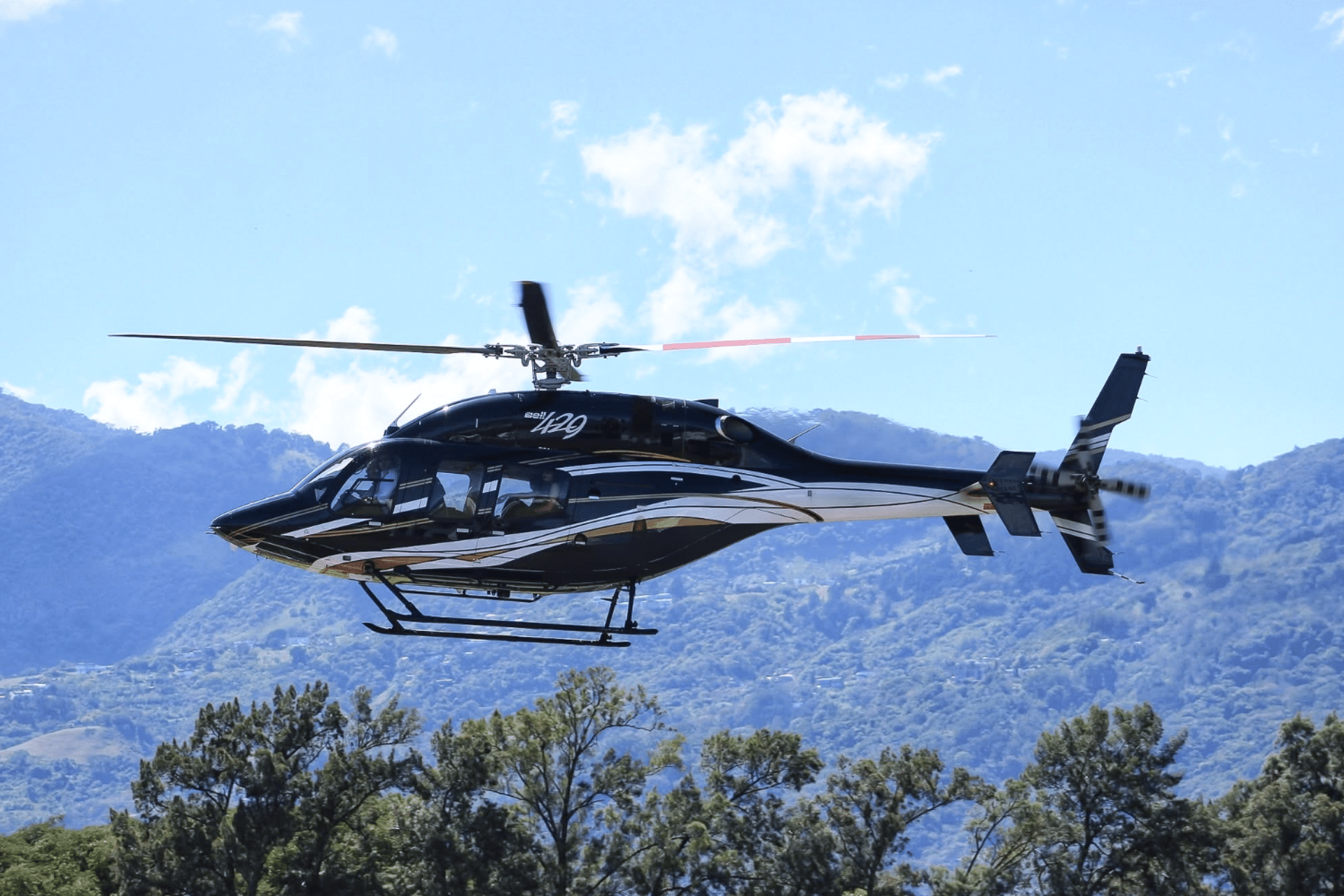
Helicopters add another layer of flexibility for suitable routes and landing locations. They are particularly useful for short transfers, scenic itineraries, site access, and missions where a fixed-wing airport is not the closest practical point of arrival. The right aircraft depends on passenger count, luggage, range, landing requirements, and the nature of the operation.
Privacy Supports Better Travel and Better Business
Privacy is often discussed as an amenity, but it can also be an operational need. Senior executives may need to hold confidential conversations while traveling. Families may prefer a quieter, more controlled experience. Public figures, high-profile guests, and production personnel may require lower visibility from arrival to departure.
A private cabin allows passengers to travel with their own group, conduct conversations without the distractions of a commercial environment, and maintain a more predictable experience throughout the journey. For corporate travelers, that continuity can make the aircraft a productive setting rather than simply a mode of transportation.
Privacy also supports personalization. Catering preferences, baggage needs, ground coordination, and timing can be addressed in advance. The result is not a standardized travel product. It is a flight organized around the people on board and the work or experience waiting at the destination.
Direct Access Changes What Is Possible
Costa Rica rewards travelers who can move beyond the most heavily traveled corridors. Its rainforests, Pacific coastline, volcanoes, private lodges, golf resorts, and conservation areas are spread across varied terrain. Private aviation helps connect these locations more efficiently, often allowing guests to experience more of the country without adding days to the itinerary.
A private airplane charter may be the right solution for longer regional transfers between airports. A helicopter can be the better choice for a rapid point-to-point journey, a scenic arrival, or an aerial operation requiring specialized positioning. Neither is automatically better. The most effective option is the one selected after reviewing the route, passenger requirements, safety considerations, and operational conditions.
This access is equally relevant outside leisure travel. Organizations may need aerial support for site inspections, infrastructure work, survey activities, event logistics, or remote-location coordination. Media teams can require aerial filming or photography platforms that are planned around the production schedule and supported by operators familiar with aviation-specific requirements.
Aerial Work Requires More Than an Aircraft
Specialized flight operations demand planning that goes beyond booking transportation. Aerial filming, photography, industrial support, and mission-specific charters require careful coordination between pilots, production or project teams, airport personnel, and, where applicable, local authorities.
Weather, weight and balance, equipment mounting, flight paths, airspace rules, and site conditions all influence what can be done safely. An experienced operator does not treat these details as afterthoughts. They are part of the planning process that protects the crew, the aircraft, and the objective of the flight.
For a production team, that may mean selecting an aircraft with the appropriate visibility, capacity, and operating profile. For a commercial project, it may mean determining whether a helicopter offers the access required or whether a fixed-wing aircraft provides a more efficient solution. The goal is not simply to fly. It is to execute the mission reliably and responsibly.
Safety and Experience Should Lead the Decision
The premium value of a private flight depends on confidence in the operator. Aircraft type, itinerary, and cabin experience matter, but safety culture, certification, maintenance practices, crew training, and operational judgment matter more.
When evaluating a charter provider, travelers and organizations should ask practical questions. Is the operator properly certified for the intended service? Are flights conducted in accordance with national aviation requirements and recognized international standards? Does the company have established local knowledge, qualified crews, and a clear process for weather or itinerary changes?
In Costa Rica, DGAC certification and adherence to ICAO standards are meaningful indicators of an operator’s regulatory framework. They should be paired with a demonstrated operating history and a disciplined approach to flight planning. A responsible operator will also be transparent about limitations. Weather can require a delay, alternate routing, or cancellation. Aircraft performance and airport conditions set real boundaries. No premium service should promise outcomes that compromise safe decision-making.
Aerotour brings operating experience dating to 1973, with bases in San José and Liberia that support access across the country’s principal business and tourism corridors. That kind of local presence matters when a charter requires responsive coordination, whether the flight is for executive mobility, a private transfer, scenic travel, or an aerial production assignment.
The Value Calculation Is Personal
Private aviation is priced differently from a commercial ticket because the aircraft, crew, planning, and operational resources are dedicated to a specific flight. The decision should therefore be based on total value, not the fare alone.
For a group traveling to a remote destination, the cost per person can be more understandable when compared with commercial tickets, airport transfers, overnight stops, and time away from the actual purpose of the trip. For an executive team, the calculation may include meetings completed, travel fatigue avoided, and the ability to visit multiple locations in a limited window. For a production, it may be the difference between capturing a critical scene and losing a day to logistics.
There are occasions when a private flight is primarily an experience. A helicopter journey over the coastline, rainforest, or volcanic landscape offers a perspective unavailable from the road. That is a legitimate reason to charter as well, provided it is approached with the same attention to weather, aircraft suitability, and professional operations.
The best charter decision starts with a clear brief: who is traveling, where they need to go, when they need to arrive, what they are carrying, and what would make the trip successful. From there, an experienced aviation partner can recommend an aircraft and operating plan that respects both the ambition of the journey and the realities of safe flight.
When the itinerary matters as much as the destination, private aviation gives Costa Rica more room to be experienced well.