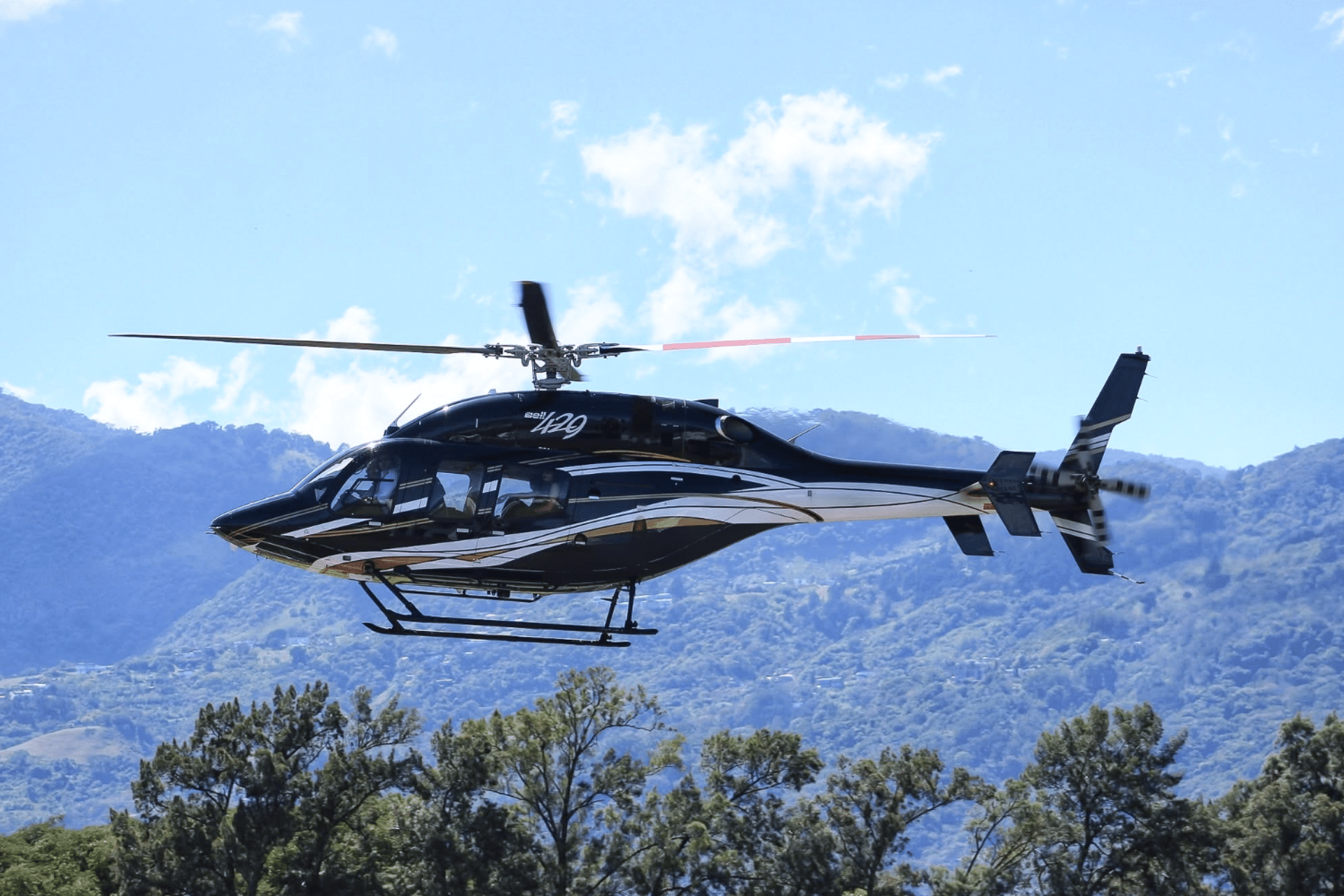

How Private Helicopter Transfers Work


A three-hour drive can become a 35-minute flight when the route, landing access, and timing all line up. That is the practical appeal behind how private helicopter transfers work – they are built to move people directly, efficiently, and with far less friction than standard ground transportation or scheduled airline connections.
For travelers and organizations moving across Costa Rica, helicopter transfers are not simply a luxury add-on. In many cases, they are a logistical tool. They help executives reach remote properties on a tight schedule, allow families to avoid long overland transfers, and give production teams access to locations that would otherwise require complex coordination.
How private helicopter transfers work from booking to landing
At the most basic level, a private helicopter transfer is a point-to-point charter flight arranged around your route, timing, passenger count, and landing requirements. Unlike commercial aviation, there is no fixed schedule to join. The operator evaluates the mission, confirms whether the departure and arrival points are suitable, assigns an aircraft that matches the load and route, and builds the flight around operational safety.
The process usually starts with a request for key details: where you want to depart, where you need to land, how many passengers are traveling, what baggage is involved, and when the flight is needed. That sounds simple, but those details matter because helicopters are highly flexible without being unlimited. Passenger weight, baggage volume, weather, fuel planning, daylight, and landing site conditions all affect the final operating plan.
Once the operator reviews the mission, you receive a proposed itinerary and charter quote. If the flight is approved and confirmed, the operations team begins coordinating aircraft scheduling, crew assignment, and any site-specific permissions or logistics. In a market like Costa Rica, where routes may connect resorts, private estates, business centers, lodges, and remote regions, local operating knowledge can make a major difference in how efficiently that coordination happens.
The booking stage is more detailed than many travelers expect
Private helicopter charters are tailored, which means the booking stage does more than reserve a seat. It defines the operational parameters of the flight.
Passenger count is the starting point, but total payload is often the more important factor. A helicopter may technically have enough seats, yet baggage type, individual weights, route distance, and weather conditions can change usable capacity. Soft-sided luggage is often preferred because it fits more easily within aircraft storage limits. Large hard-shell bags, oversized production gear, or golf clubs may require a different aircraft or separate planning.
Timing is also more nuanced than simply choosing a departure hour. Operators look at weather patterns, air traffic flow, airport coordination if relevant, and whether the destination is best reached in daylight. If your itinerary includes a resort check-in, a corporate event, or a shoot schedule, the helicopter transfer is planned to support that broader objective rather than exist as an isolated flight.
For premium travelers, this is one of the strongest advantages of private aviation. The aircraft is there to serve the mission. At the same time, the mission still has to fit within real aviation constraints.
How routing and landing approvals are handled
One reason people ask how private helicopter transfers work is that helicopters seem able to land almost anywhere. In practice, the answer is more disciplined than that.
Helicopters can access many places airplanes cannot, but every landing site must be evaluated for safety and legality. The operator considers surface conditions, slope, obstacles, rotor clearance, nearby structures, approach paths, wind exposure, and whether the location is authorized for helicopter operations. Some transfers use airports or established helipads. Others use private properties, hotels, lodges, or temporary landing areas that have been assessed in advance.
If a requested landing point is unsuitable, the operator may recommend the nearest practical alternative and arrange ground transport for the final segment. That hybrid approach is common and often still saves substantial time overall.
Experienced operators also assess route efficiency. The most direct line on a map is not always the best flight path. Terrain, controlled airspace, weather cells, fuel requirements, and traffic conditions may influence the route. This is especially relevant in a country with coastal corridors, mountain ranges, rainforest regions, and rapidly changing weather patterns.
Safety and compliance are built into every flight
For a serious operator, safety is not a marketing layer added after the fact. It shapes how the charter is accepted, how the aircraft is assigned, and whether the flight proceeds at all.
That includes aircraft maintenance standards, pilot qualifications, operational oversight, weight and balance calculations, weather review, and compliance with civil aviation requirements. Travelers may not see every part of that process, but they benefit from it at every stage.
Before departure, passengers typically receive basic flight and boarding guidance. That can include arrival time, identification requirements, baggage restrictions, clothing recommendations, and ramp safety instructions such as when to approach the helicopter and how to secure loose items. On arrival at the departure point, the crew or ground team manages boarding in a controlled sequence.
For buyers comparing providers, credentials matter. A DGAC-certified operator working to recognized aviation standards brings a level of accountability that should not be treated as optional. In private aviation, the value of experience is often most visible in the details customers never have to solve themselves.
What the day of the transfer looks like
The actual transfer experience is usually efficient and quiet by design. There is no commercial terminal process, no general boarding queue, and no need to build a day around airline infrastructure.
Passengers arrive at the agreed departure point, check in with the operator or crew, and receive a short safety briefing. Baggage is weighed or confirmed, seating may be assigned based on aircraft balance, and final weather and route checks are completed. Once the aircraft is ready, boarding is guided by the crew.
Inside the helicopter, the cabin experience depends on aircraft type and mission length, but most passengers notice two things immediately: visibility and speed. Helicopter transfers offer a direct sense of geography that ground travel cannot match. Coastline, valleys, roads, forests, and developed areas become part of the route rather than obstacles around it.
Flight times are often short, which is part of the value. A transfer is not designed to feel drawn out. It is meant to deliver access. For that reason, onboard service tends to be professional and focused rather than elaborate.
On arrival, disembarkation is quick. If ground coordination has been arranged, the handoff is usually immediate. For executive travelers and high-end leisure guests, that continuity matters as much as the flight itself.
How private helicopter transfers work for different use cases
Not every charter client is solving the same problem. A couple headed to a remote resort may value privacy and a scenic arrival. A corporate group may care most about recovering half a day of productive time. A production team may need aircraft access that aligns with location schedules, equipment loads, and changing weather windows.
The structure of the flight changes accordingly. Leisure itineraries often prioritize direct resort access and comfort. Business charters usually focus on precision, schedule reliability, and close-to-destination landings. Film and photography missions may require more technical planning, especially when transfer needs overlap with aerial work.
This is where an established operator has an advantage. A company such as Aerotour, with deep experience in private charter and specialized aerial operations in Costa Rica, can evaluate whether a request is a straightforward transfer, a multi-stop itinerary, or a more complex mission that calls for added coordination.
Trade-offs worth understanding before you book
Helicopter transfers are efficient, but they are not the right answer for every route or every traveler. Short sectors can be highly effective, especially where roads are slow or indirect. On the other hand, if the landing point is far from your final destination, the time savings may narrow.
Weather is another factor. Helicopter operations are flexible, but not immune to changing conditions. In tropical and mountainous environments, afternoon weather shifts can affect departure windows or routing. That does not mean the service is unreliable. It means the operator has to make disciplined decisions, and premium service includes saying no when conditions do not support a safe flight.
Cost is the obvious consideration. Private helicopter travel is a premium service, and pricing reflects aircraft operating costs, crew, maintenance, routing, positioning, and mission complexity. For some clients, the value is measured in convenience. For others, it is measured in hours saved, access gained, or production risk reduced.
The best way to think about helicopter transfers is not as a more glamorous taxi. They are a specialized air mobility solution. When planned well, they can remove friction from travel in a way few other transportation options can.
If you are considering one, the smartest first step is to treat the flight as part of the whole itinerary – not just a standalone booking. When the route, landing logistics, baggage plan, and schedule are aligned from the start, the experience tends to feel exactly as it should: efficient, polished, and confidently handled.