
Helicopter vs Airplane Charter: Which Fits?

A charter flight from San Jose to a resort, a job site, or a filming location can look very different depending on the aircraft. In a helicopter vs airplane charter decision, the right choice is rarely about prestige alone. It comes down to where you need to go, how much time you need to save, what kind of landing access matters, and how the mission will actually unfold on the ground.
In Costa Rica, that distinction matters more than it does in many other destinations. Mountain ranges, coastal terrain, island access, limited road infrastructure in some regions, and tightly scheduled itineraries can make one aircraft clearly more practical than the other. For some travelers, an airplane is the efficient answer. For others, a helicopter turns a difficult transfer into a direct and highly controlled operation.
How helicopter vs airplane charter really differs
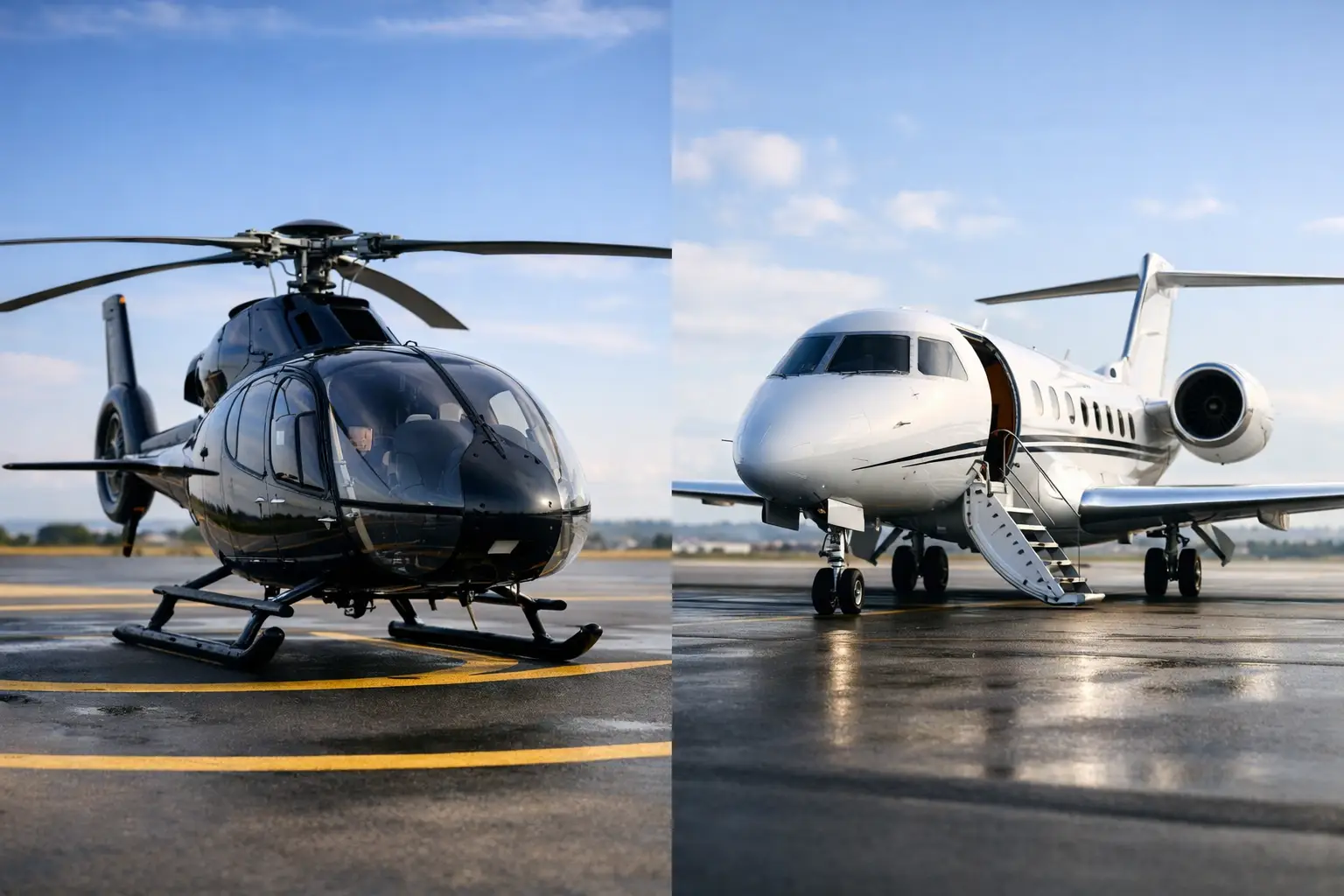
At a high level, airplanes are designed to move passengers efficiently over longer distances between airports or airstrips. Helicopters are built for flexibility, short-range access, and point-to-point convenience where runway infrastructure is limited or unavailable. Both are premium charter options, but they solve different problems.
An airplane charter is often the better fit when the route connects established airports, the passenger count is higher, or trip economics favor fixed-wing travel. A helicopter charter becomes especially valuable when the destination is remote, the schedule is tight, or ground transfers would erase much of the time saved by flying.
That is why the comparison should start with the mission, not the aircraft type. A corporate transfer to a regional airport has different priorities than a luxury lodge arrival, an aerial filming day, or a site visit for industrial operations.
When a helicopter charter makes more sense
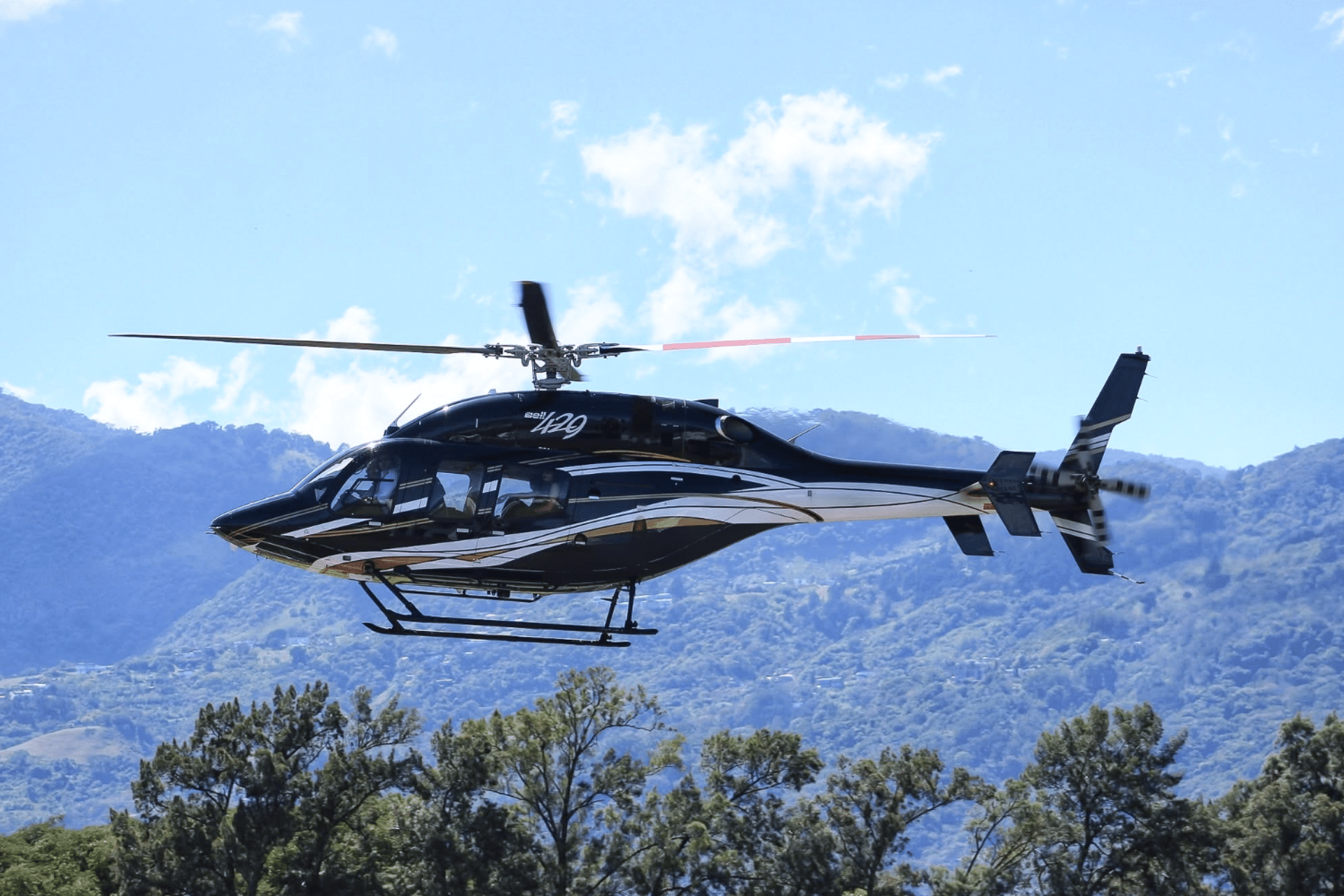
A helicopter is at its best when access is the priority. If your destination is near a private property, remote development, resort zone, marina, or work site without convenient runway access, rotary-wing capability can reduce logistical friction in a way an airplane cannot.
In Costa Rica, that can mean reaching areas where road travel is slow, indirect, or highly variable due to terrain and traffic. A helicopter can also be the stronger choice when multiple stops are required in a single day. For executives, production teams, and organizations with time-sensitive schedules, the ability to operate closer to the actual destination changes the value equation.
Helicopters are also the natural fit for specialized aerial work. Filming, photography, inspections, surveys, and mission-specific support often demand low-altitude maneuverability, controlled positioning, and visual access that fixed-wing aircraft are not designed to provide.
There are trade-offs. Helicopters generally carry fewer passengers, have shorter range, and usually come at a higher cost per mile. They are not automatically the most efficient option for every route. If the trip simply connects two airports with strong fixed-wing access, the flexibility of a helicopter may not justify the premium.
Best helicopter charter use cases
Helicopter charter is often the stronger option for resort arrivals, remote property access, executive site visits, island and coastal transfers, and aerial production work. It also suits travelers who place a premium on privacy and direct routing, especially when avoiding long overland transfers is part of the goal.
For leisure clients, the appeal is not only speed but also experience. The route itself becomes part of the journey, particularly over coastlines, volcanoes, forests, and mountain corridors.
When an airplane charter is the smarter choice
Airplane charter usually offers stronger value for longer regional trips and airport-to-airport transportation. If your itinerary begins and ends at locations with suitable runways, an airplane can move more people more efficiently and often at a lower operating cost than a helicopter.
This matters for business groups, families, and travelers who want private air travel without paying for capabilities they do not need. Airplanes also tend to provide a more practical solution for carrying baggage over longer distances. Depending on the aircraft and route, passenger comfort and range can make fixed-wing charter the more straightforward option.
In a country like Costa Rica, an airplane charter may be ideal for regional transfers where airports already support the destination efficiently. If the final destination is still a meaningful drive from the airport, however, the apparent advantage can narrow quickly. That is where a charter decision becomes more operational than theoretical.
Best airplane charter use cases
Airplane charter is often the better fit for intercity travel, regional business movement, family or group itineraries, and routes where airport infrastructure is already well aligned with the final destination. It is also a strong option when the objective is dependable private transportation rather than specialized access.
Cost is only one part of the equation
Clients often start with price, but charter decisions are better made around total value. A helicopter may cost more per flight hour, yet still make financial sense if it eliminates several hours of ground transport, protects a production schedule, or allows senior personnel to complete multiple site visits in one day.
An airplane may appear more economical, and often is, but only if the airport locations support the itinerary efficiently. If a fixed-wing charter still requires lengthy transfers on the ground, hotel coordination, or additional vehicle logistics, the lower flight cost can become less decisive.
This is especially true for organizations. For executives, project teams, and media crews, the cost of delay can exceed the cost difference between aircraft types. For leisure travelers, value may be tied to privacy, comfort, and making the most of limited vacation time.
Access, infrastructure, and destination reality
The clearest difference in helicopter vs airplane charter is not speed in the air. It is access on the ground.
Airplanes need airports or airstrips. Helicopters can work from far more flexible landing environments, subject to operational and safety requirements. That distinction matters in Costa Rica, where natural geography shapes travel in a very practical way. Two routes with similar airborne distance can produce very different travel days depending on road connections and final approach options.
If your destination is a lodge near the coast, a private estate, a mountain property, or a work site away from airport infrastructure, helicopter access can turn a complicated transfer into a direct arrival. If your destination is already well served by a nearby airport, an airplane charter may be the cleaner and more cost-effective solution.
Comfort, privacy, and travel experience
Both charter types provide privacy and control that commercial travel does not. The difference is in how that experience feels.
An airplane charter often suits travelers who want a quiet, efficient cabin environment for regional travel with colleagues, family, or clients. The journey tends to feel structured and transportation-focused.
A helicopter charter is more immediate and immersive. Visibility is a major part of the experience, and the route can feel far more connected to the landscape below. For scenic transfers and premium tourism experiences, that can be a real advantage. For some passengers, though, cabin size and flight profile may make an airplane feel more relaxed on longer sectors.
Neither is universally more comfortable. It depends on route length, passenger preferences, baggage needs, and the reason for travel.
How to choose the right charter for your trip
The simplest way to choose is to ask four practical questions. Where is the true final destination, not just the nearest airport? How many passengers are traveling? How time-sensitive is the itinerary? Is the flight purely transportation, or does it involve access, scenery, or operational support?
If direct destination access is critical, a helicopter often leads. If passenger count, route length, and cost efficiency matter more, an airplane usually has the advantage. If the mission involves filming or technical aerial work, the answer is even clearer.
This is where an experienced operator adds real value. The right recommendation should not push one aircraft type by default. It should reflect route feasibility, landing considerations, weather planning, safety standards, payload, and what the client is actually trying to accomplish. In Costa Rica, where charter missions range from executive transfers to resort arrivals and aerial production, that operational judgment matters.
Aerotour has served this market for decades, and that kind of experience is particularly useful when a trip looks simple on paper but is shaped by terrain, timing, or access constraints in practice.
The best charter choice is the one that fits the mission cleanly, protects the schedule, and gets you closer to where you really need to be. If you start there, the aircraft type usually becomes obvious.