
Private Flights for Film Crews in Costa Rica

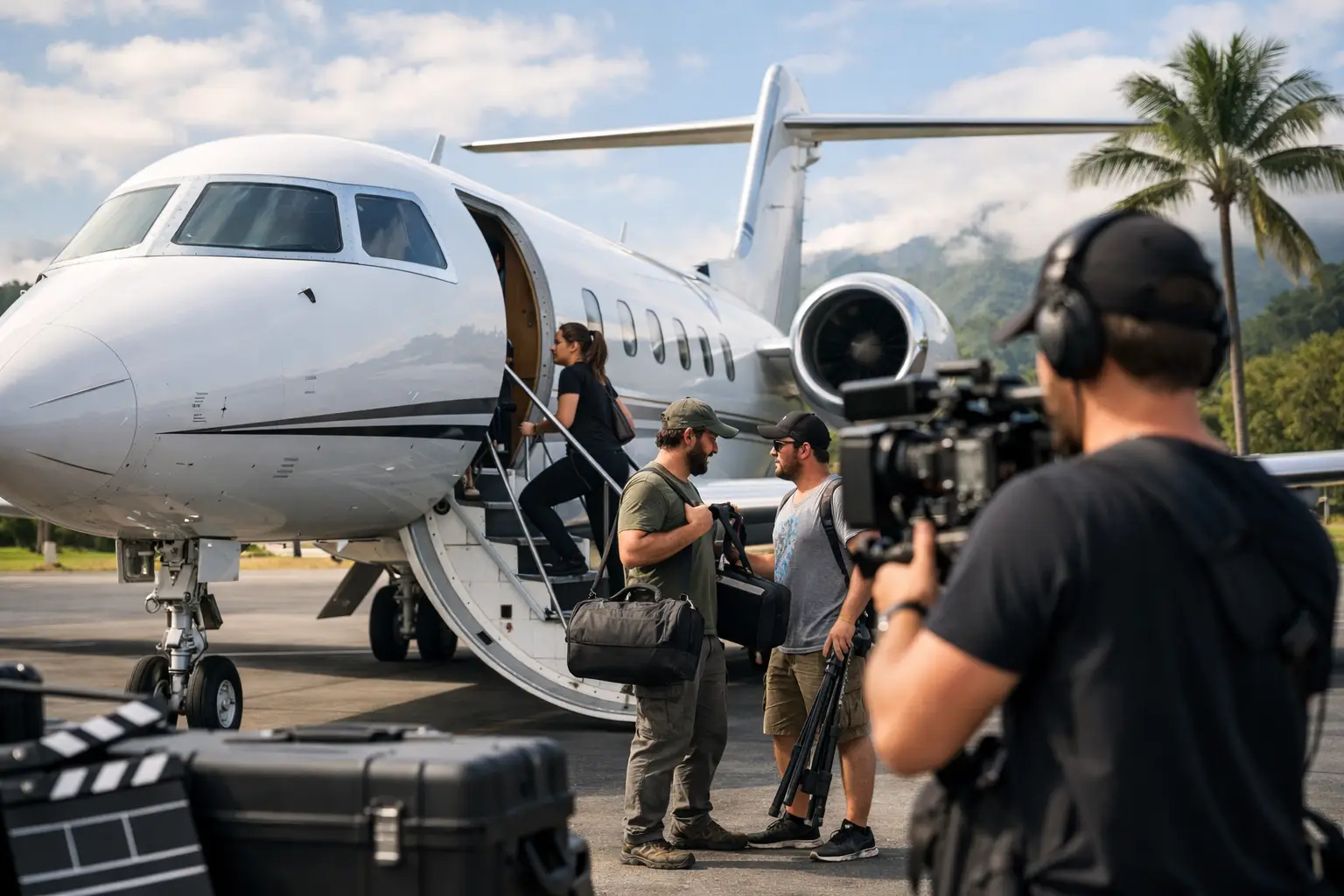
A sunrise call time in the Osa Peninsula, a camera package arriving from San José, and a location accessible only after hours on the road can put a production schedule under immediate pressure. Private flights for film crews replace much of that uncertainty with a direct, planned route that respects the realities of a working set: people, equipment, daylight, weather, and a schedule that rarely has room to move.
For productions in Costa Rica, private aviation is not simply a premium way to travel. It can be a practical production tool. The right aircraft and operating plan can connect crews to remote lodges, coastal locations, private airstrips, and regional hubs while reducing ground-transfer time and helping departments arrive ready to work.
Why private flights for film crews change the production day
Costa Rica offers an exceptional range of visual settings within a relatively compact country: rain forest, volcanic terrain, Pacific beaches, Caribbean coastline, cities, and agricultural landscapes. The distance between two locations may look manageable on a map, yet road conditions, weather, traffic, and terrain can turn a transfer into a significant part of the day.
A private airplane charter can shorten transfers between key regional destinations and allow production leadership to set departure times around the call sheet rather than commercial airline schedules. For a crew moving between San José and a remote coastal or northern location, that difference can protect a filming window, reduce overtime exposure, and preserve energy for the people needed on set.
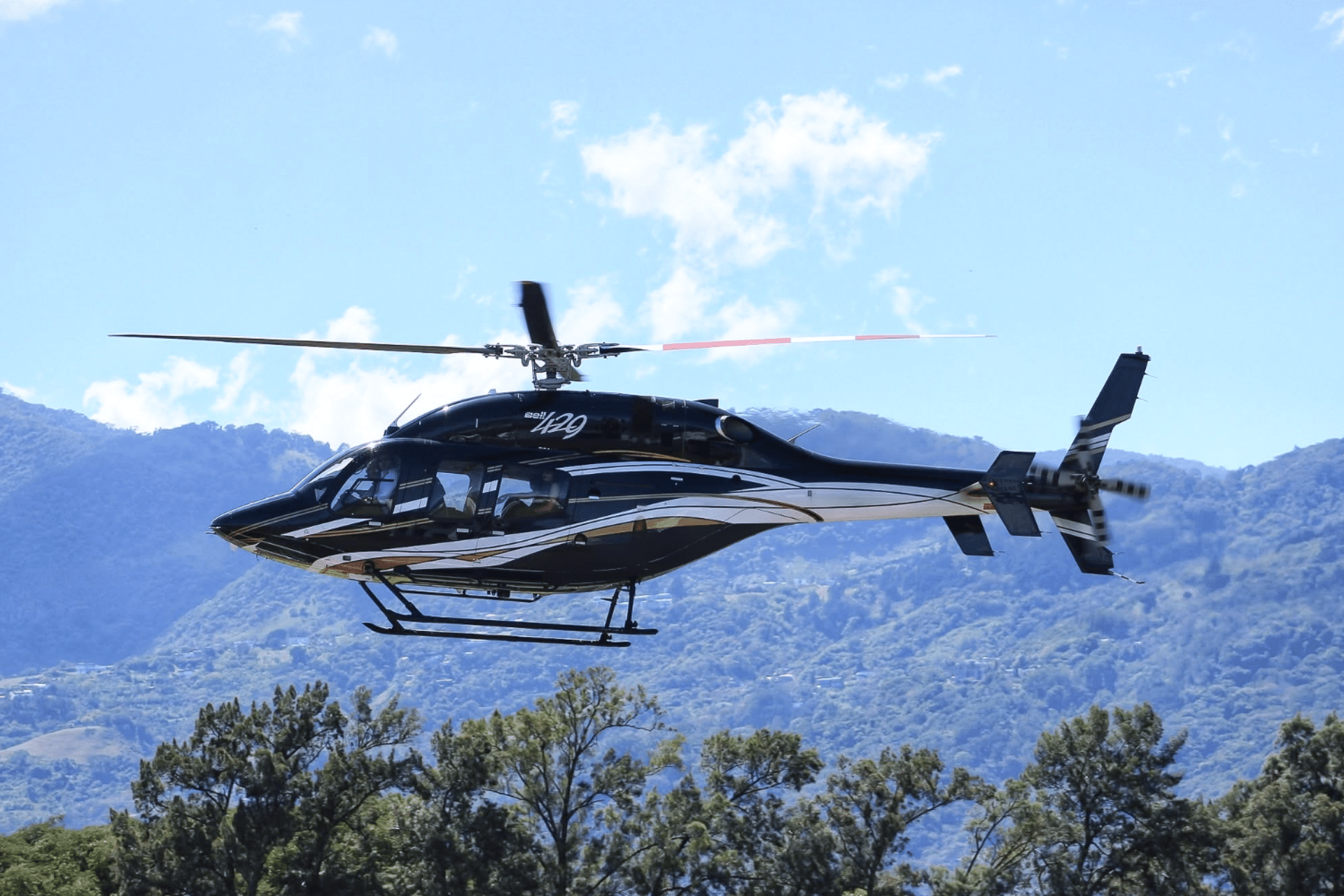
Helicopters offer a different advantage. They can provide access to locations where road travel is slow or impractical, subject to approved landing conditions and operational requirements. They are also valuable when a director, producer, location manager, or technical team needs to scout a site quickly before committing the full unit.
The trade-off is that private aviation requires early coordination. Payload limits, weather conditions, airfield operating hours, and the availability of suitable landing areas all shape the plan. A well-managed charter does not eliminate these variables. It accounts for them before they affect production.
Match the aircraft to the mission
Film logistics work best when the aircraft is selected for the actual assignment, not just the destination. A small team traveling with light personal bags has different needs than a commercial crew moving cinema cameras, lenses, sound equipment, wardrobe, and support cases.
A fixed-wing aircraft is often the efficient option for regional crew transfers, particularly where established airstrips are available. It can move several passengers and a planned equipment load over longer distances with greater range and cost efficiency than a helicopter. For multi-location productions, it may also serve as the connection between a central base and regional shooting areas.
A helicopter can be the more appropriate choice when access is the priority. It can support remote location scouting, executive movement, time-sensitive crew repositioning, and aerial production work. For aerial filming, the platform, camera configuration, flight profile, safety procedures, and crew roles must be planned as one operation rather than treated as separate transportation and filming tasks.
There is no universal answer. Aircraft selection depends on the number of passengers, equipment dimensions and weight, the usable runway or landing site, the required flight time, and the visual objective. Productions should also consider whether they need a one-time transfer, a series of daily movements, or dedicated aviation support across the shoot.
Plan equipment movement before the shoot day
The most common aviation challenge for a production is not finding seats. It is determining exactly what needs to travel, how it will be packed, and whether it can be loaded safely within the aircraft’s payload and baggage limitations.
A detailed manifest should be prepared well before departure. This should identify passenger names, baggage, camera cases, batteries, support equipment, and any items that need special handling. Dimensions matter as much as total weight. A long tripod case or unusually shaped rig may require a different loading approach than several compact hard cases with the same combined weight.
Lithium batteries deserve particular attention. They are essential to modern production, but their transport is subject to safety procedures. The charter operator should receive clear information about battery type, quantity, watt-hour rating, packaging, and whether the batteries will travel in cabin baggage or as approved cargo. Do not assume that a process used on a commercial airline automatically applies to every charter mission.
For heavier equipment loads, productions may need to divide passengers and gear between aircraft, schedule a separate equipment movement, or combine air and ground logistics. That can feel less convenient during early planning, but it is preferable to discovering a payload issue on the ramp when a crew is already on the clock.
Aerial filming requires an aviation plan, not just a flight booking
Aerial footage can establish scale, reveal a location, and give a story its defining visual language. It also demands greater coordination than a standard charter. Camera operators, directors of photography, and aviation teams need a shared understanding of the intended shots, flight duration, route, altitude considerations, door configuration, communications, and weather thresholds.
The safest aerial filming plans begin with a pre-flight briefing. The pilot and production team should review the shot sequence, anticipated maneuvers, camera mounting or handheld procedures, cabin seating, restraint requirements, sterile-cockpit expectations, and the authority of the pilot in command. The pilot’s operational judgment takes priority when conditions change.
Weather is especially relevant in Costa Rica. Coastal wind, mountain cloud, rain, and seasonal visibility can develop quickly. A production should build alternate shot windows and reserve time for conditions that are appropriate for both safe flight and usable footage. The most ambitious shot plan is of limited value if it leaves no room for the atmosphere and light that make the location distinctive.
Aerotour supports specialized aerial operations with an operating history dating to 1973, DGAC certification, and practices aligned with ICAO standards. For production teams, that experience matters because aerial work involves more than reaching a destination. It requires disciplined coordination between aviation professionals and the creative crew.
Build flight timing around the call sheet
The strongest charter plan starts with the production schedule, then works backward. Identify the non-negotiable moments first: first light, talent call, permit windows, tide conditions, location access restrictions, and the final practical departure time. From there, allow time for passenger check-in, loading, safety briefings, weather review, and transfers between the airfield and set.
Avoid scheduling a flight to land at the exact minute a department is expected to begin work. Even on a private charter, a sensible buffer protects the day. It gives the team room for a weather hold, a longer-than-expected loading process, or a short ground transfer at the destination.
For larger units, it can be effective to fly key personnel first. The director, producer, director of photography, location manager, and essential technical leads may need to arrive ahead of the main group to confirm conditions and begin set preparation. The balance depends on the budget and the consequence of losing time at the location.
Safety and access must be confirmed early
Remote shoots can involve privately managed properties, lodge clearings, regional airfields, or land near sensitive environmental areas. Each location has its own access limitations. A suitable area for a production vehicle is not automatically an approved helicopter landing site, and an airstrip shown on a map may have operating restrictions, runway conditions, or hours that affect the mission.
Early location review helps establish whether aviation access is appropriate and what support is required on the ground. It also gives the operator time to assess weather patterns, fueling needs, communications, passenger handling, and contingency airports or landing options.
Production teams should share any anticipated changes as soon as possible. An additional passenger, a revised call time, a new equipment case, or a request for a different filming route can affect the aircraft, crew duty planning, or authorization process. Clear communication is one of the most valuable ways to protect a private flight operation.
Treat the charter team as part of the location strategy
The best private aviation support feels quiet when the cameras are rolling. That result comes from detailed work beforehand: accurate manifests, realistic transfer times, approved equipment procedures, clear weather alternatives, and a shared understanding of what cannot be compromised.
For film crews, private flight planning is ultimately about preserving creative time in places that are difficult to reach by road. When aviation is integrated early into the location strategy, the crew can spend less of the day in transit and more of it capturing the light, landscape, and performance that made Costa Rica the right setting in the first place.