
Executive Air Charter Costa Rica Guide


A delayed connection in San Jose can cost more than a meeting. For travelers managing site visits, investor schedules, resort inspections, or private itineraries across multiple regions, executive air charter Costa Rica services offer something commercial travel rarely can – direct access, schedule control, and privacy built around the day’s priorities.
Costa Rica is compact on a map, but business and premium leisure travel here are shaped by terrain, weather patterns, road conditions, and airport access. A route that looks simple can turn into several hours on the ground. That reality is exactly why private aviation plays a practical role in the country. It is not only about comfort. It is about moving efficiently between San Jose, Liberia, coastal destinations, inland properties, and specialized locations without giving up time, discretion, or reliability.
Why executive air charter in Costa Rica makes business sense
For executives and high-value travelers, the main advantage is time compression. A private flight can turn what would be a full-day ground movement into a same-day itinerary with room for meetings, inspections, or personal downtime. That matters for corporate leaders, family offices, real estate investors, hospitality groups, and production teams working against fixed timelines.
There is also the question of access. Costa Rica’s commercial network serves major gateways well enough, but it does not always align with where business actually happens. Luxury developments, eco-lodges, industrial sites, filming locations, and private residences are often outside the most convenient airline routing patterns. Air charter makes those locations far more reachable.
Privacy is another major reason clients choose this category. Executive travel often involves confidential discussions, sensitive passenger profiles, or public figures who prefer a lower-visibility journey. A private aircraft or helicopter gives that control from departure planning to arrival handling.
Still, not every trip calls for a charter. If the route is well served, the schedule is flexible, and privacy is not a concern, commercial service may be adequate. The value of charter increases when time is limited, the destination is less accessible, or the itinerary includes multiple stops.
What to expect from executive air charter Costa Rica services
The best operators do more than provide an aircraft. They manage a transportation solution. That includes matching the mission to the right aircraft type, planning around local operating conditions, coordinating departure windows, and minimizing friction on both ends of the trip.
In Costa Rica, that often means choosing between fixed-wing aircraft and helicopters based on distance, landing options, passenger count, and the purpose of the flight. A short executive hop between key regions may be ideal by airplane if airport infrastructure supports it. A helicopter may be the stronger option when the objective is point-to-point flexibility, site access, aerial visibility, or a combination of transport and operational support.
The premium standard also extends to responsiveness. Charter clients are not buying a seat. They are buying a schedule tailored to a business need or personal priority. That requires a service team that can communicate clearly, handle changes without confusion, and set realistic expectations when weather or operational constraints affect timing.
Airplanes vs. helicopters for executive travel
Fixed-wing charters are often the preferred choice for longer regional movements and for passengers who want a traditional private aviation experience between airports. They can be efficient, comfortable, and well suited to executive groups moving on defined routes.
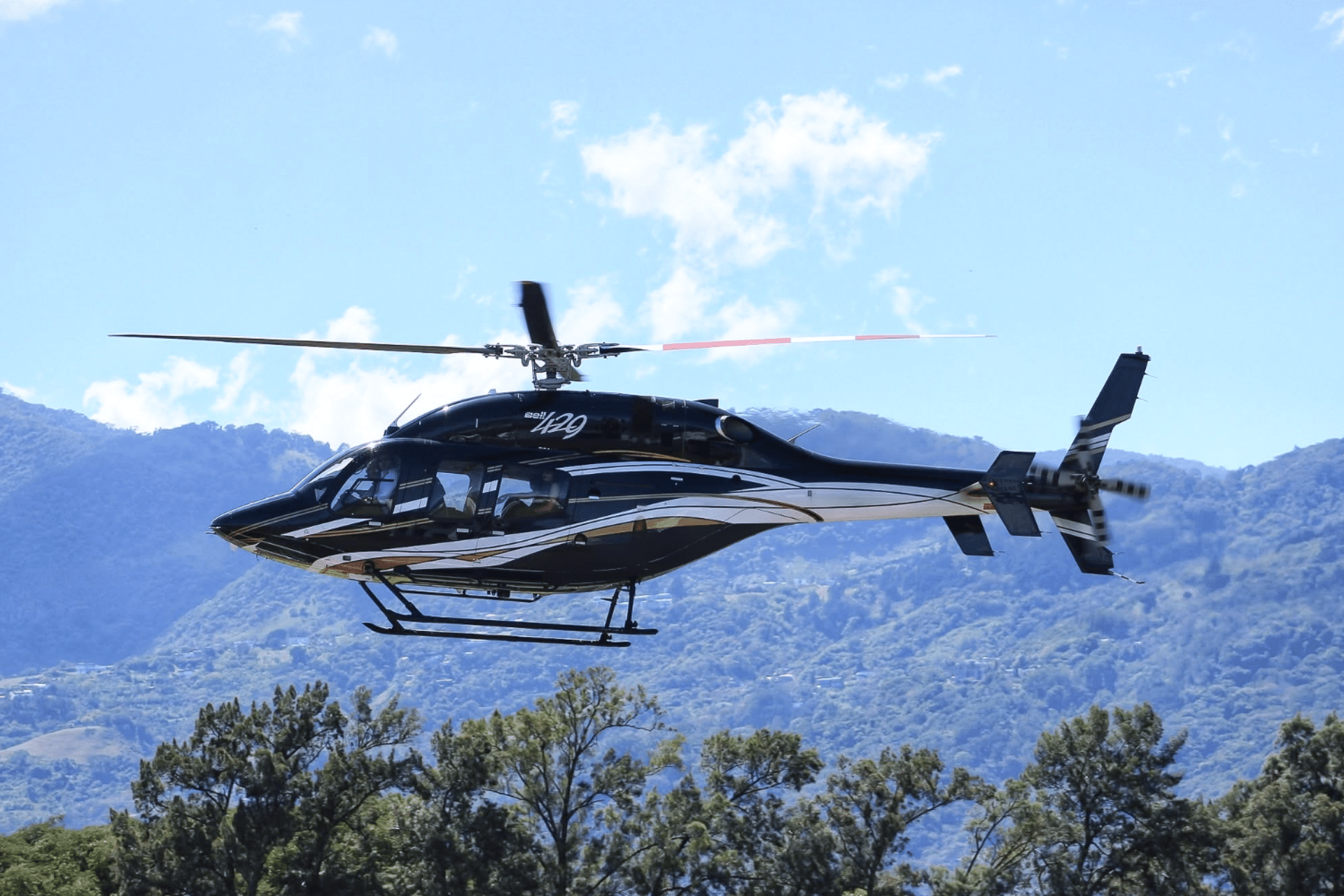
Helicopters bring a different kind of value. They are especially useful when travelers need to reduce ground transfer time, reach more isolated destinations, or inspect properties and project sites from the air before landing. For resort owners, developers, and media teams, that flexibility can be as valuable as the flight itself.
The right choice depends on the mission. Speed alone is not the only factor. Landing access, luggage requirements, passenger profile, weather conditions, and on-site infrastructure all shape the decision.
Safety and certification should lead the conversation
In executive aviation, premium service means very little without operational credibility behind it. Costa Rica is a destination market, but charter decisions should still be made with the discipline of any high-trust transport purchase.
That starts with operator credentials. Clients should look for an established company with DGAC certification, compliance with ICAO standards, experienced crews, and a clear operating history. These are not marketing extras. They are central indicators of how seriously the operator treats maintenance, pilot training, procedures, and flight planning.
Experience matters in another way as well. Local knowledge can materially affect the quality of a charter operation. Weather shifts, terrain, airport limitations, and regional logistics all require sound judgment. An operator with decades of experience in Costa Rica is better positioned to make strong operational decisions than one that simply offers private flights as a generic product.
A provider such as Aerotour, with operating roots dating back to 1973 and a long-standing focus on private charter and specialized aerial operations, reflects the kind of background many executive clients look for when reliability is non-negotiable.
Who uses executive charter in Costa Rica
The audience is broader than many people assume. Corporate leaders use charter to move between meetings, properties, and regional facilities without losing a day to transfers. Hospitality and real estate professionals use it to visit projects, host investors, and evaluate remote assets efficiently. International families and high-net-worth travelers often choose it for privacy, comfort, and direct access to premium destinations.
Production teams also fit naturally into this category. In Costa Rica, aviation is not only about transport. A helicopter charter can support aerial filming, photography, location scouting, and technical mission planning in ways a standard passenger trip cannot. That dual capability matters for clients who need both movement and operational support from the same aviation partner.
Government entities, NGOs, and commercial organizations may also require mission-specific flights when time, geography, or field conditions make conventional travel impractical. In those cases, the quality of coordination becomes just as important as the aircraft itself.
Two-base coverage matters more than it sounds
An operator with established bases in both San Jose and Liberia offers a real logistical advantage. Those two hubs anchor much of Costa Rica’s business and tourism activity, and they support faster positioning for flights serving the Central Valley, Guanacaste, Pacific coast destinations, and nearby inland regions.
For clients, that can translate into better routing efficiency, more practical departure options, and a stronger ability to support both planned charters and time-sensitive requests. It also reduces the sense that the aircraft is coming from somewhere else just to begin the actual mission. In charter, positioning strategy affects both responsiveness and value.
How to evaluate a provider before you book
The strongest charter decisions usually come down to a few practical questions. Is the operator certified and established? Do they explain aircraft suitability clearly rather than overselling one option for every mission? Can they support both executive expectations and local logistical realities? Do they communicate with confidence when plans change?
It is also worth asking how much of the operation is truly customized. Some providers advertise private charter but function more like a simple booking desk. Others operate with a mission-based mindset, adjusting the plan around passenger priorities, destination constraints, weather, baggage, and timing. For executive clients, that difference is noticeable very quickly.
Price matters, but it should be interpreted correctly. Charter is a premium service, and lower pricing is not always better value if it comes with weaker coordination, less experienced operators, or aircraft that are not well matched to the route. The better question is whether the service protects time, reduces uncertainty, and meets the standards expected for high-level travel.
When charter delivers the most value
Executive air charter is at its best when the trip has consequences. If a leadership team needs to inspect multiple properties in one day, if a client wants to move discreetly between a private residence and a remote resort, or if a production crew has limited shooting windows, the benefit is immediate. The aircraft becomes a working tool, not just transportation.
That said, there is still a human side to the experience. Costa Rica rewards aerial travel with views that are exceptional even for frequent flyers – coastlines, volcanoes, forests, and ridgelines that make the journey feel purposeful as well as efficient. For some travelers, that is an added luxury. For others, especially in hospitality, development, or filming, it is part of how they assess the country from a strategic perspective.
The right charter provider understands both sides of that equation. They know the client expects premium service, but they also know the flight has to perform. In Costa Rica, where geography can either complicate travel or make private aviation remarkably effective, that balance is what separates a pleasant flight from a genuinely valuable one.
If your itinerary demands privacy, timing, and direct regional access, the smartest flight choice is often the one built around your objective rather than the airline schedule.