
Top Benefits of Private Charters in Costa Rica


A morning meeting in San José, an afternoon site visit near the coast, and a sunset arrival at a remote lodge can be difficult to coordinate through commercial schedules and long road transfers. The top benefits of private charters are most apparent when time, privacy, and direct access are not luxuries, but practical requirements. In Costa Rica, private airplanes and helicopters give travelers and organizations a more controlled way to move across a country where terrain, weather, and distance can shape every itinerary.
Private aviation is not the right choice for every journey. For travelers on a fixed budget or those flying simple point-to-point international routes, scheduled commercial service may be more appropriate. But for executive teams, families, production crews, and mission-focused organizations, a charter can turn a complex travel day into a well-managed operation.
Top Benefits of Private Charters for Time-Critical Travel
The most immediate advantage is control of your schedule. Rather than building a day around airline departure times, a private charter is planned around the timing that matters to you. That can mean departing after a board meeting, adjusting for a delayed arrival, or scheduling a return flight after an event concludes.
This flexibility is especially valuable in Costa Rica, where a relatively short distance on a map may still involve hours of driving. Mountain roads, traffic around urban centers, and limited access to remote regions can make ground transportation unpredictable. A charter flight helps reduce those variables and allows travelers to focus on the purpose of the trip rather than the transfer between destinations.
For corporate travelers, that time can be redirected toward client meetings, property inspections, project oversight, or team coordination. For leisure travelers, it creates more time at a resort, villa, national park, or private destination. The value is not simply arriving sooner. It is having a day that runs according to a deliberate plan.
Direct access reduces unnecessary connections
Commercial travel often requires passengers to connect through major airports, then continue by road or arrange a separate regional flight. Private charter operations can be designed around the airports and landing areas that best serve the itinerary, subject to aircraft capabilities, operating conditions, and airport availability.
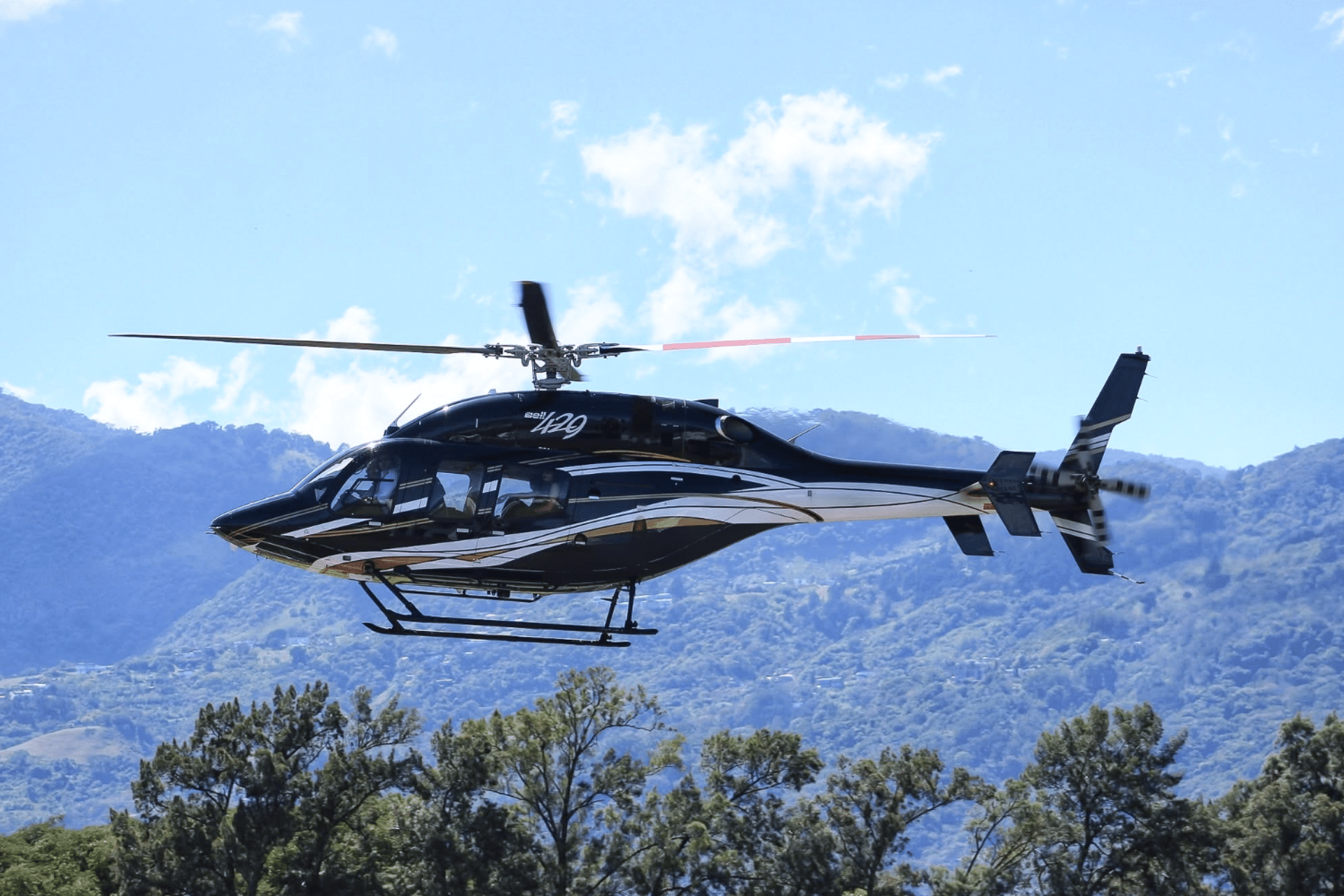
A helicopter can be particularly useful where road access is lengthy or where the objective is to reach a location quickly from San José, Liberia, or another practical departure point. A private airplane may be the better choice for longer regional sectors, larger groups, or travel to airfields with suitable runway infrastructure. The right aircraft depends on passenger count, baggage, route, weather, and operational requirements.
Privacy That Supports Work and Rest
Privacy is among the top benefits of private charters, yet it is often misunderstood as only an indulgence. For many passengers, it is a functional advantage. A private cabin gives executives room to speak openly, review sensitive materials, or prepare for meetings without the interruptions that come with a crowded terminal and commercial cabin.
For families and high-profile guests, privacy can mean a calmer, more comfortable start to a holiday. There are no public boarding lines, no need to navigate a busy gate area, and no requirement to share the cabin with unfamiliar passengers. The experience is designed for the people on the flight and the needs they bring with them.
Production teams may have an even more specific need for discretion. Aerial filming assignments can involve confidential locations, unreleased campaigns, executive talent, or demanding schedules. Charter arrangements allow the aviation operation to be coordinated around the production plan, with a clear understanding of the equipment, crew, and flight profile involved.
A Flight Built Around the Actual Mission
A charter is not a standard product with a fixed set of limitations. It is an aviation service that starts with the mission. That distinction matters when the flight involves more than transportation.
A sightseeing journey may call for a helicopter route that gives guests exceptional views of volcanoes, coastlines, forests, and waterfalls while respecting safety procedures and local operating conditions. An executive trip may require a precise departure window, ground-transfer coordination, and the most efficient airport pairing. An industrial or commercial assignment may require aerial observation, photography, site access, or support for a specialized team.
The planning conversation should cover more than origin and destination. Passenger numbers, luggage dimensions, equipment weight, desired arrival time, fuel considerations, weather patterns, and alternate plans can all affect the recommended solution. Clear information early in the process helps an operator match the aircraft and operational plan to the assignment rather than force the assignment into a generic schedule.
Safety Is the Foundation of the Experience
Premium service begins with safety discipline. A well-planned charter should never treat convenience as more important than weather limitations, aircraft performance, crew readiness, or regulatory requirements. The best operators communicate with confidence, but they also make prudent decisions when conditions require a revised departure time, route, or aircraft selection.
When evaluating a private charter provider, travelers and organizations should look beyond appearance and marketing language. Ask about operating certification, pilot experience, maintenance practices, safety procedures, insurance requirements, and how the operator manages changing weather or operational disruptions. These questions are particularly relevant in a destination with varied microclimates and terrain.
Aerotour brings operating experience dating to 1973, DGAC certification, and adherence to ICAO standards to private charter and specialized aerial operations in Costa Rica. Those credentials matter because charter travel depends on disciplined preparation before passengers ever arrive at the airport or helipad.
Local operating knowledge makes a difference
Aviation decisions are shaped by local conditions. Morning weather can differ substantially from afternoon weather in some regions. Visibility, winds, airport operating hours, and runway conditions can influence what is practical on a given day. An experienced local operator understands that flight planning is not only about plotting a route. It is about making informed choices that protect passengers, schedules, and the overall mission.
This expertise can also support more realistic itineraries. If a planned sequence is too ambitious for the available daylight, baggage load, or weather outlook, a qualified team should identify the issue early and offer alternatives. That level of candor is part of dependable service.
Better Use of Group Travel Time
Private charters can make particular sense for groups traveling together. A family traveling with children, a leadership team attending multiple meetings, or a production crew moving with cameras and support equipment may find that commercial travel creates unnecessary fragmentation. Separate check-in processes, baggage rules, connections, and delayed arrivals can affect the entire group.
With a charter, the group travels together under one operational plan. This makes communication easier and reduces the risk that a key person, piece of equipment, or checked bag arrives on a different timeline. It also allows the flight experience to remain focused, whether the priority is quiet preparation, a family celebration, or production coordination.
The economics depend on the trip. A private charter is generally a premium service and should be evaluated accordingly. However, when several travelers are sharing the aircraft, the comparison should include more than the cost of individual airline tickets. Consider the value of reduced travel time, fewer hotel nights, avoided ground transfers, improved productivity, and the ability to reach destinations that commercial schedules do not serve efficiently.
A Strong Option for Specialized Aerial Work
Private aviation also serves needs that cannot be addressed by scheduled airlines. Aerial photography, filming, reconnaissance, survey support, and mission-specific transport require a team that understands the operational objective as well as the aircraft.
For aerial filming and photography, the aircraft platform, seating configuration, door arrangements where permitted, route planning, light conditions, and communication between the pilot and production crew all matter. The same is true for specialized commercial assignments, where timing and safety procedures must work alongside technical requirements. These missions need careful coordination and, in some cases, additional permissions or operational limitations.
A qualified provider will discuss what is feasible rather than promise a result before understanding the assignment. That approach helps protect the crew, the aircraft, the location, and the final production schedule.
Choosing When a Charter Is Worth It
Private charter travel is most compelling when it solves a real logistical problem or elevates an experience that deserves more than a standard transfer. It may be the right fit when a group needs to cover several destinations in limited time, when a remote property is difficult to reach by road, when privacy is essential, or when the flight itself is central to the occasion.
The best first step is to define the outcome you need: where you must be, when you need to arrive, who and what must travel, and how much flexibility the schedule allows. With those details, an experienced charter team can recommend an aircraft and routing that respects both the ambition of the itinerary and the realities of safe flight operations.
A well-planned private charter does more than move people between locations. It gives a trip, a workday, or a specialized assignment the time, focus, and operational confidence it deserves.