
Private Aviation Versus Business Class: What Fits?

A business-class seat can make a long international flight far more comfortable. It cannot, however, change the commercial airline schedule, the airport process, or the fact that your trip begins and ends where the network allows. Private aviation versus business class is therefore not simply a question of luxury. For travelers and organizations moving through Costa Rica, it is a decision about control, access, privacy, and the value of time.
The right choice depends on the mission. Business class is often an excellent option for a solo traveler flying a well-served international route. A private aircraft becomes more compelling when several people are traveling together, schedules are tight, the destination is beyond a major airport, or the flight itself needs to support a business, production, or logistical objective.
Private Aviation Versus Business Class: The Real Difference
Business class upgrades the onboard commercial airline experience. Depending on the route and carrier, that may mean priority services, lounge access, lie-flat seating, enhanced dining, and additional baggage allowance. It is a strong product when the airline’s timetable and airport pair already match your itinerary.
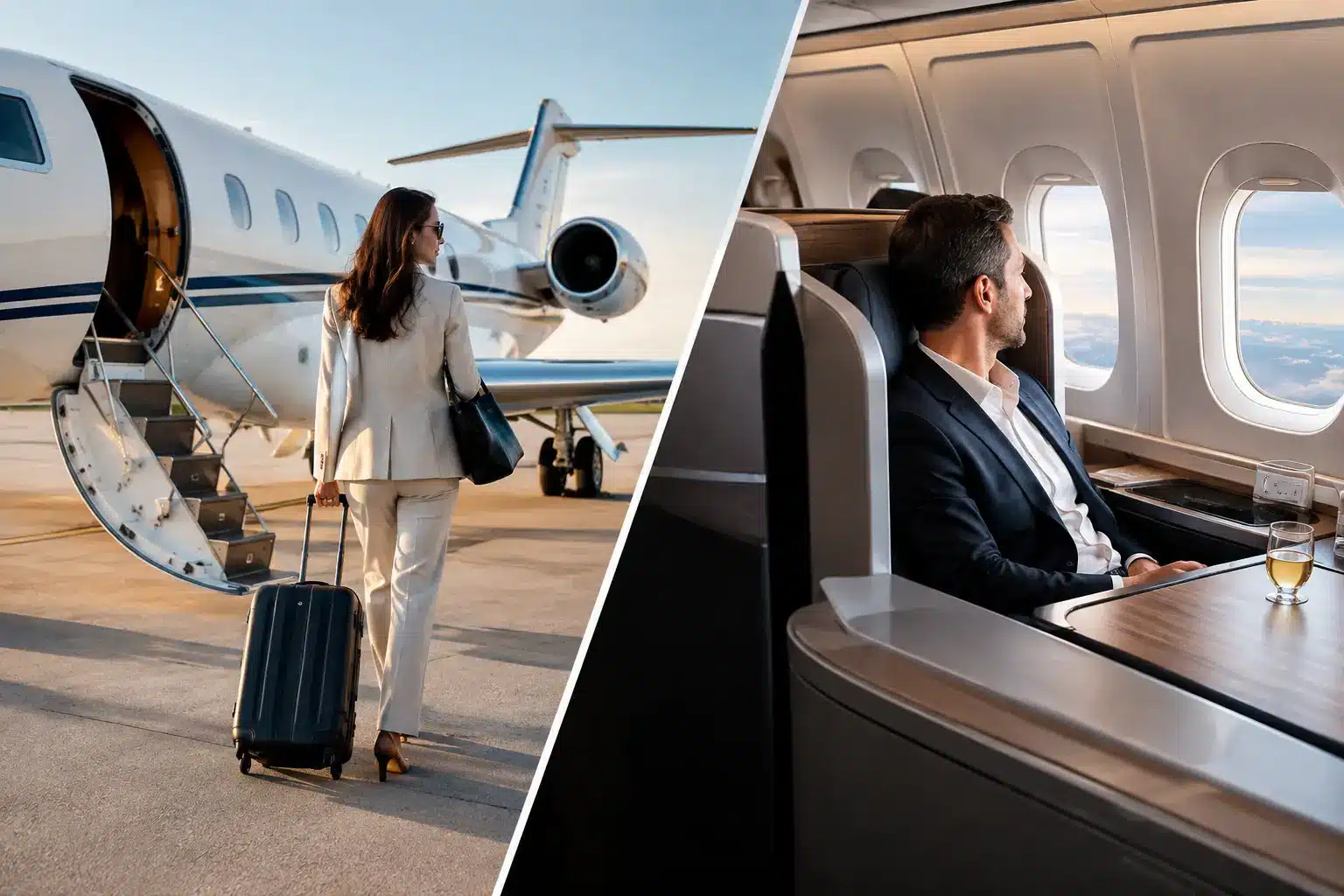
Private aviation changes the operating model. Rather than purchasing an individual seat on a fixed flight, you charter the aircraft for a defined mission. Departure time, passenger list, routing, and many service details are built around the trip. The cabin is reserved for your group, and the aircraft may use airports that are impractical or unavailable for scheduled service.
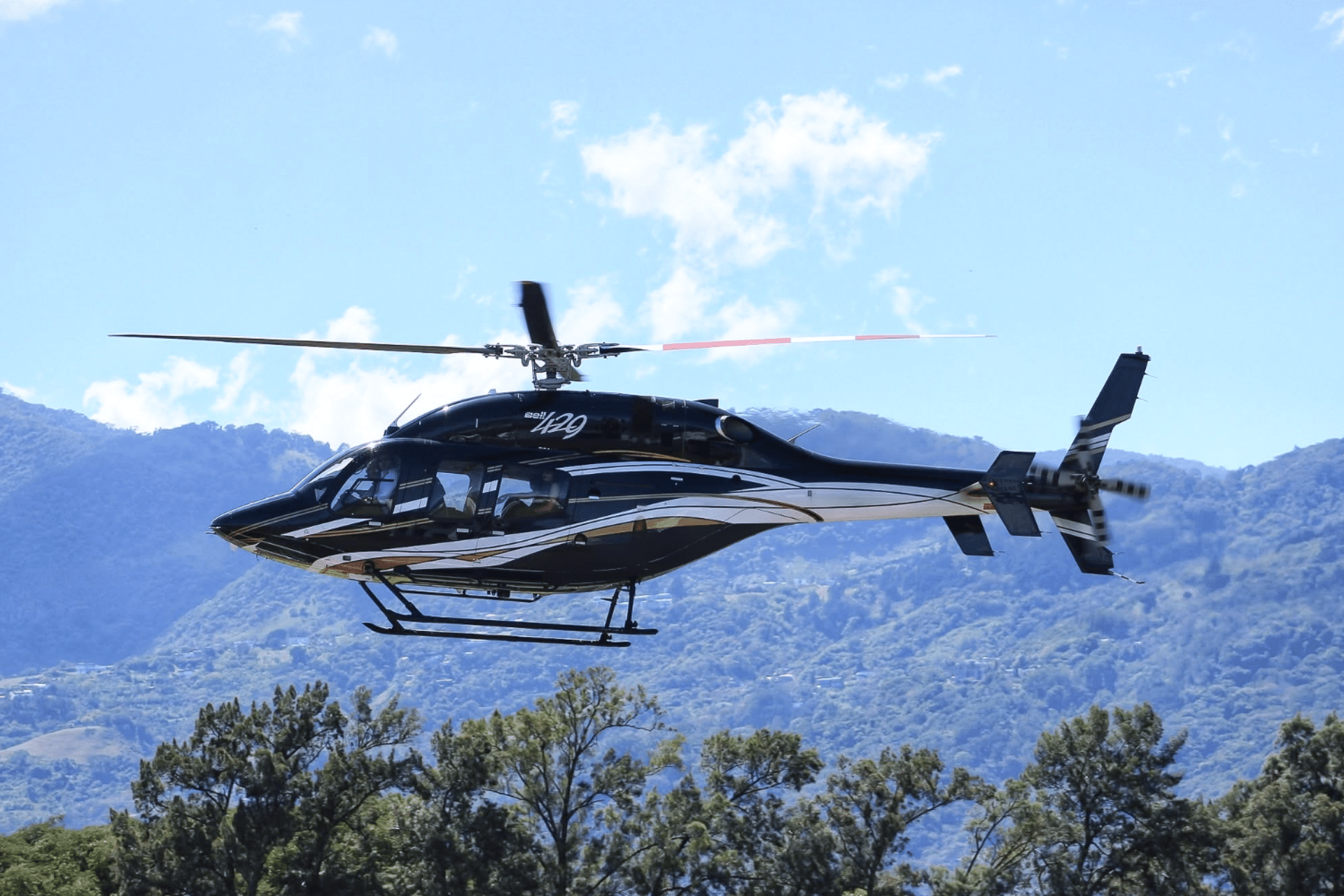
That distinction matters considerably in Costa Rica. A commercial itinerary may require a connection through San José or Liberia, followed by a long road transfer. A private airplane or helicopter charter can reduce unnecessary transitions and place travelers closer to a resort, private residence, remote worksite, or filming location. The benefit is not merely getting there faster. It is reducing the number of points where a carefully planned day can lose momentum.
Time Is More Than Flight Duration
Comparisons often focus on time in the air, but total travel time is more useful. With business class, passengers still need to work within check-in requirements, security screening, boarding windows, baggage delivery, connections, and the possibility of schedule changes. Premium airline services improve parts of that experience, but they do not remove the structure of commercial travel.
A private charter generally offers a more direct ground-to-air process. Passengers arrive closer to departure, board with their own group, and depart according to the approved flight plan. For a leadership team visiting multiple locations, a family with limited vacation time, or a production crew carrying sensitive equipment, these hours can matter more than the cabin finish.
When a Charter Saves Meaningful Time
Private aviation is especially valuable when the itinerary includes more than one destination, a same-day return, or an area with limited scheduled service. Consider an executive team landing internationally in San José and needing to reach a coastal property, attend a meeting, and return before evening. The issue is not whether business class provides a better meal on the inbound flight. The issue is whether the team can complete its work without turning one meeting into an overnight commitment.
Helicopter service can be particularly useful where road conditions, traffic, or terrain make ground transportation unpredictable. It also provides a practical aerial platform for site surveys, inspections, and certain media assignments, subject to operational planning and applicable permissions.
Business class remains sensible when timing is flexible, the route is nonstop, and the destination is close to a major airport. There is no value in chartering simply to recreate an itinerary that commercial aviation already handles efficiently.
Privacy, Productivity, and Control
A business-class cabin offers more personal space than economy, but it remains a shared environment. Calls are limited, confidential material must be handled carefully, and the passenger experience is shaped by the airline’s procedures and other travelers on the flight.
In a private cabin, the travel environment belongs to the charter group. Executives can prepare for negotiations, review documents, or hold discussions without an audience. Families can travel with greater discretion and at their own pace. Production teams can keep people and gear together rather than dividing them across seats, flights, and baggage systems.
Control also extends to the flight plan. Private operations can be tailored around a desired departure time and specific passenger needs, though aircraft availability, weather, crew duty limitations, airport hours, runway conditions, and aviation regulations still apply. A responsible operator will be clear about those boundaries. Flexibility is valuable precisely because it is managed safely, not because rules are ignored.
The Cost Question Requires a Better Calculation
Business class is usually less expensive when one or two passengers are traveling on a standard route. Commercial airlines spread the cost of the aircraft, crew, fuel, and airport operations across many seats. A premium ticket buys an elevated seat and service level within that shared system.
Private charter pricing covers the dedicated aircraft and the operational resources required to conduct the flight. For a single traveler on a simple route, it may not be the economical choice. The equation changes as the group grows, the itinerary becomes more complex, or the cost of lost time rises.
A useful comparison includes more than airfare. Factor in hotel nights caused by inconvenient connections, airport transfers, vehicle logistics, delayed meetings, employee travel time, baggage constraints, and the cost of separating key people or equipment. For a group of colleagues, a charter cost divided across passengers may be closer to the commercial premium option than expected, while delivering a substantially different operating outcome.
The same principle applies to leisure travel. A private flight is not automatically the rational choice for every vacation. It may be justified when the group values a direct arrival, has a narrow travel window, or wants to begin a Costa Rica itinerary at a location that would otherwise require several additional hours by road.
Access Matters in Costa Rica
Costa Rica rewards travelers who plan around geography. Rainforests, beaches, mountain regions, and private retreats are part of the country’s appeal, yet they are not all equally close to scheduled airline gateways. The last segment of a journey can shape the entire experience.
Private airplanes can connect travelers to regional airfields, while helicopters can offer direct point-to-point access where operationally suitable. This can be valuable for luxury travelers seeking efficient resort transfers, as well as organizations supporting remote projects or moving teams between locations.
For aerial filming and photography, the aircraft is also part of the production solution. Cabin configuration, flight stability, crew coordination, location access, timing, and safety planning all influence whether an aerial day produces usable footage. A commercial flight, even in business class, cannot serve that purpose.
Aerotour’s long operating history in Costa Rica, DGAC certification, and adherence to ICAO standards reflect the kind of experience travelers should look for when arranging a customized flight. The operator should understand not just where you want to go, but how aircraft type, weather, airfield conditions, passenger requirements, and mission objectives affect the plan.
How to Choose the Right Option
Start with the itinerary rather than the image of either experience. Ask how many people are traveling, whether the schedule can move, how close commercial airports are to the final destination, and what the trip costs if a connection or road transfer fails. Consider whether conversations must remain private, whether equipment is traveling with the group, and whether the flight has a specialized purpose beyond transportation.
Choose business class when a scheduled flight offers the right route and timing at a sensible price. It is a refined and efficient choice for many international journeys. Choose private aviation when the trip demands direct access, schedule authority, group coordination, operational discretion, or a mission-specific aircraft solution.
The best flight is not always the most exclusive one. It is the one that protects the purpose of the trip, respects the realities of the route, and gets the right people where they need to be with confidence.