
How to Choose Charter Aircraft Costa Rica


A charter flight in Costa Rica can save hours, avoid long ground transfers, and open access to destinations that commercial schedules simply do not serve well. But if you need to choose charter aircraft Costa Rica options wisely, the right decision is not just about price or appearance. It comes down to mission fit, operator standards, and how well the aircraft matches the way you travel.
For some travelers, that means reaching a remote resort without losing half a day on the road. For executives, it may mean moving between San Jose, Liberia, and regional destinations with privacy and control over timing. For production teams and specialized operations, the aircraft has to do more than transport people – it has to support the work.
What matters most when you choose charter aircraft in Costa Rica
The first question is simple: what are you actually asking the aircraft to do? A quick transfer between major points, a scenic coastal route, a mountain-access itinerary, and an aerial filming mission are not the same assignment. The best charter choice starts with the mission, not the aircraft brochure.
In Costa Rica, geography has a direct effect on aircraft selection. Mountain ranges, coastal weather patterns, short travel windows, and the mix of urban centers and remote destinations all influence what works best. An aircraft that looks suitable on paper may not be the most efficient or practical option once routing, landing area, passenger count, and baggage are considered together.
That is why experienced operators start with a conversation, not a quote alone. They should ask where you are going, how many people are flying, what you are bringing, how flexible your schedule is, and whether you need direct access to a helipad, airport, or hard-to-reach site.
Airplane or helicopter: which is the better fit?
This is usually the biggest decision. Private airplanes and helicopters both offer speed and privacy, but they serve different travel patterns.
When a private airplane makes more sense
A private airplane is often the best fit for travelers moving between established airports, especially when the priority is efficient regional transport. If your itinerary includes business travel, resort transfers, or multi-stop movement between cities and tourism hubs, an airplane can be a strong choice. It is also well suited when passenger comfort, baggage capacity, and cost efficiency across longer segments are part of the equation.
For families, executive groups, and travelers covering more distance, airplanes often provide a practical balance of performance and value. The trade-off is access. You need suitable airport infrastructure at both ends, which can still be far more convenient than commercial travel, but not as point-specific as a helicopter.
When a helicopter is the smarter option
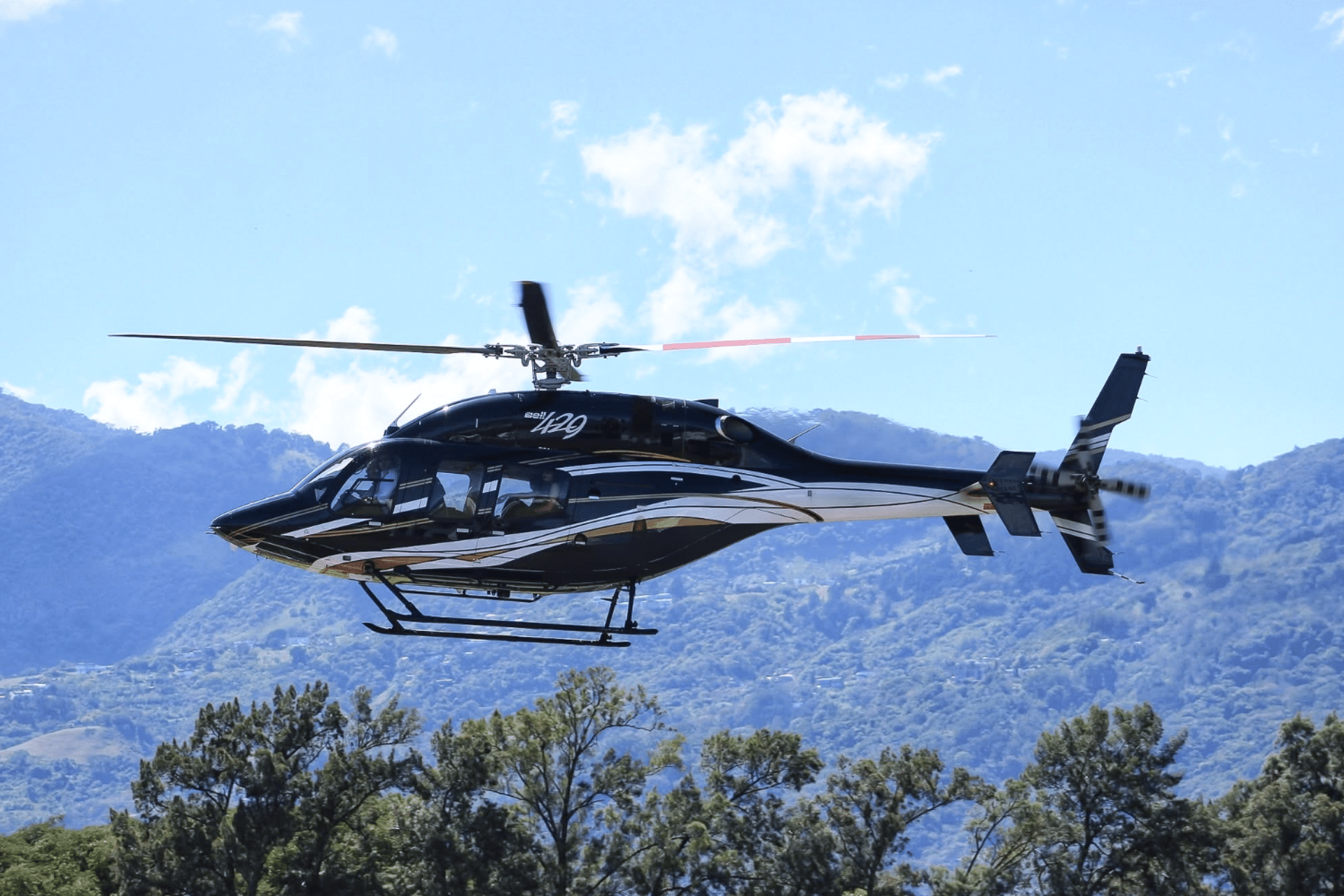
A helicopter becomes especially valuable when access is the priority. If you need to reach a property, lodge, job site, or filming area that is not best served by fixed-wing airport routing, a helicopter can significantly reduce travel complexity. It also works exceptionally well for scenic flights, inspection work, photography, and time-sensitive transfers.
The advantage is flexibility and directness. The trade-off is that helicopters typically carry fewer passengers and may have different baggage limitations depending on the mission. For some trips, that is a minor compromise. For others, it is the deciding factor.
Safety should be more than a marketing claim
When clients choose charter aircraft Costa Rica providers, safety language can sound similar from one company to another. What matters is whether the operator can back up that language with clear credentials and operating discipline.
Start with certification and regulatory standing. In Costa Rica, you should expect a legitimate charter operator to hold DGAC certification and operate under recognized aviation requirements. Alignment with ICAO standards also matters because it reflects a professional framework for flight operations, maintenance, and safety management.
Experience is another important filter. Aviation is one of those industries where years in operation still mean something, especially in a country where terrain, weather variation, and mission diversity require judgment as much as equipment. An operator with deep local flight experience is better positioned to assess route conditions, recommend the right aircraft, and manage the details that keep a charter moving smoothly.
You can also ask practical questions without being technical. Who operates and maintains the aircraft? How is weather assessed before departure? What is the plan if routing changes? A serious operator will welcome those questions and answer them clearly.
The itinerary should drive the aircraft choice
Many charter decisions become easier once the route is defined properly. Costa Rica is compact on a map, but overland travel can be slower than expected. Road conditions, mountain crossings, and resort access can turn a short distance into a long transfer.
That is why a smart charter plan looks at the entire door-to-door experience. If a helicopter can take you closer to your final destination, it may save more total time than an airplane flight followed by a vehicle transfer. If your route is between airport-served destinations and includes more passengers or luggage, an airplane may be the better solution.
There is also the question of schedule control. Private charter is valuable because it reduces dependence on fixed timetables, but that flexibility still works best when the operator understands your real priorities. Some clients want the fastest possible movement. Others want a scenic route built into the day. A production crew may need stable flight windows and coordination around equipment and shot plans. The right aircraft is the one that fits the mission profile with the fewest compromises.
Service quality matters as much as the aircraft
Premium charter is not just about getting airborne. It is about how the operation is handled before, during, and after the flight.
A dependable provider should be responsive, precise, and comfortable managing variables. That includes confirming passenger details, baggage expectations, special handling needs, ground coordination, and timing across multiple locations. If the conversation feels vague on the ground, it rarely improves in the air.
This is especially important for corporate travel and specialized missions. Executives often need privacy, efficiency, and predictable execution. Production teams may need coordination around doors-off operations, camera mounts, routing permissions, or location timing. Tourism clients may care most about comfort, scenic value, and a smooth arrival experience. These are different service models, and the operator should understand the difference.
A company such as Aerotour stands out when it combines charter capability with specialized aerial expertise, because that depth supports both premium travel and more technical assignments under one operating standard.
Questions worth asking before you book
A few well-placed questions can tell you a great deal about whether the provider is the right fit. Ask what aircraft is recommended and why. Ask whether the routing has alternatives if weather shifts. Ask what baggage limits apply to your specific mission, not just in general terms.
You should also ask about departure bases and positioning. An operator with strong coverage in both San Jose and Liberia may offer meaningful logistical advantages depending on where your trip begins. That can affect timing, aircraft availability, and overall efficiency.
Finally, ask how customized the service really is. Some charter providers offer little more than private transport. Others can build the flight around a broader objective, whether that is executive mobility, resort access, sightseeing, aerial filming, or commercial support.
Price matters, but value matters more
It is reasonable to compare charter pricing, but the lowest quote is not always the best decision. A lower price can reflect a different aircraft class, less favorable positioning, limited flexibility, or a service model that does not include the level of support your trip requires.
The better comparison is total value. Are you saving significant time? Is the aircraft appropriate for the route? Is the operator experienced and properly certified? Will the service reduce friction across the entire journey? Those are the factors that make private aviation worthwhile.
For many clients, the best charter decision is the one that removes uncertainty. When the aircraft is well matched to the mission and the operator has the credentials and local knowledge to execute it properly, the trip feels efficient from the start.
Choosing well is not about picking the most impressive aircraft in the fleet. It is about selecting the right platform, with the right operator, for the way you need to move through Costa Rica. If a provider can guide that decision with clarity, safety, and real operational experience, you are already on the right path.