
Top Helicopter Safety Features That Matter Most

A private helicopter can turn a multi-hour ground transfer into a direct flight above Costa Rica’s mountains, coastlines, and rainforest. That convenience only has value when it is supported by disciplined aviation practices. The top helicopter safety features are not simply visible equipment in the cabin. They are the combined result of aircraft design, crew training, maintenance standards, weather judgment, and an operator’s willingness to decline a flight when conditions do not support a safe outcome.
For charter guests, corporate travel coordinators, and production teams, understanding these safeguards helps separate a premium aviation operation from one that only appears to offer the same service. Safety is a system, and every part of that system must perform.
Top helicopter safety features start before takeoff
The most meaningful protections are often in place long before passengers arrive at the helipad. A properly managed flight begins with operational planning: confirming passenger weight and baggage, calculating aircraft performance, reviewing the intended route, checking landing-site conditions, and evaluating current and forecast weather.
Helicopters are exceptionally capable aircraft, but their performance is affected by altitude, temperature, wind, terrain, and payload. Costa Rica’s varied geography makes those considerations especially relevant. A flight from San José to a coastal resort, for example, may cross changing elevations and weather patterns within a relatively short distance. Careful planning ensures the helicopter has appropriate fuel reserves, performance margins, and alternate options.
A professional operator also applies formal risk assessment to each mission. A scenic flight, executive transfer, aerial filming assignment, and remote commercial support mission each present different operational demands. The safest plan is not always the fastest or most direct route. It is the route that allows the crew to maintain sound margins throughout the operation.
Aircraft maintenance is a daily safety discipline
Helicopter maintenance is not limited to fixing an issue after it appears. It follows prescribed inspection intervals, component-life limits, manufacturer requirements, and regulatory standards. Critical rotating components, engines, transmissions, avionics, and flight controls are monitored and maintained according to detailed schedules.
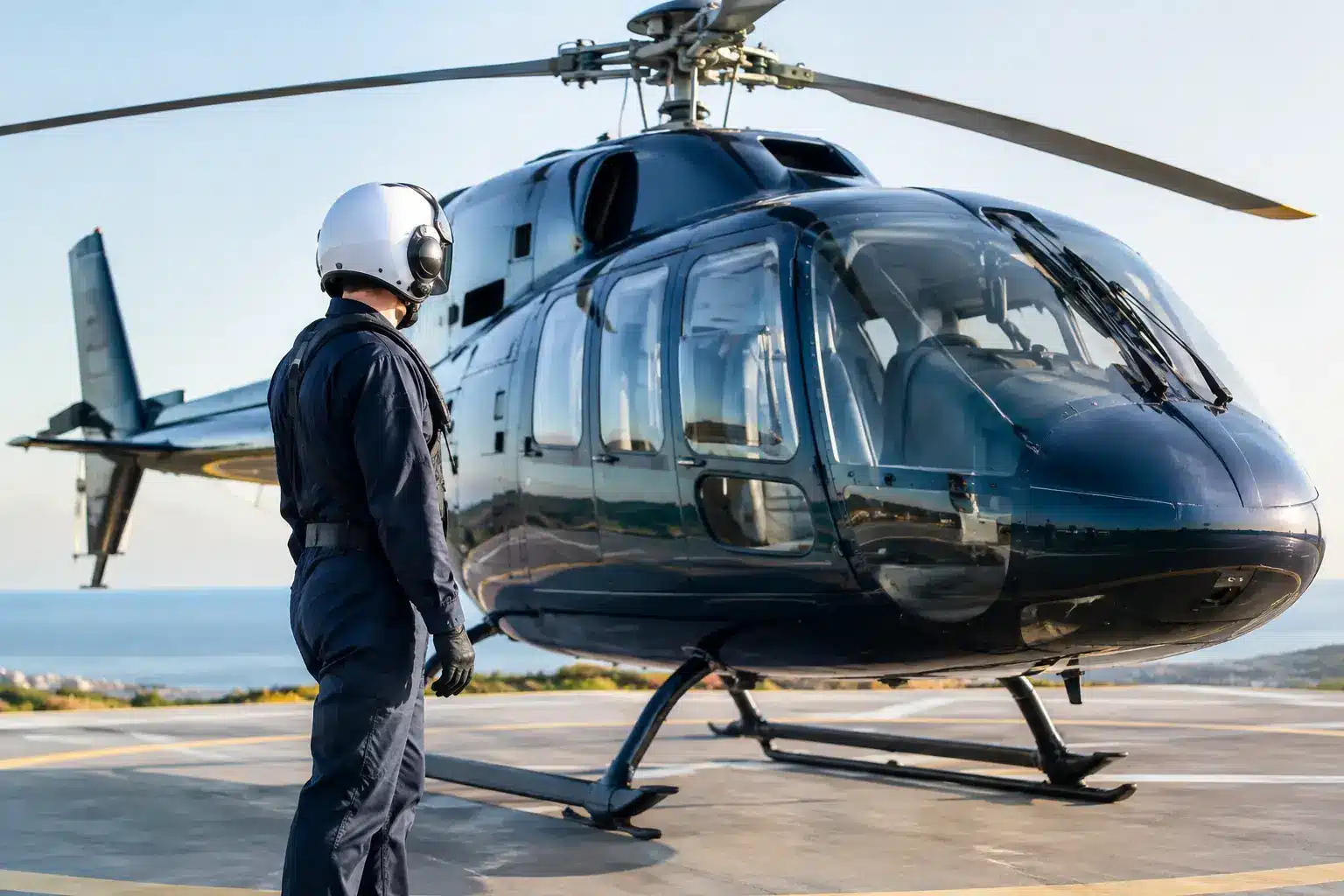
Before every flight, pilots conduct a thorough preflight inspection. They examine the aircraft’s exterior, rotor system, fluid levels, tires or landing gear, cabin condition, and essential systems. Any discrepancy must be assessed and resolved before departure. This is one reason charter schedules should never be treated as more important than aircraft readiness.
Maintenance records also matter. They provide a documented history of inspections, repairs, component replacements, and compliance actions. For passengers and charter clients, the key question is not whether an aircraft looks pristine, although that reflects care. It is whether it is maintained under a disciplined, traceable program by qualified aviation personnel.
Redundancy where it counts
Modern helicopters incorporate multiple layers of protection, including backup systems and warning indications designed to give pilots clear information when attention is required. Depending on the aircraft type, these may include dual hydraulic systems, independent electrical sources, engine monitoring, fire detection, and caution and warning systems.
Redundancy does not mean a helicopter can disregard a system malfunction. It means pilots have additional capability to manage an abnormal event, follow approved procedures, and land safely when a primary system is affected. The level of redundancy varies by helicopter model and mission profile, which is why matching the aircraft to the assignment is an operational decision, not merely a comfort preference.
Skilled crews remain the strongest protection
Technology supports safe operations, but it does not replace professional judgment. Helicopter pilots require specialized training that goes beyond basic flight skills. They must understand low-level operations, terrain awareness, weather interpretation, landing-zone evaluation, emergency procedures, aircraft performance, and crew resource management.
Experience in local conditions is particularly valuable. Mountain valleys can produce changing winds, coastal areas can develop weather quickly, and visibility may differ significantly between departure and destination. A pilot who understands regional routes, terrain, and appropriate diversion options brings practical knowledge that cannot be replicated by a navigation display alone.
Recurrent training keeps those skills current. Professional flight crews regularly practice emergency procedures, including simulated engine failures, hydraulic issues, electrical abnormalities, and decision-making under pressure. The goal is not to suggest that these events are routine. It is to ensure that, if an unexpected condition occurs, the response is practiced, deliberate, and aligned with the aircraft’s approved procedures.
Crew judgment also includes recognizing when not to fly. A postponed departure can be disappointing, especially for a tight executive schedule or a planned production day. Yet conservative weather and performance decisions are among the clearest signs of an operator that places safety ahead of convenience.
Weather awareness and terrain protection
Weather is one of the most important variables in helicopter operations. Rain alone does not automatically prevent flight, but reduced visibility, low cloud layers, gusting winds, thunderstorms, and rapidly changing conditions can alter the risk profile. Safe operators use reliable weather information before and during a mission, while pilots continuously compare forecast conditions with what they observe in flight.
Advanced avionics can enhance situational awareness through GPS navigation, moving maps, terrain displays, and weather information where available. Terrain awareness systems can provide alerts when the aircraft approaches rising ground or obstacles. These tools are valuable, particularly in mountainous or unfamiliar environments, but they are aids to sound pilot decisions rather than substitutes for them.
Route selection is equally important. A direct line on a map may cross terrain, enter cloud-prone areas, or leave fewer options for a precautionary landing. Experienced crews select routes and altitudes that support visibility, performance, communications, and practical alternatives.
Landing-zone assessment protects every phase of the trip
A safe flight does not end when the helicopter reaches its destination. Landing zones must be evaluated for surface condition, slope, obstacles, overhead wires, loose debris, approach paths, and nearby people or vehicles. Even established helipads require a current assessment because conditions can change.
For remote locations, aerial production sites, resorts, and private properties, this assessment may be one of the most significant parts of mission planning. Rotor wash can move unsecured items, and confined areas may require precise approach techniques. Clear coordination between the flight crew, ground personnel, and passengers helps create a controlled arrival and departure environment.
Cabin safety and passenger preparation matter
Passengers contribute to helicopter safety by following the crew’s briefing. Before departure, they should understand how to approach and exit the aircraft, where to store personal items, how to use seat belts and headsets, and what to do in an emergency. They should never approach the helicopter until directed by the crew, particularly near a turning rotor system.
Headsets do more than improve comfort. They allow passengers to hear essential instructions despite aircraft noise. Secure seating, properly stowed baggage, and clear weight information help the pilot maintain the aircraft within approved operating limits.
For specialized missions, additional procedures may apply. Aerial filming can involve camera mounts, open-door operations, or communication between pilots and production personnel. These missions require carefully defined roles, approved equipment, and operational discipline. Creative flexibility is valuable, but it must remain within the aircraft’s certified capabilities and the crew’s safety procedures.
Certifications and operating standards provide accountability
An operator’s safety culture should be supported by oversight, not just promises. Aviation certification, regulatory compliance, documented procedures, maintenance control, and crew qualification standards establish accountability across the organization.
Aerotour’s operating history dates to 1973, with DGAC certification and operations aligned with ICAO standards. Credentials such as these matter because they reflect a structured approach to how aircraft, personnel, and flights are managed. They should be considered alongside the operator’s experience with the specific type of mission a client needs.
For a private traveler, the practical benefit is confidence that a scenic experience is managed with the same attention to planning and aircraft readiness as a time-sensitive executive transfer. For organizations and production teams, it means working with a partner that understands how to organize complex missions without treating safety requirements as an obstacle.
The best helicopter flight feels calm because much of the work is invisible: the maintenance completed before dawn, the weather review before dispatch, the performance calculation before loading, and the experienced pilot who chooses the right route. When selecting a charter provider, look beyond the aircraft and ask how those decisions are made. That is where trust is built.