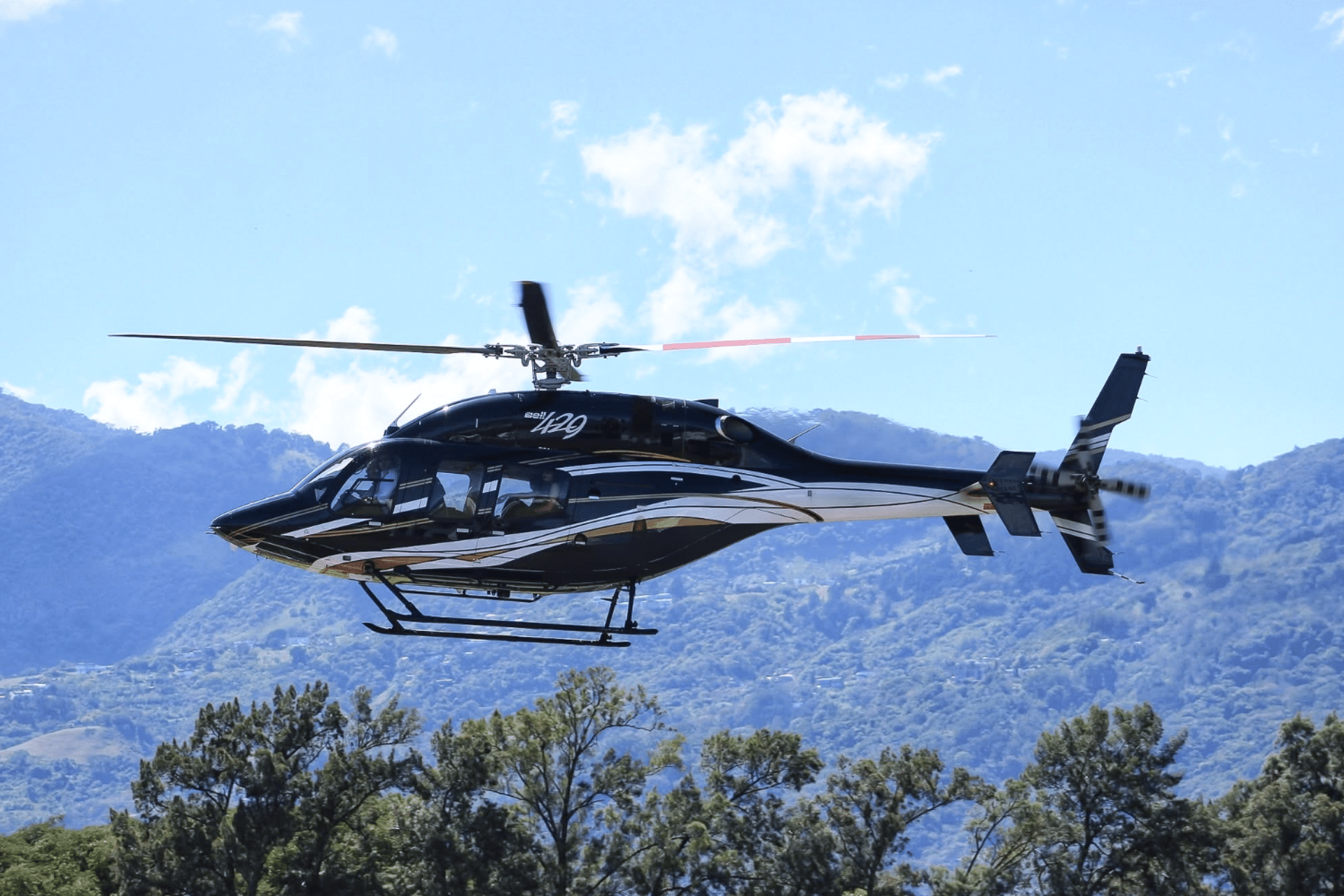

How Private Helicopter Charters Work in Costa Rica

A helicopter transfer from San José to a remote lodge, a coastal arrival for an executive meeting, or a filming day above rainforest terrain all begin the same way: with a mission designed around the passenger, not a published airline schedule. Understanding how private helicopter charters work helps travelers and teams plan with the right expectations about timing, safety, access, and cost.
A private helicopter charter is an aircraft reserved for one party and operated on a route tailored to that party’s requirements. In Costa Rica, that can mean connecting key regions quickly, reaching properties with approved helipad access, viewing the country from above, or supporting a production or industrial assignment where an aerial platform is essential.
How Private Helicopter Charters Work From Request to Takeoff
The process starts with a detailed request, rather than a simple seat reservation. The operator needs the travel date, preferred departure time, passenger count, pickup and destination locations, baggage details, and the purpose of the flight. A leisure transfer may be straightforward. Aerial photography, a site survey, or a multi-stop executive itinerary usually requires more operational planning.
From there, the charter team evaluates the mission. This includes aircraft availability, estimated flight time, passenger and baggage weight, weather outlook, fuel planning, and the suitability of each landing location. Helicopters are highly flexible, but flexibility does not mean every open space is an approved landing site. The operator must confirm that a helipad or alternative landing area can be used safely and legally for the planned operation.
Once the practical details are confirmed, the client receives a proposed itinerary and charter price. Unlike commercial air travel, pricing is generally based on the aircraft and mission, not on an individual ticket. The quotation may reflect flight time, aircraft positioning, crew requirements, landing arrangements, airport or helipad fees, and the complexity of the assignment.
After confirmation, the operator coordinates final logistics with the client, ground handlers, hotels, resorts, venues, or production representatives as needed. The goal is not simply to have an aircraft waiting. It is to make sure the aircraft, crew, landing locations, ground transportation, passenger requirements, and operating conditions align before departure.
Choosing the Right Helicopter for the Mission
Aircraft selection is a safety and service decision, not just a question of appearance or cabin comfort. A light helicopter can be an efficient option for a small party with limited luggage traveling on a short regional route. A larger aircraft may be more appropriate for additional passengers, heavier baggage, longer sectors, or missions that require specialized equipment.
Weight matters in helicopter operations. Passenger count alone does not determine whether a particular aircraft is suitable. The combined weight of people, luggage, equipment, fuel, and anticipated operating conditions must remain within approved limits. Warm temperatures, high-elevation locations, and terrain can also affect aircraft performance, which is why a professional operator asks specific questions before accepting a flight.
For scenic travel, the best aircraft may depend on the size of the group and the viewing experience desired. For aerial filming, the requirement may involve camera mounts, door configurations, communication systems, safety equipment, or a crew experienced in coordinating with a director and camera team. Corporate travel may prioritize efficient point-to-point routing, discretion, and precise ground coordination.
Safety Planning Happens Before the Passenger Arrives
Private aviation is premium because it is personalized, but the foundation of a quality charter is disciplined operational control. Before a flight, the crew reviews aircraft status, weather, route conditions, fuel requirements, passenger information, and landing-site considerations. The aircraft receives the required inspections and the pilot makes the final operational assessment.
Weather is one of the most important variables in Costa Rica. Conditions can change quickly between the Central Valley, mountain corridors, Pacific coast, and Caribbean side. Rain, cloud cover, wind, visibility, and localized conditions may affect the route, departure time, or feasibility of a landing. A responsible operator will never treat a requested schedule as more important than safe operating conditions.
This can occasionally mean adjusting plans. A departure may move earlier to take advantage of better morning conditions, a route may change, or a flight may be delayed until conditions improve. For guests accustomed to commercial airline schedules, this is a useful distinction: private charter provides control where conditions allow, while aviation safety defines the limits of that control.
At Aerotour, operations are supported by experience dating to 1973, DGAC certification, and adherence to ICAO standards. For clients, those credentials translate into a more confident planning process: an operator with established procedures, trained personnel, and the local knowledge to manage Costa Rica’s varied terrain and destinations.
What Happens on the Day of a Private Helicopter Charter
Passengers typically arrive at the designated departure point with enough time for a short briefing and baggage coordination. The exact arrival time depends on the location and mission, but private charter avoids the long terminal process associated with scheduled airline travel. Identification and passenger details may still be required, particularly for airport departures or international-related arrangements.
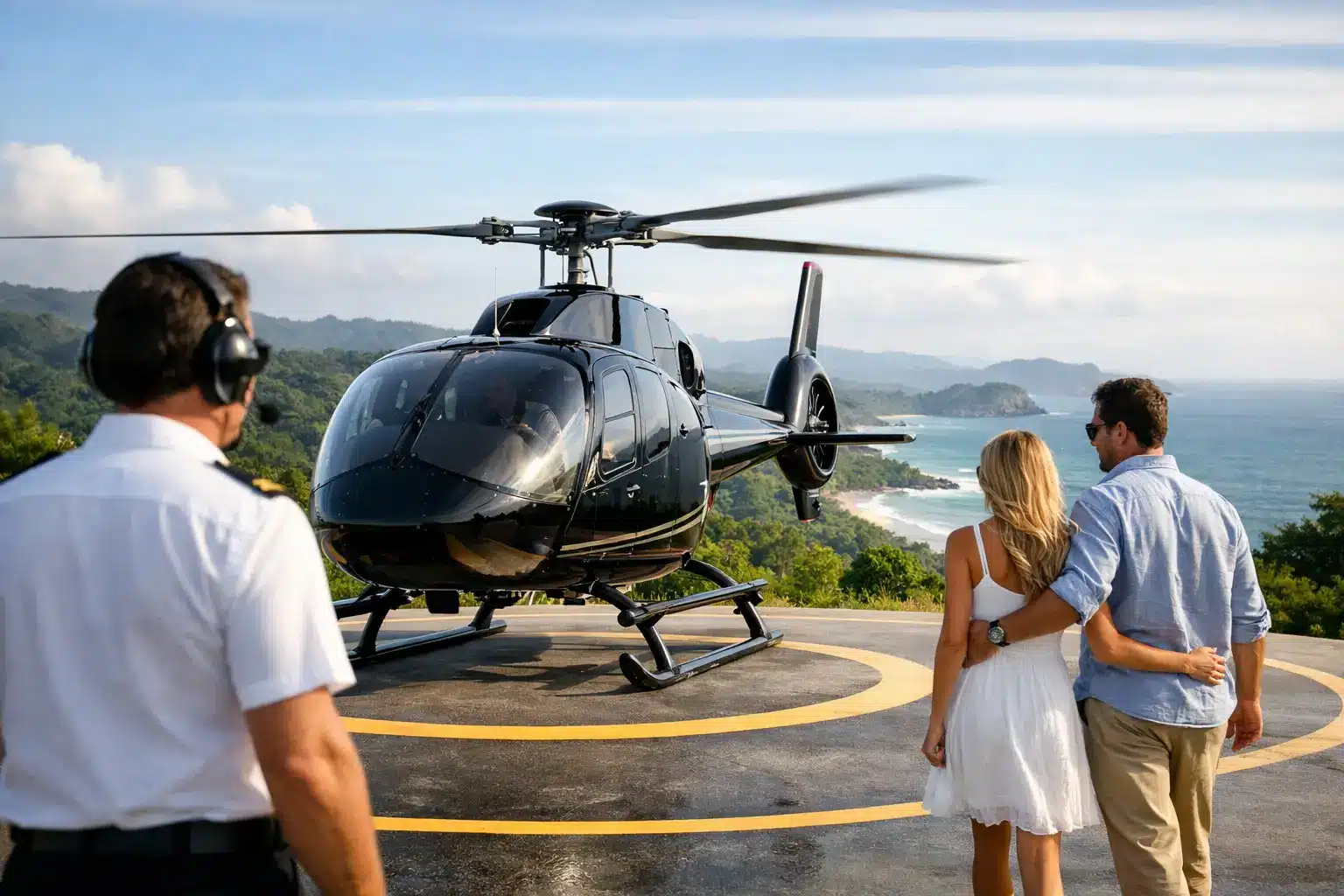
Before boarding, the crew explains how to approach and exit the helicopter safely. Passengers should always follow crew direction around the aircraft, especially near the rotor system. Loose items such as hats, scarves, lightweight bags, and unsecured papers need careful handling. The crew will identify the correct approach path, assist with doors and baggage, and provide headsets when appropriate.
Inside the cabin, passengers are assigned seats based on weight and balance requirements as well as operational needs. Headsets allow communication with fellow passengers and, when conditions permit, the pilot. On a scenic flight, the crew may point out landmarks. On an executive transfer, the focus may be a quiet, efficient arrival. On a technical mission, the flight profile follows the operational plan established with the client.
The experience is often faster than a road journey, but the real benefit is more precise access. Costa Rica’s roads can be affected by traffic, weather, geography, and seasonal conditions. A helicopter can connect areas that are time-consuming to reach by ground, provided suitable landing infrastructure and safe weather are available.
Routes, Landing Sites, and Real-World Flexibility
Many travelers imagine that a helicopter can land anywhere. In reality, a suitable landing site needs more than open ground. The operator must consider obstacles, surface conditions, approach and departure paths, nearby people and vehicles, local permissions, and the property owner’s authorization. Established helipads at airports, resorts, lodges, private estates, and business locations can simplify this process.
For transfers between San José, Liberia, coastal destinations, and remote regions, advance planning is especially valuable. A two-base operating model can reduce unnecessary positioning and support coverage across major business and tourism corridors. Still, the best route is not always the shortest line on a map. Airspace requirements, terrain, weather, and destination procedures all inform the final plan.
Clients can request multi-stop itineraries, but each stop must be feasible within aircraft performance, crew duty, fuel, and landing-site requirements. A day that combines resort transfers, a property visit, and a return to an airport may be entirely practical. It simply needs to be designed as one coordinated mission instead of a series of assumptions.
Baggage, Privacy, and Special Requirements
Baggage capacity is more limited than in most private airplanes, particularly when the helicopter is carrying a full passenger load. Soft-sided luggage is often easier to accommodate than large hard-shell cases. The charter team should receive an accurate description of bags, golf equipment, camera gear, medical equipment, or any unusually large items before the aircraft is assigned.
Privacy is another reason clients choose charter. The cabin is reserved for the traveling party, the departure can be organized around their schedule, and ground movement can be coordinated discreetly. That said, private does not mean exempt from aviation rules. Passenger information, safety briefings, operational limits, and landing permissions remain part of every professionally managed flight.
Special missions deserve an earlier conversation. Production flights may require reconnaissance, specific camera angles, coordination with ground crews, and clear restrictions around door-off or equipment-based operations. Commercial and industrial aerial support may call for site assessments, specialized lifting considerations, or mission-specific approvals. These flights should be planned with the same care as any other professional aviation operation, often with additional layers of coordination.
When a Helicopter Charter Is the Right Choice
A private helicopter charter is most valuable when time, access, privacy, or mission capability matter more than the lowest possible transportation cost. It can turn a long ground transfer into a direct regional connection, create a memorable arrival at an approved destination, or give a professional team the aerial perspective it cannot obtain from the ground.
The best first step is to share the full purpose of the trip, not just the desired route. A clear brief allows the operator to recommend the appropriate aircraft, identify practical constraints early, and build an itinerary that respects both the client’s schedule and the realities of safe flight. The most rewarding charter experiences are the ones planned with enough detail to make the journey feel effortless once the rotors begin to turn.