
Business Aviation for Resort Transfers in Costa Rica


A three-hour drive after an international arrival can change the character of a luxury vacation. For guests headed to a remote beach, rainforest retreat, or private villa, business aviation for resort transfers replaces uncertain road time with a direct, private connection designed around the itinerary.
Costa Rica rewards travelers who go beyond its major gateways, but its most distinctive resorts are often located far from San José or Liberia. A private airplane or helicopter transfer can turn that distance into part of the experience while giving travelers more control over timing, privacy, and comfort.
Why Resort Transfers Require More Than Transportation
A resort transfer is not simply a flight from one point to another. It is the first operational detail of a guest’s stay and, for many travelers, the final opportunity to protect valuable vacation time. Commercial connections and ground transfers can work well for certain routes, especially when schedules are flexible and a destination is close to the airport. They are less appealing when guests are arriving after a long international journey, traveling with family, carrying specialized luggage, or working around a fixed event schedule.
Private aviation gives the itinerary a different structure. Rather than fitting into a published schedule, the transfer is planned around the guest’s arrival, destination, group size, and available operating conditions. This can be especially valuable for multi-generational families, executive groups, honeymooners, and guests combining several destinations in one visit.
The value is not only speed. It is also the ability to avoid unnecessary transitions. Fewer vehicle changes, less waiting between connections, and a direct route to an airfield or approved landing location near the resort can make arrival feel considered rather than complicated.
Business Aviation for Resort Transfers: Choosing the Right Aircraft
The right aircraft depends on the route, the number of passengers, baggage requirements, and the destination’s access options. In Costa Rica, both fixed-wing aircraft and helicopters play an important role, but they solve different travel needs.
When a Private Airplane Is the Better Fit
Private airplanes are often the practical choice for longer regional transfers between airports and airstrips. They can accommodate families, small groups, and luggage more comfortably than many helicopter configurations, depending on the aircraft assigned. They are particularly effective for moving guests from San José or Liberia to destinations served by established regional airfields.
For travelers going to coastal areas, the northern plains, or remote lodges with nearby runways, a private airplane transfer can significantly reduce travel time compared with a full road journey. It also creates a more predictable experience when the guest has a defined arrival window and the destination is beyond the range where a helicopter is the most efficient option.
When a Helicopter Adds More Value
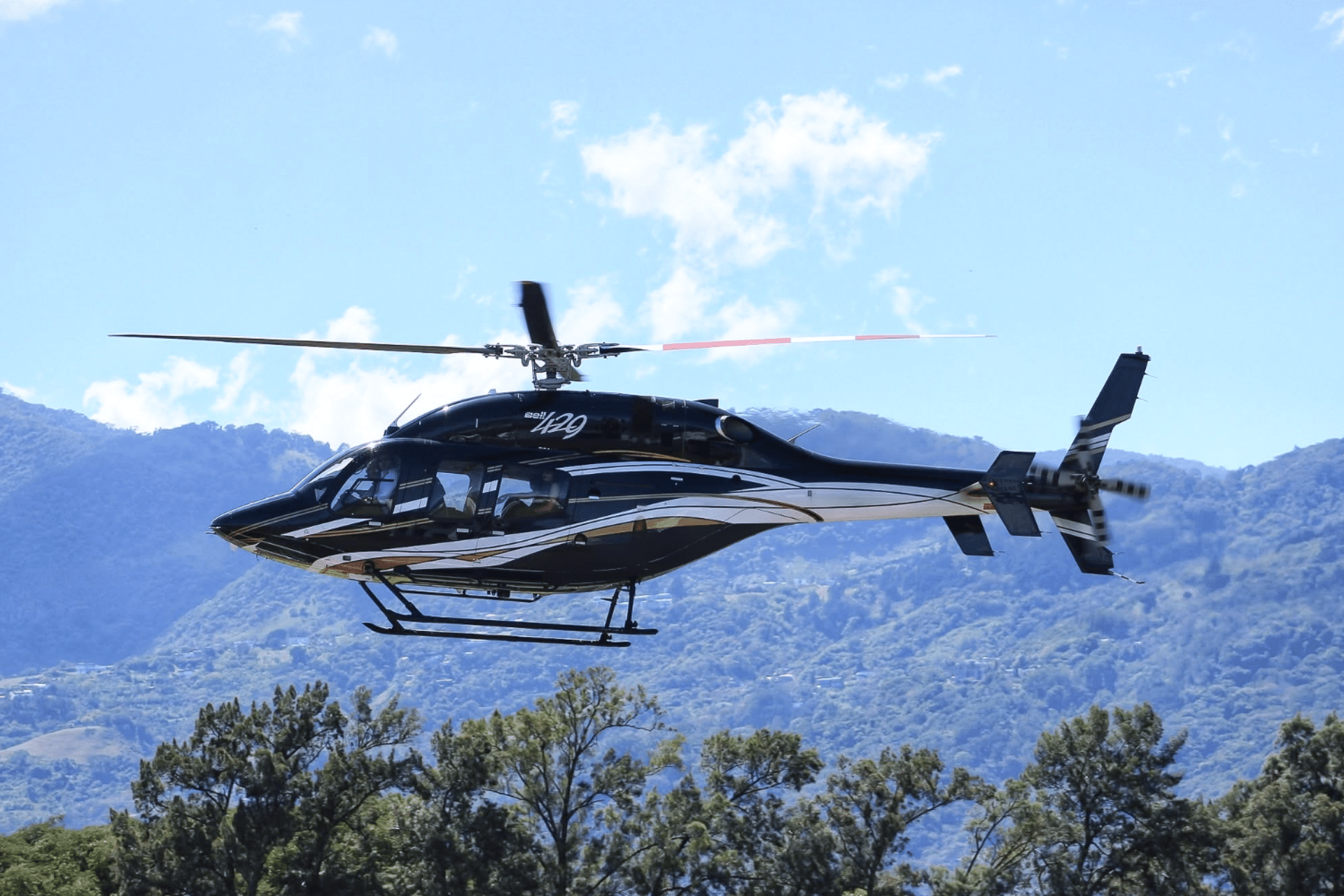
A private helicopter is often the preferred solution when the priority is point-to-point access, visual experience, or avoiding difficult ground routes. Subject to operational approvals and landing-site conditions, helicopters can reach areas that may be less convenient by road or fixed-wing aircraft.
For resort guests, the appeal is clear: the coastline, volcanic terrain, rivers, and forest canopy become part of the transfer. Yet the decision should remain practical. Helicopters have specific passenger-weight, baggage, weather, and landing-area considerations. A professional operator will evaluate these details before confirming the most suitable aircraft rather than promising a one-size-fits-all solution.
What Determines the Transfer Plan
Premium aviation is customized, but customization begins with operational facts. A credible charter provider will ask for the international flight schedule, final resort location, passenger count, baggage profile, and any special items such as golf clubs, camera equipment, surfboards, medical equipment, or children’s gear.
Arrival timing deserves particular attention. International flight delays, immigration processing, and baggage collection can affect the planned departure window. Building reasonable flexibility into the schedule helps protect the guest experience without overlooking crew duty limits, airport operating hours, and local weather patterns.
Weather is another essential part of planning in Costa Rica. Conditions can vary sharply between the Central Valley, coastlines, and mountain regions. Rain, cloud cover, wind, and visibility may influence routing or departure timing, particularly for helicopter operations. The right response is not to treat this as an inconvenience after the fact, but to plan with local knowledge and communicate clearly when conditions require an adjustment.
Baggage should be discussed early. A transfer that is ideal for four passengers with soft luggage may require a different aircraft or operating plan for the same number of passengers traveling with hard cases and sporting equipment. Clear information upfront allows the operator to match capacity responsibly and avoid surprises on departure day.
Safety and Local Experience Shape the Experience
Luxury travel should never separate comfort from aviation discipline. The most reassuring resort transfer is one managed by an operator that understands local terrain, weather, airfields, and regulatory requirements as thoroughly as it understands guest service.
Travelers should look for an operator with appropriate national certification, established safety procedures, qualified crews, and meaningful experience in the country where the flight takes place. International operating standards matter, but local familiarity matters just as much. A crew that routinely works across Costa Rica’s tourism corridors understands the practical distinctions between an airport transfer that looks simple on a map and one that requires careful coordination on the ground.
Aerotour brings operating experience dating to 1973, DGAC certification, and adherence to ICAO standards to private aviation services in Costa Rica. With bases in San José and Liberia, the company is positioned to coordinate transfers across key arrival gateways and resort regions while maintaining the operational focus expected of a long-established aviation provider.
How Private Transfers Improve the Resort Stay
The strongest reason to book private aviation is not that every route must be flown. It is that the right transfer can preserve the purpose of the trip. A family may gain an afternoon at the beach instead of spending it in transit. Executives may arrive ready for a meeting rather than after a long road transfer. Production teams can move personnel and equipment toward a location with greater schedule control.
Privacy also has real value. High-profile guests, corporate leaders, and travelers who simply prefer discretion can travel with their own party rather than through a public terminal and scheduled service. The level of privacy varies by airport and operating plan, but private charter generally allows for a more controlled experience from arrival through departure.
For resort groups, aviation can also simplify a wider itinerary. Guests may arrive through one gateway, spend several nights at a coastal property, continue to a mountain lodge, and depart from another airport. A custom flight plan can connect those destinations more effectively than returning to the same hub each time. This is often where private charter becomes less about a single transfer and more about making a multi-stop Costa Rica itinerary workable.
Setting Expectations for a Premium Transfer
A premium transfer should feel effortless to the guest, but it should never be casual behind the scenes. The best charter experiences come from accurate details, realistic timing, and a clear understanding of what the aircraft and destination can accommodate.
Guests should provide flight details as early as possible, confirm names and baggage information, and communicate any mobility needs or special requests before the day of travel. Resort teams can support the process by sharing the exact property location, preferred arrival time, and ground-handling requirements at the destination.
It also helps to recognize that private aviation is not immune to operational limits. Weather, air traffic restrictions, runway conditions, and safety requirements can require a revised departure time, alternate airport, or ground-transfer solution. A dependable operator does not minimize those realities. It manages them proactively, explains the options, and keeps safety ahead of schedule pressure.
For travelers who value time, discretion, and direct access, the journey to a Costa Rican resort can be as carefully arranged as the stay itself. The right aircraft, crew, and transfer plan turn distance into a manageable detail, leaving more of the day for the destination that made the trip worth taking.