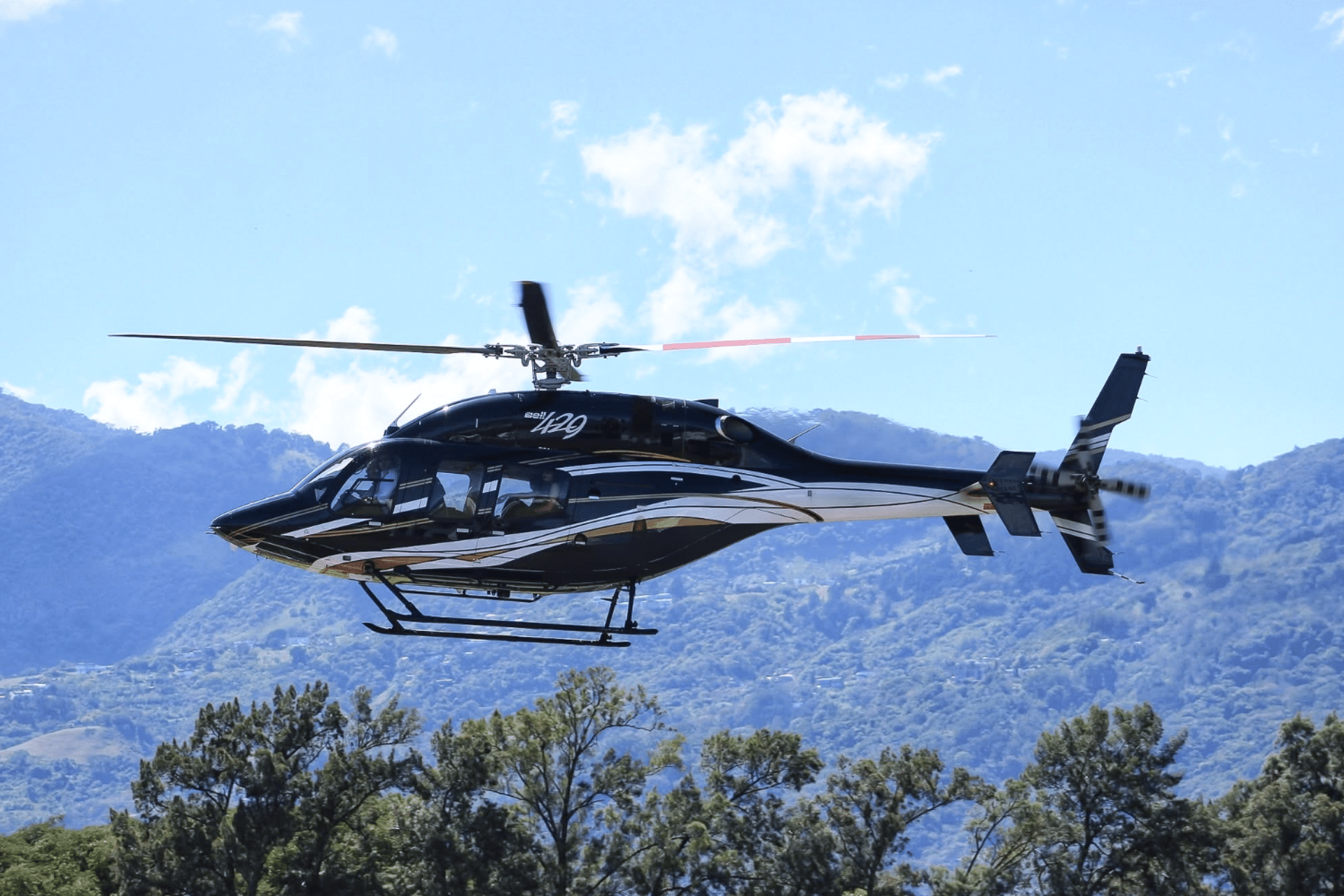

Aerial Filming vs Drone Footage Explained

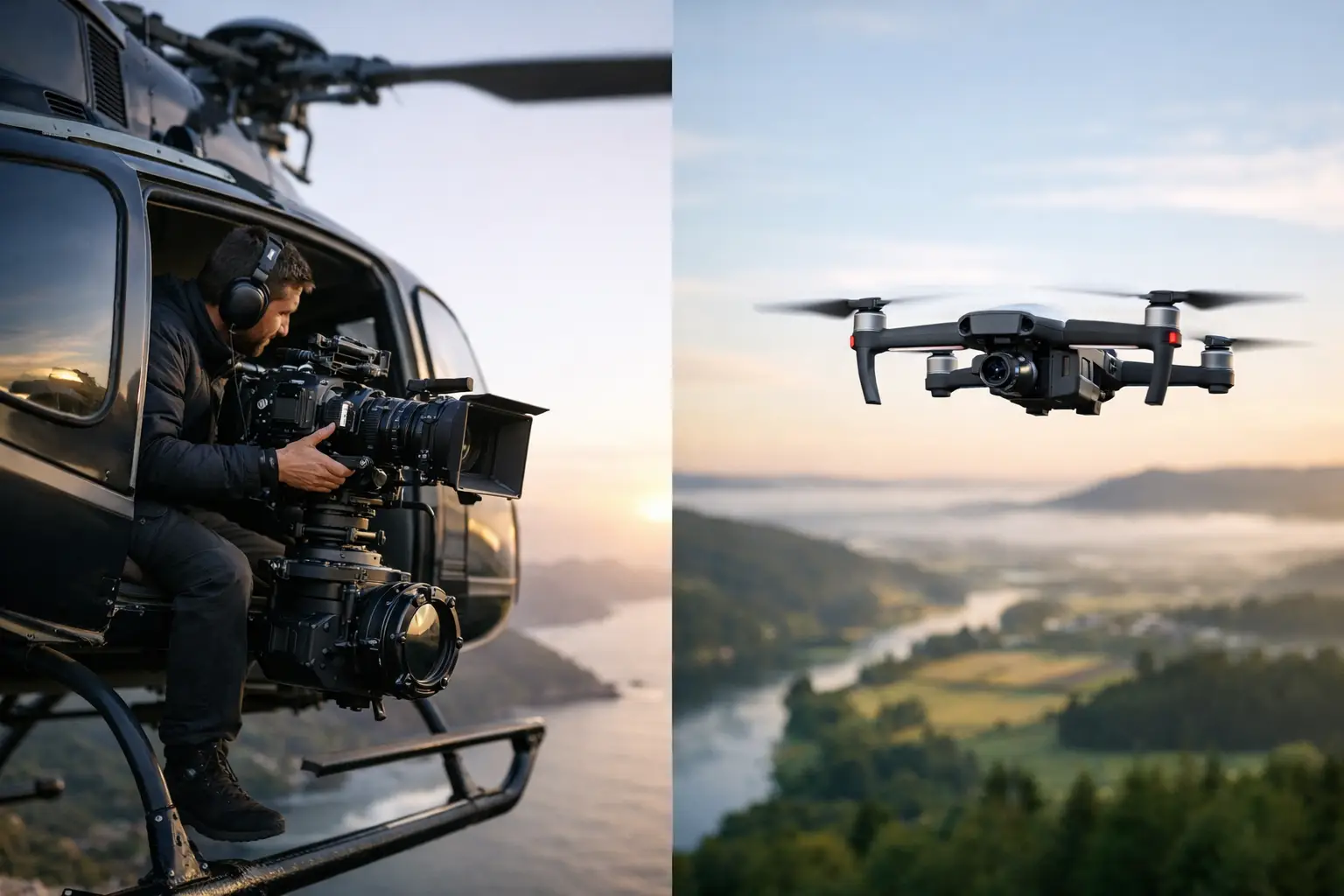
A sunrise pass over Costa Rica’s coastline can look extraordinary from almost any camera in the air. The difference is whether that shot simply looks good or whether it serves the production exactly as planned. That is where aerial filming vs drone footage becomes a practical decision, not just a creative one.
For producers, agencies, and brands, the right platform affects far more than image quality. It shapes flight permissions, payload options, shot duration, safety planning, location access, and the pace of the entire production day. In some cases, a drone is the efficient answer. In others, a helicopter or fixed-wing aircraft is the only way to get the shot with the consistency and operational support a professional project requires.
Aerial filming vs drone footage: what is the difference?
The terms are often used as if they mean the same thing, but they are not identical. Drone footage refers specifically to images captured by an unmanned aircraft system. Aerial filming is broader. It includes drone work, but it also includes filming from helicopters, airplanes, and other crewed aircraft equipped for professional camera operations.
That distinction matters because each platform brings a different level of range, camera capacity, stability, airspace flexibility, and production support. If the goal is a short establishing shot over a private property, a drone may be ideal. If the project calls for long tracking shots, high-speed pursuits, multiple camera systems, or work in complex environments, crewed aerial filming usually offers a different class of capability.
Why the choice affects the final production
Many people first compare these options on price, but cost alone is rarely the smartest lens. A lower-cost platform that cannot complete the mission efficiently may end up costing more in retakes, delays, or missing footage.
The real comparison starts with the shot list. A drone can capture dynamic low-altitude perspectives and move close to terrain, architecture, or subjects in ways that feel immersive and modern. That flexibility is one reason drone footage has become standard in real estate, hospitality, tourism, and social content.
A crewed aircraft, however, can deliver something a drone often cannot – scale with continuity. When you need to cover long distances, maintain speed with a moving subject, or carry specialized stabilized systems and experienced aerial crews, traditional aerial filming becomes less about prestige and more about performance.
When drone footage is the better option
Drone work is especially effective when the production needs agility. Short flights, quick repositioning, and close-range cinematic movement are where drones shine. For resorts, private villas, eco-lodges, construction updates, and promotional content, they can produce impressive results with relatively light logistics.
Drones also work well when access on the ground is limited but the airspace and local regulations allow operations. A beach access point, a remote property, or a controlled marketing shoot may be covered efficiently without mobilizing a full crewed aircraft operation.
That said, there are practical limits. Battery life reduces time in the air. Weather can ground smaller systems quickly. Payload restrictions narrow camera choices. And in regulated or sensitive areas, a drone may face stricter operating limitations than clients expect. The shot may look simple on paper and still be difficult to approve or execute legally.
When aerial filming from a helicopter or airplane makes more sense
Crewed aerial filming is often the stronger choice when the project is larger, more technical, or more time-sensitive. Helicopters offer exceptional flexibility for cinematic work, especially when shooting landscapes, coastlines, infrastructure corridors, industrial assets, or moving vehicles. They can reposition quickly, stay airborne longer, and support professional camera operators and stabilized systems designed for commercial production.
Airplanes can also be valuable, particularly for broad-area coverage, mapping-related visual missions, and higher-altitude perspectives where endurance matters more than hovering capability.
For high-end productions, this approach adds more than aircraft performance. It adds an aviation team. That means flight planning, pilot coordination, safety procedures, local airspace knowledge, and operational discipline that support the production from start to finish. In a market like Costa Rica, where terrain, weather patterns, and regional access can shift quickly, experience in aerial operations is not a minor detail.
Quality is not only about resolution
One of the biggest misconceptions in aerial filming vs drone footage is that image quality begins and ends with camera specs. Resolution matters, but it is only one piece of the result.
Lens options, sensor size, stabilization performance, vibration management, shooting duration, and consistency across multiple passes all influence the final edit. A drone may capture sharp footage in ideal conditions, but larger camera systems mounted on crewed aircraft often provide more latitude for commercial-grade production, especially when matching ground cameras or meeting agency standards.
There is also the issue of repeatability. If a director needs the same line, speed, and framing across several takes, a professional aerial platform with experienced aviation coordination often gives the production team more control. That control can be the difference between usable footage and footage that almost worked.
Safety and compliance should lead the conversation
For professional buyers, safety is not a footnote. It is part of the service itself. Any aerial operation should be evaluated through the lens of certification, pilot or operator experience, maintenance standards, and local regulatory compliance.
Drone operations may appear simpler because the aircraft is smaller, but that does not make them casual. They still require proper authorization, risk assessment, and disciplined execution. The same is true, at a higher operational level, for helicopters and airplanes used in filming.
When filming involves populated areas, tourism zones, sensitive infrastructure, or complex terrain, the margin for error narrows. Established operators with formal aviation standards, local knowledge, and documented procedures are better positioned to protect the client, the crew, and the production schedule. For premium productions, that reliability is part of the value.
Budget, schedule, and production goals
There is no universal winner in aerial filming vs drone footage because the right answer depends on what the production actually needs.
If the assignment is compact, visual, and location-specific, drone footage may offer the right balance of speed and cost. If the project involves multiple sites across the country, extended airborne time, complex logistics, or demanding motion shots, a crewed aerial platform may be the more efficient path despite the higher day rate.
This is where experienced planning matters. The cheapest option on paper can become expensive if it requires multiple resets, weather delays, separate permits, or supplementary ground solutions. Likewise, booking a helicopter for a shot that a drone could handle may add unnecessary complexity. The best decisions usually come from aligning the platform with the brief, not forcing the brief to fit the platform.
Choosing the right option in Costa Rica
Costa Rica offers dramatic filming value, but it also presents operating realities that affect aerial work. Coastal winds, mountainous terrain, microclimates, protected areas, and varying access conditions all influence what can be flown safely and effectively.
That is why local operating knowledge matters. A production team may know exactly what it wants visually, but the aerial execution still depends on route planning, weather judgment, legal permissions, and practical launch or landing considerations. In these situations, the provider is not simply supplying aircraft. They are helping translate creative goals into an operational plan.
For clients who need premium service and technical confidence, an experienced aviation operator can also reduce the friction between production and logistics. That includes timing, coordination, access strategy, and the kind of responsiveness that keeps a shoot moving when conditions change.
The smarter question is not which is better
Most serious productions do not need a debate about which method is superior in general. They need a clear answer about which method is right for this assignment, this location, and this timeline.
Drone footage is excellent for proximity, flexibility, and efficient cinematic coverage. Aerial filming from helicopters or airplanes is stronger when the mission demands range, endurance, payload, and higher-level flight support. Both can produce outstanding results. Both also have limitations.
The advantage comes from choosing with precision. When the platform matches the objective, the footage feels effortless on screen because the complexity has already been handled behind the scenes.
For teams planning aerial content in Costa Rica, that is usually the deciding factor. Not what is trending, and not what is cheapest, but what will deliver the shot safely, professionally, and without compromise when the camera goes up.