
Costa Rica Airstrip Access Guide for Private Flights


A Costa Rica airstrip access guide is not simply a list of places an aircraft can land. For private travelers, executive teams, and production crews, the meaningful question is whether a specific runway can support the planned aircraft, passenger load, arrival time, and onward ground logistics on the day of flight.
Costa Rica’s geography makes air access exceptionally valuable. A route that requires several hours by road can become a short private flight, placing the Nicoya Peninsula, the Central Pacific, the Southern Zone, or the northern coast within practical reach. Yet the country’s mountains, changing weather patterns, runway conditions, and aviation procedures make advance operational planning essential.
Start With the Destination, Not the Nearest Pin on a Map
A nearby airstrip is only useful if it serves the purpose of the trip. A resort guest may prioritize the shortest possible transfer from runway to villa. A corporate team may need reliable access close to a meeting location. A film production may require room for equipment, scheduled repositioning flights, and a suitable platform for aerial work.
Costa Rica has a network of public, regional, and private-use landing locations, but access varies. Some locations are well suited to scheduled domestic operations and private charter arrivals. Others have restrictions related to prior authorization, runway surface, operating hours, aircraft dimensions, seasonal conditions, or local support.
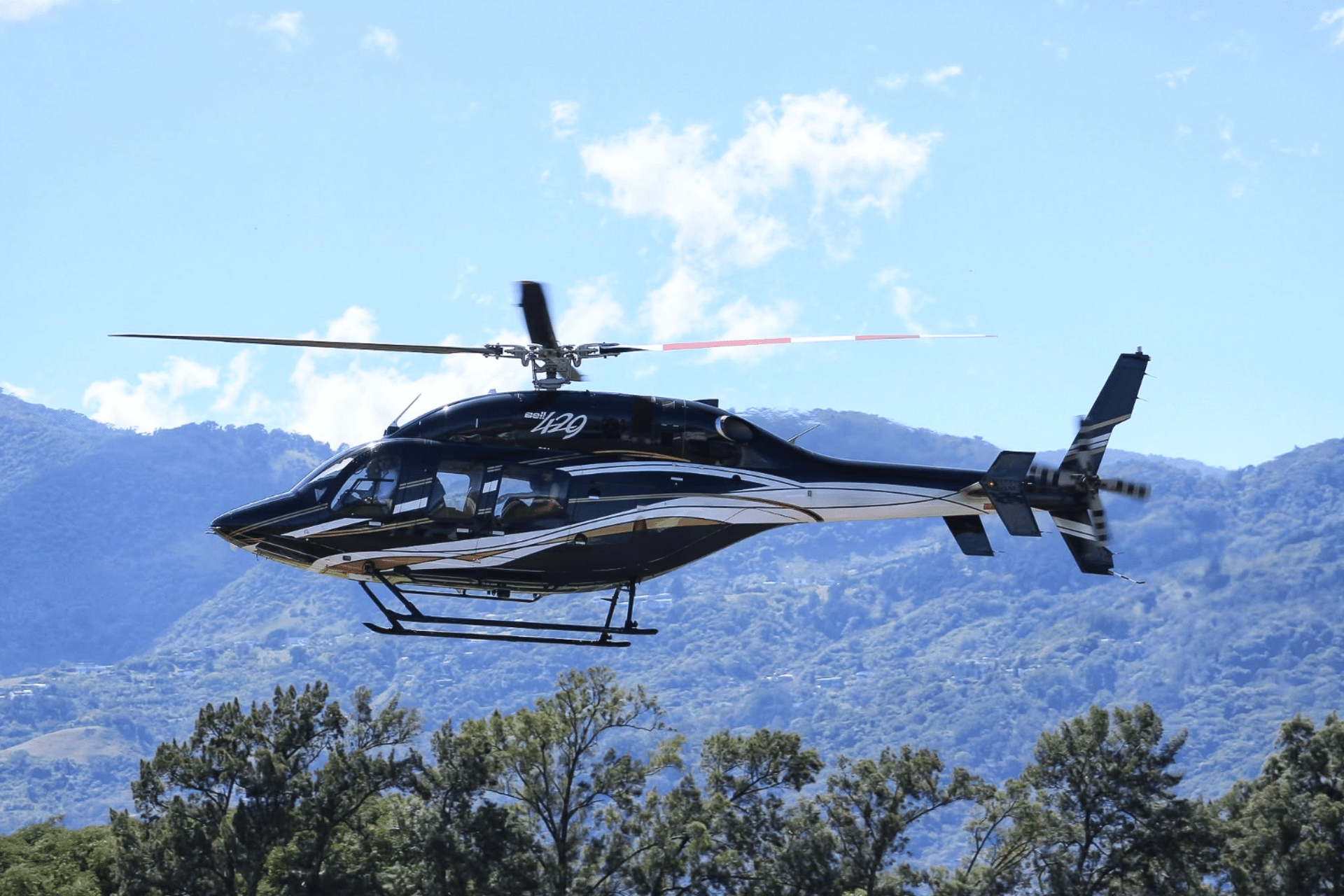
For that reason, a professional flight plan begins with the final destination and desired arrival window. The operator can then assess the most appropriate airport or airstrip, including whether a helicopter provides a more direct alternative. In remote coastal, mountain, and eco-lodge settings, a helicopter landing site may reduce or eliminate the final road transfer, provided the site is operationally suitable and authorized.
Costa Rica Airstrip Access Guide: What Determines Suitability
Runway length is a major consideration, but it is not the only one. A runway that appears sufficient on paper may have a different operational margin depending on elevation, temperature, rainfall, surface condition, obstacles, wind, and the aircraft’s takeoff or landing weight.
Paved and unpaved surfaces also require different assessments. A grass or gravel strip may be appropriate for certain aircraft under favorable conditions, while rain can change its usability quickly. Soft ground, standing water, loose material, and reduced braking performance can all affect an operator’s decision. The same strip can be workable one week and unsuitable the next.
Approach and departure paths matter just as much. Costa Rica’s terrain is dramatic, which is part of its appeal from the air, but mountains, ridgelines, trees, and localized cloud cover demand careful route and performance planning. An experienced operator will also account for nearby wildlife, wind shifts, and the availability of a safe alternate airport if conditions change.
For private flights, the correct question is not, “Can an airplane land there?” It is, “Can this aircraft complete the mission safely, legally, and with an appropriate margin under expected conditions?”
Weather Can Change the Best Plan
Costa Rica has distinct dry and green seasons, although local conditions differ significantly by region. Afternoon rain, coastal haze, mountain cloud, and wind can influence flight timing, especially during the wetter months. A clear morning departure does not guarantee the same conditions later in the day.
This is why earlier departures are often preferable for regional private flights. Morning operations can offer more stable weather windows, and they preserve flexibility if a schedule adjustment becomes necessary. For travelers connecting from an international arrival, it may be wiser to allow a realistic buffer rather than building a tight onward charter connection around an exact commercial arrival time.
Weather planning is not limited to whether rain is forecast. Visibility, cloud base, winds, runway drainage, and the conditions at both the destination and alternate airport all factor into the decision. A dependable operator monitors these variables continuously and communicates promptly when a change is advisable.
Confirm Permissions and Local Procedures Early
Not every usable-looking runway is open for ad hoc private arrivals. Some airstrips require advance permission from an owner or administrator. Others may have local procedures, limited hours, restrictions on commercial activity, or operational requirements that must be coordinated before departure.
International private arrivals add another layer. Aircraft, crew, and passengers must meet the applicable entry, customs, immigration, and aviation requirements. Depending on the aircraft’s origin and mission profile, this can involve documentation, declarations, handling coordination, and approvals that should never be left until the day of travel.
Domestic charters are generally more straightforward, but details still matter. Passenger names and weights, baggage volume, special items, arrival times, vehicle transfers, and destination contacts should be confirmed early. For a corporate movement or high-value production schedule, one accurate operating brief prevents many avoidable delays.
Aerotour applies this same planning discipline across private airplane and helicopter missions, drawing on operating experience in Costa Rica dating to 1973 and a safety culture aligned with DGAC certification and ICAO standards.
Match the Aircraft to the Mission
Private aviation is most effective when the aircraft fits the itinerary rather than when the itinerary is forced to fit an aircraft. Passenger count is only the starting point. The choice between a fixed-wing airplane and a helicopter may depend on runway access, luggage, route length, terrain, desired arrival point, and the need for flexibility on the ground.
A private airplane is often an efficient choice between established regional airports and airstrips, particularly when traveling with several passengers or substantial baggage. It can provide a fast, private connection from San José or Liberia to many key tourism and business regions.
A helicopter can be especially valuable when the final destination lacks a suitable runway or when road access is slow. It may also be the stronger option for executive day trips, remote properties, aerial filming, infrastructure inspections, and missions that require arrival close to the work site. The trade-off is that payload, weather exposure, and landing-site requirements must be considered closely.
Production teams should plan beyond passenger seating. Camera systems, stabilization equipment, safety personnel, communications needs, door-off configurations, and aerial-work permissions may affect aircraft selection and scheduling. Specialized aerial support is a separate operational mission, not an ordinary sightseeing flight with equipment added at the last minute.
Build Ground Transfers Into the Flight Plan
Landing is only one part of access. At many regional destinations, the quality of the ground transfer determines whether the charter meaningfully saves time. A 20-minute road journey may be simple in dry conditions but longer after heavy rain, on unpaved roads, or during high-demand travel periods.
Before confirming the airstrip, evaluate the full door-to-door movement: arrival handling, luggage collection, vehicle access, road time, and destination check-in. For private estates, lodges, and production locations, identify a local point of contact who can confirm the access route and receive the party.
This is also where privacy and service level become tangible. A well-organized charter should connect the aircraft arrival with a waiting vehicle, a clearly briefed driver, and a transfer plan appropriate to the guests, luggage, and destination. For VIP travelers, that coordination preserves the advantage of flying privately.
Plan With Flexibility, Especially for Remote Itineraries
The strongest airstrip access plan has options. A backup airport, an alternate transfer route, or a revised departure time can protect an important meeting, hotel arrival, or production day when weather or runway conditions change.
Avoid scheduling a remote-airstrip arrival immediately before an inflexible event. Give the flight team permission to recommend a safer time window or alternate landing point if conditions require it. This is not a loss of convenience. It is the practical value of working with an operator that understands local aviation conditions and treats schedule reliability as part of the service.
For travelers visiting multiple regions, routing can also reduce unnecessary backtracking. A private itinerary might arrive internationally through San José or Liberia, continue by charter to a coastal or remote destination, then depart from a different regional point when the trip concludes. Whether that is practical depends on aircraft positioning, permissions, and current operating conditions, but it is worth assessing early.
A well-planned private flight turns Costa Rica’s varied terrain from a logistical obstacle into part of the experience. Share your destination, timing, passenger details, baggage needs, and any mission-specific requirements early, and the right airstrip or landing solution can be evaluated with the care the journey deserves.