
Corporate Aviation Procurement Guide for Costa Rica


A delayed connection in San José can turn a one-day site visit into a two-night itinerary. A commercial flight schedule may also leave executives, investors, engineers, or production crews hours from the place they need to be. This corporate aviation procurement guide is designed for organizations that need a more controlled way to plan air travel in Costa Rica, where terrain, weather, airport infrastructure, and destination access all shape the right decision.
Private aviation procurement is not simply a question of finding an available aircraft. It is the process of selecting an operator and flight solution that can protect people, schedules, budgets, and operational objectives. For a board meeting in Liberia, a resort inspection on the Pacific coast, a remote industrial assignment, or an aerial production day, the details behind the booking matter as much as the aircraft itself.
Start With the Mission, Not the Aircraft
A procurement conversation should begin with the purpose of the flight. The right solution for two executives traveling from San José to Guanacaste is not necessarily the right solution for a survey team carrying equipment, a film crew requiring doors-off aerial work, or a group moving between several destinations in one day.
Define the non-negotiables first: passenger count, baggage or equipment volume, origin and destination, desired arrival time, ground-transfer requirements, and whether the mission needs flexibility for last-minute changes. Also consider whether the destination has a suitable runway, helipad, or nearby operating point. In Costa Rica, the fastest route on a map is not always the most practical route in the air.
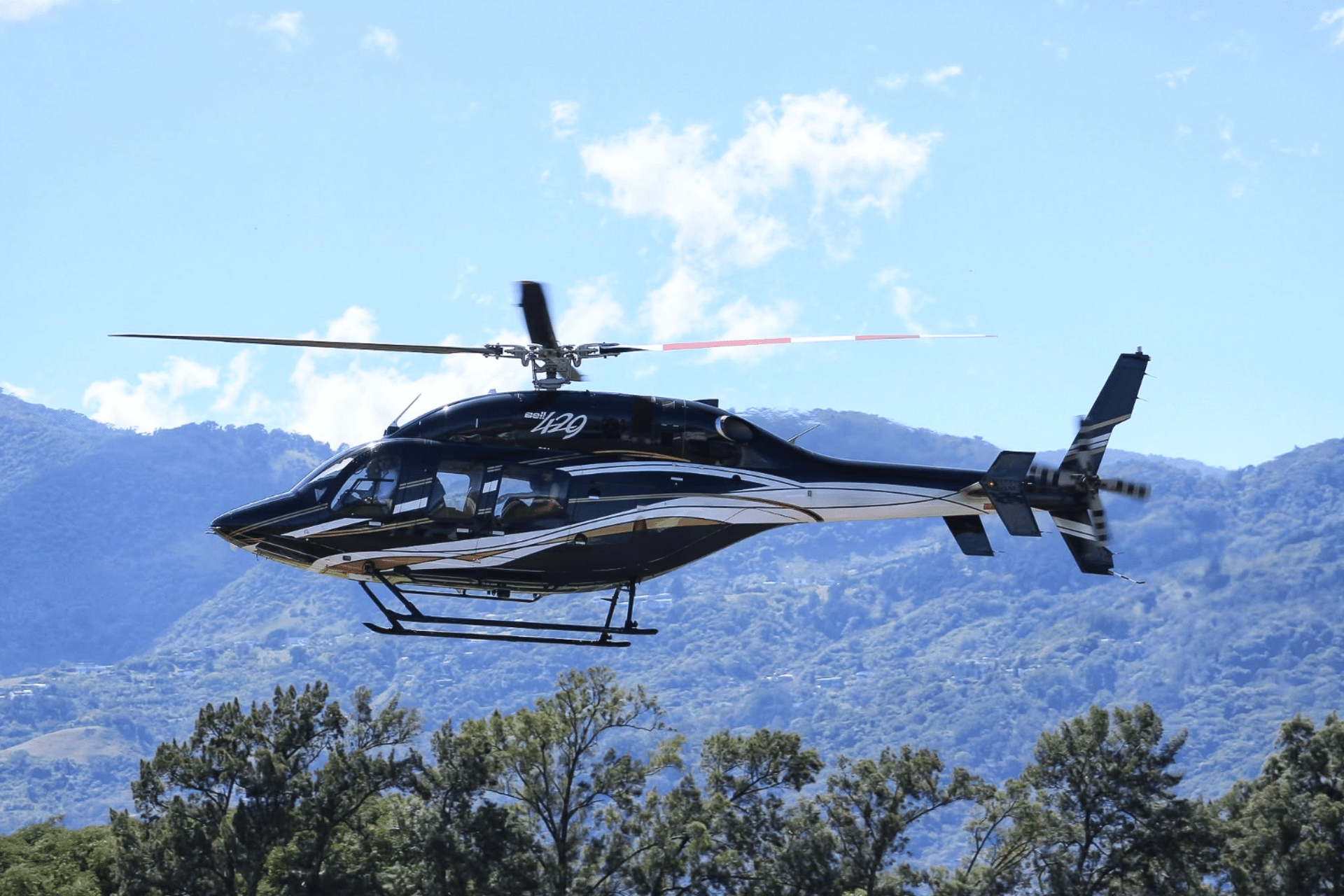
Helicopters can offer direct access to select resorts, private properties, worksites, and scenic regions where a fixed-wing aircraft would require an additional ground transfer. Private airplanes can be more appropriate for longer domestic sectors, regional connections, or passenger groups with more baggage. For specialized operations, the platform must also be compatible with the assignment rather than merely capable of transporting people.
The goal is not to choose the largest or most expensive option. It is to procure the aircraft and operating plan that reduce friction without adding unnecessary cost or complexity.
Evaluate the Operator Before Comparing Quotes
Two proposals can look similar on price and itinerary while reflecting very different operating standards. Corporate buyers should assess the operator behind the offer with the same care used for other high-consequence vendors.
Start with operating authorization and oversight. Ask whether the provider is properly certified for the proposed operation, how its safety management practices are applied, and whether it operates under the relevant civil aviation requirements. In Costa Rica, DGAC certification and alignment with ICAO standards are meaningful indicators to examine, but procurement teams should still request clear, current documentation for the specific flight being considered.
Experience also deserves context. A long operating history can signal local knowledge, established maintenance practices, and familiarity with changing weather and destination logistics. However, experience should be connected to the type of mission. An operator experienced in executive transfers may not be the best fit for a complex aerial filming project, and a tourism-focused flight provider may not be prepared for a time-sensitive industrial support mission.
Ask how the flight will be managed from confirmation through arrival. A dependable provider should be able to explain who coordinates manifests, weather monitoring, operational approvals, passenger communications, ground arrangements, and contingency planning. Responsiveness is part of the service, but it is also part of risk management.
Questions procurement teams should ask
A focused discussion usually reveals more than a generic capability statement. Ask which aircraft and crew will be assigned, whether the aircraft is operated directly or sourced through another party, what weather limitations may affect the route, and what alternatives are available if conditions change. Confirm the cancellation terms, waiting-time policy, baggage constraints, and any airport, landing, or ground-handling charges that may apply.
For recurring travel, ask how the operator maintains service consistency. A familiar account team, documented passenger preferences, and clear approval procedures can save significant time when senior travelers need to move quickly.
Build Safety Into the Procurement Criteria
Safety should not appear as a final checkbox after price, aircraft appearance, and schedule. It should be a core evaluation criterion from the beginning.
Review how the operator approaches pilot qualifications, recurrent training, aircraft maintenance, operational control, and weather decisions. A professional provider will communicate these areas with clarity, without making unrealistic promises about flying in every condition. The ability to decline or modify a flight when safety requires it is a sign of disciplined operations, not poor service.
Costa Rica’s microclimates make this especially relevant. Conditions can vary sharply between the Central Valley, Caribbean slopes, mountain corridors, and Pacific coast. A morning itinerary may require adjustment because of cloud cover, rainfall, winds, or visibility at a destination. The procurement standard should therefore include realistic contingency planning: alternative departure times, alternate landing options, ground transportation backups, and a clear decision-making process.
For production or mission-specific flights, safety planning becomes even more detailed. Aerial filming, photography, surveying, and external-equipment operations may require specialized crew coordination, route planning, permits, weight-and-balance calculations, and communication protocols. These are not add-ons to arrange casually on the day of the flight.
Compare Total Mission Value, Not Just Hourly Price
The lowest quoted hourly rate rarely tells the full cost story. Corporate aviation pricing may include positioning flights, crew duty time, airport or landing fees, fuel considerations, overnight expenses, handling, taxes, and mission-specific support. A transparent proposal distinguishes these items and explains what could change.
Price should be measured against the value of time, access, and predictability. If a private flight allows a leadership team to visit multiple locations and return the same day, the relevant comparison is not only the cost of a commercial ticket. It includes hotel nights, lost work hours, road travel, schedule exposure, and the opportunity cost of delayed decisions.
That said, private aviation is not automatically the best answer for every trip. Commercial service may remain the sensible choice when routes are frequent, schedules are favorable, and the destination is well connected. A strong procurement approach recognizes this rather than treating private charter as a default. The best travel program uses each mode where it performs best.
Watch for unclear assumptions
An unusually low quotation may be based on assumptions that do not match the actual mission. It may exclude positioning, presume a short ground wait, use an aircraft with limited baggage capacity, or depend on a narrow weather window. Before approving a flight, make sure the itinerary, passenger count, luggage, destination, and turnaround expectations are reflected in writing.
For international arrivals or departures, verify customs, immigration, and handling requirements early. These details can influence airport selection and required reporting times, particularly when connecting through Costa Rica on a fixed business schedule.
Make Destination Access Part of the Plan
Corporate aviation earns much of its value after the aircraft lands. A flight that arrives near the destination but leaves passengers facing an unplanned two-hour drive may not meet the mission objective.
Evaluate the entire journey: private terminal or airport arrival procedures, vehicle availability, security needs, final-mile travel time, and coordination with hotels, offices, resorts, project sites, or production locations. The best providers treat the air segment as one part of a complete movement plan.
Local operating coverage is particularly useful when travel spans the country’s principal business and tourism corridors. Aerotour’s bases in San José and Liberia, for example, support planning across two important access points, while its experience across charter, scenic, and specialized aerial services can be relevant when one organization needs more than executive transportation.
For high-profile travelers, discretion also belongs in the operational plan. Share passenger details only with necessary parties, establish a clear point of contact, and align arrival procedures with the traveler’s privacy and security expectations.
Create a Repeatable Corporate Aviation Procurement Process
Organizations that charter more than occasionally benefit from a short internal protocol. Identify who may request flights, who approves expenditures, what traveler information is required, and when legal, security, or procurement teams need to review a mission. This avoids the common problem of trying to resolve passenger manifests, payment approvals, and operational details minutes before departure.
Maintain a preferred-provider evaluation file that records certifications, insurance information, aircraft capabilities, service performance, and post-flight feedback. After each mission, review whether the flight met its schedule, communication, safety, and cost expectations. Over time, this creates better buying decisions than relying on isolated quotes.
A well-procured flight should feel calm long before the rotors turn or the engines start. When the operator understands the mission, states the limitations clearly, and prepares alternatives with the same care as the primary plan, your team is free to focus on the work waiting at the destination.