
How Corporate Air Charters Save Time


A missed connection in a major hub can derail an entire business day. For executives, project teams, and decision-makers moving across Costa Rica or arriving with tight regional schedules, that lost time often costs more than the ticket itself. That is exactly why many companies look closely at how corporate air charters save time, not as a luxury perk, but as a practical tool for better execution.
Commercial air travel works well when routes, schedules, and airport logistics align with your plan. Business rarely works that way. Meetings move. Site visits run long. Teams need to reach destinations that are not well served by airline schedules. In those moments, the value of a charter flight is not just comfort or privacy. It is control over the day.
How corporate air charters save time in real business travel
The largest time savings usually start before the aircraft even leaves the ground. Commercial travel requires travelers to adapt to the airline’s schedule, airport processes, and network structure. Corporate charters reverse that model. The flight is organized around the client, the destination, and the business objective.
That difference matters more than many travelers expect. A one-hour flight can easily become a five- or six-hour travel block when you add early airport arrival, security queues, boarding delays, layovers, baggage wait times, and the ground transfer from a major airport to the actual final destination. A charter often compresses that timeline substantially.
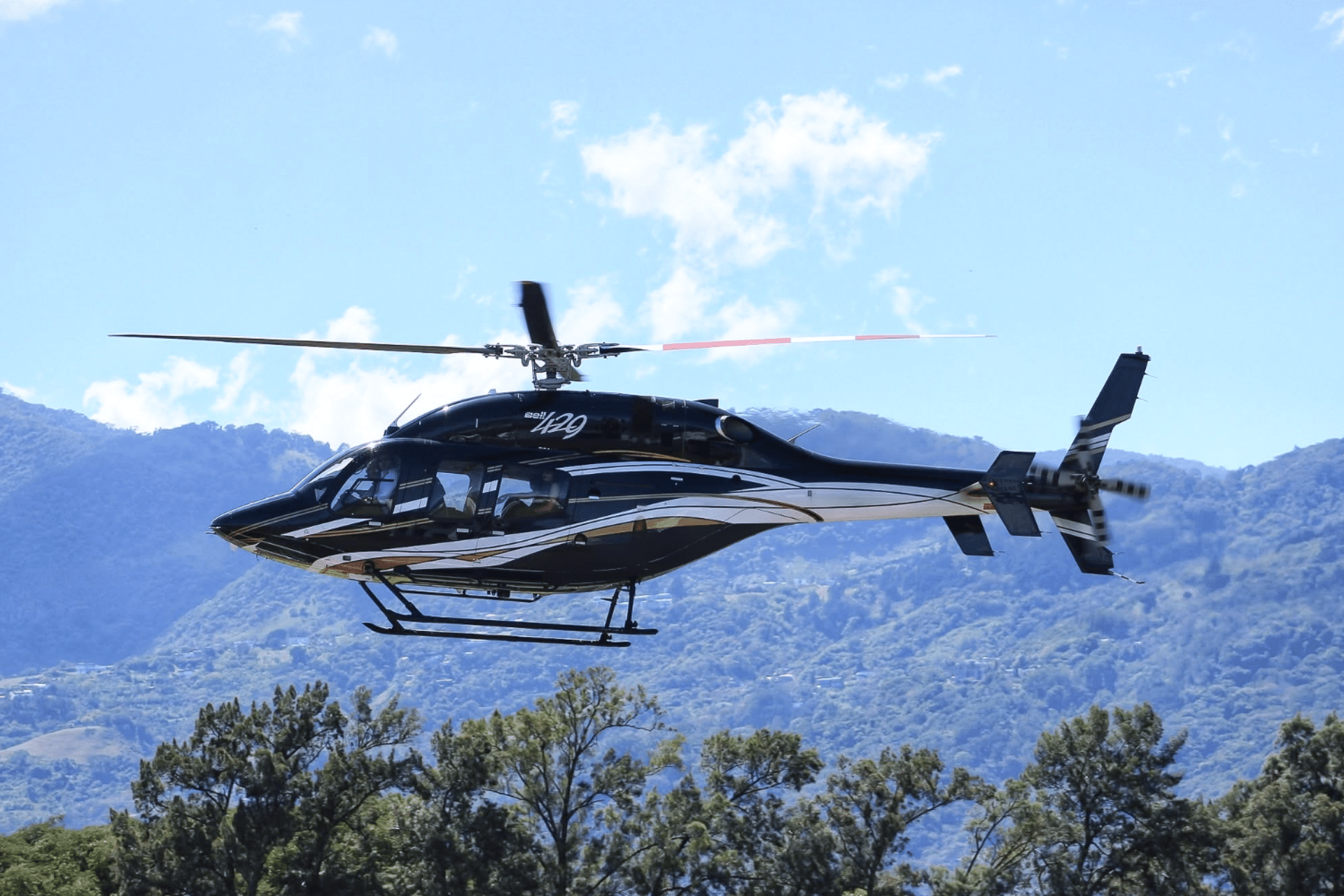
For companies operating in Costa Rica, where terrain and road travel can turn relatively short distances into long journeys, direct air access is especially valuable. A chartered helicopter or private airplane can connect key business and resort regions with far less friction than a road-and-airline combination.
Direct routing reduces wasted hours
One of the clearest answers to how corporate air charters save time is simple: they eliminate unnecessary routing. Commercial airlines are built around fixed networks and hub operations. If your destination is not on that network at the right time, you may need to connect through another city or accept a long drive after landing.
A corporate charter is planned for your itinerary, not the market average. If the goal is to move from San Jose to a business property, coastal development site, resort meeting, or remote operations area, the aircraft can often take a far more direct route. That means less waiting, fewer transfers, and more predictable arrival times.
This is particularly useful for leadership teams visiting multiple locations in one day. Rather than structuring the day around airline limitations, they can structure flying around the work itself.
Flexible scheduling protects the business agenda
Time savings are not only about speed in the air. They also come from flexibility on the ground. Commercial schedules are fixed, and even a small delay in a meeting can trigger a larger travel problem. Miss one departure and the entire day may need to be rebuilt.
With a charter, departure windows can be coordinated around the business plan. If a negotiation runs over, if a production team needs more setup time, or if weather shifts the best operating window, there is more room to adapt. That flexibility can preserve the value of a trip that would otherwise be compromised by rigid airline timing.
There are trade-offs, of course. Charter flying still operates within weather, air traffic, aircraft availability, and safety requirements. It is not a guarantee that every request can be accommodated instantly. But compared with commercial travel, the operating model is far more responsive.
Faster airport access and shorter pre-flight processes
A frequent source of hidden delay in commercial travel is the airport experience itself. Travelers are advised to arrive well in advance, move through crowded terminals, and wait through standard boarding procedures designed for high passenger volumes. Even when the flight is on time, the process can consume hours.
Private charter operations are different by design. Dedicated handling, streamlined passenger processing, and more efficient terminal access allow travelers to move from vehicle to aircraft much faster. For executives traveling with sensitive materials, tight schedules, or senior clients, that reduced airport friction is not just convenient. It can be the difference between making a meeting and missing it.
This is one reason private aviation remains attractive for high-value travel days. When every hour matters, reducing nonproductive waiting time has measurable value.
Better access to the actual destination
Many business itineraries do not end at the main airport. They end at a conference venue, industrial site, hospitality property, or development location that may be hours away by road. In Costa Rica, geography plays a major role in travel planning, and the final ground segment can often become the longest part of the trip.
Charter aircraft, including helicopters where appropriate, can shorten that final gap considerably. Instead of landing at the largest airport and beginning a long transfer, travelers can often reach airfields or landing areas closer to where the work happens. For site inspections, investor tours, executive retreats, and time-sensitive operations, this can transform a full-day travel effort into a focused half-day schedule.
Productivity improves when the trip is built around the team
There is another side to how corporate air charters save time: they preserve working time that would otherwise be lost. Commercial travel breaks concentration. Teams are separated by seat assignments, interrupted by airport logistics, and limited in what they can discuss in public spaces.
A chartered flight gives teams a more controlled environment. Executives can review presentations, discuss transactions, prepare for client meetings, or debrief after a site visit without the noise and exposure of a crowded terminal. The aircraft becomes part of the workday rather than a pause in it.
That does not mean every charter is the right choice for every trip. For a single traveler on a simple route with plenty of commercial service, the efficiency gain may be modest. But for groups, senior decision-makers, or multi-stop itineraries, the productivity benefit often compounds quickly.
Multi-stop itineraries become far more practical
One of the strongest use cases for charter travel is the schedule that commercial airlines handle poorly: several stops, one day, high stakes. A leadership team may need to visit a hotel project in one region, a partner meeting in another, and a property review before returning the same evening. On a commercial schedule, that may be impossible or require overnight stays.
A charter can make that itinerary workable. Instead of coordinating multiple tickets, transfer times, and overnight contingencies, the company can move in a sequence that matches operational priorities. That means faster decisions, less downtime, and fewer travel days pulled away from the business.
For production teams and organizations managing technical fieldwork, the same principle applies. Moving people and equipment efficiently between locations can keep projects on schedule and reduce the indirect cost of delay.
The time savings have a financial side
Corporate buyers usually evaluate travel by total business impact, not ticket price alone. That is where charter value becomes clearer. If a charter allows a team to complete essential meetings in one day instead of two, avoid hotel stays, reduce ground transport, and keep senior personnel focused, the total economics can shift.
This does not mean charters are automatically more cost-effective in every scenario. They are premium services, and they should be assessed that way. But when time has a direct business value, the relevant question is often not just what the flight costs. It is what delay costs.
Experienced operators help clients assess that balance realistically. Aircraft type, route, passenger count, access requirements, and schedule flexibility all shape whether charter is the smart option for the mission.
Why operator experience matters as much as aircraft access
Time efficiency in aviation depends on planning, coordination, and operational discipline. An experienced charter provider does more than supply an aircraft. It helps clients choose the right flight solution, manage route practicality, and operate within the standards that keep travel dependable.
That is particularly important in a market like Costa Rica, where weather patterns, topography, and destination access can all influence flight planning. Companies that rely on private aviation should look for proven operators with a long track record, proper certification, and a clear safety culture. Premium service only delivers its promised time advantage when the operation behind it is organized and credible.
For clients who value speed, discretion, and reliability, that combination is exactly what makes a provider like Aerotour relevant. Long-standing operational experience, established bases in San Jose and Liberia, and safety-centered execution matter because they support the one benefit business travelers care about most: getting where they need to be, when they need to be there.
The smartest travel decision is not always the cheapest seat or the fastest advertised flight time. It is the option that protects the day, supports the objective, and removes avoidable friction from the schedule.