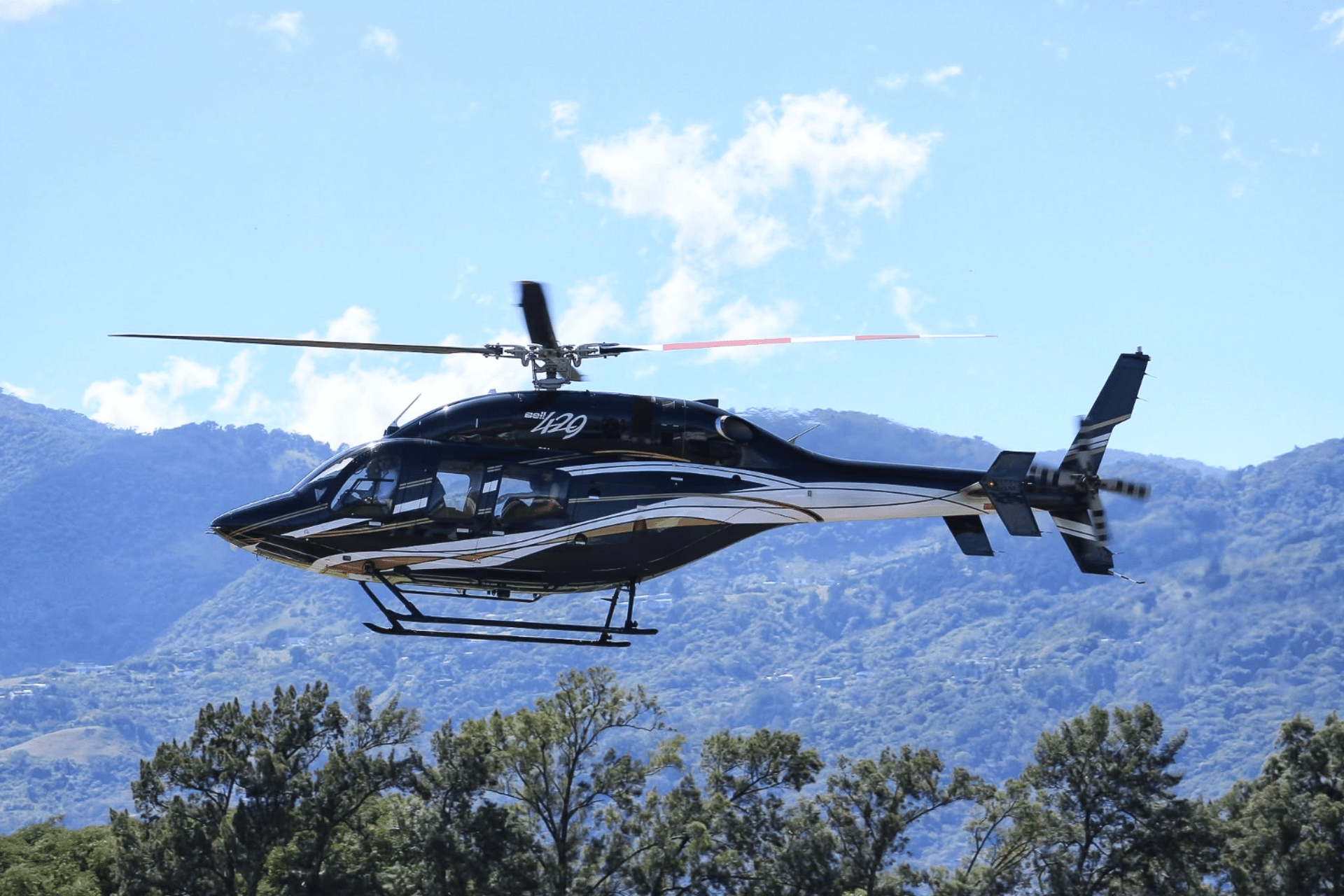

Helicopter Landing Permissions for Costa Rica

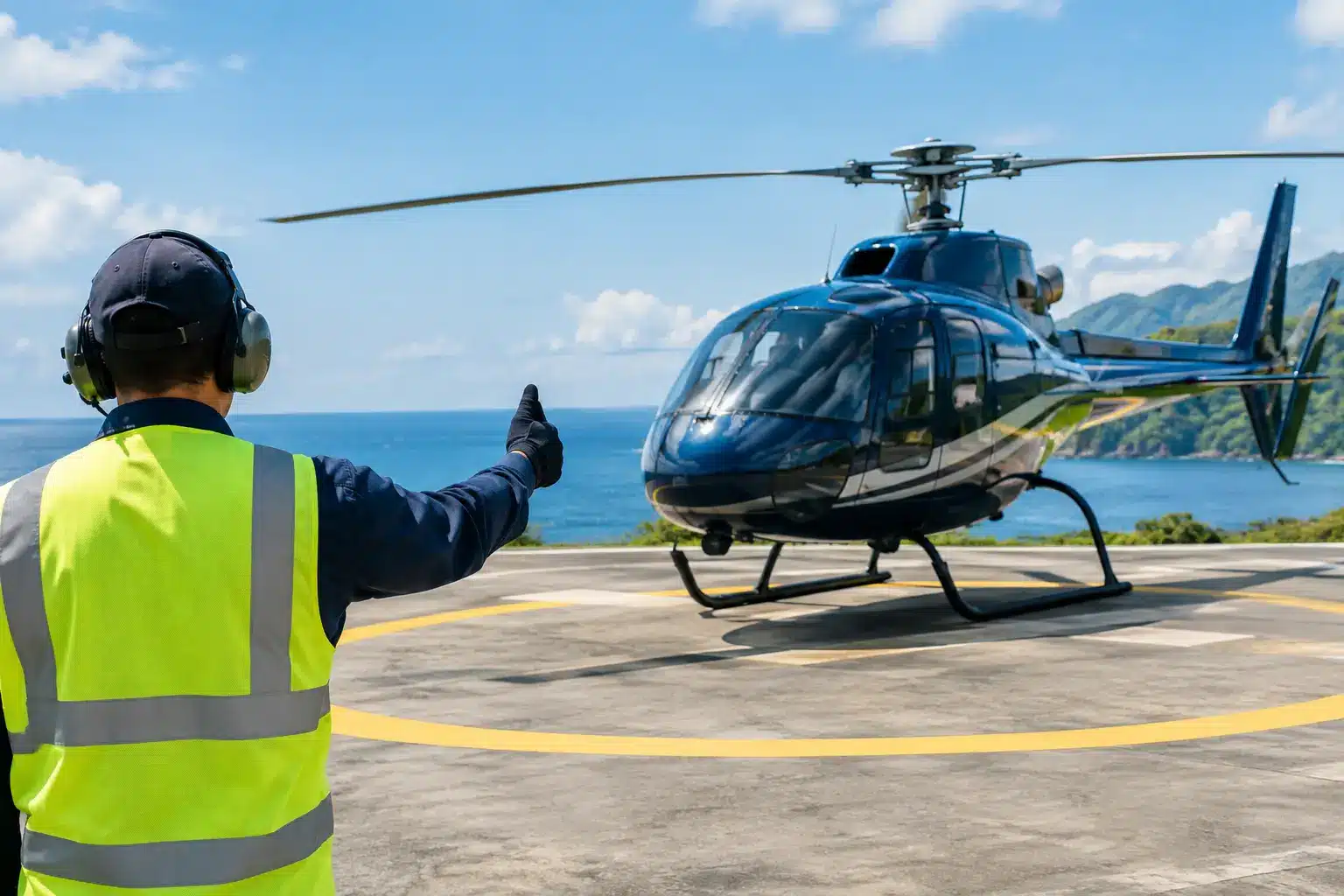
A helicopter can turn a multi-hour road transfer into a direct arrival at a resort, estate, job site, or production location. But helicopter landing permissions are never an afterthought. In Costa Rica, every off-airport landing requires a careful review of the proposed site, the flight operation, nearby airspace, and the people and property on the ground.
For travelers, executives, and project teams, the value of private aviation is speed and access. The responsibility behind that access is planning. A qualified operator evaluates whether a landing can be conducted legally, safely, and with the level of discretion expected of a private flight.
What helicopter landing permissions involve
“Permission” is often used as though it were a single document. In practice, it is a coordinated process. The exact requirements depend on where the helicopter will land, whether the location is an established helipad, and whether the operation is private transportation, aerial production, a commercial mission, or emergency support.
At a minimum, the operator must confirm that the landing area is suitable for the aircraft and that the landowner has authorized its use. The flight must also comply with Costa Rica’s civil aviation rules and any applicable airspace restrictions. Depending on the site and mission, coordination with the Dirección General de Aviación Civil, local authorities, property management, security teams, or environmental stakeholders may be appropriate.
This is why a destination that appears open from the road or from satellite imagery may not be a viable helicopter landing site. Open space alone does not establish permission, adequate dimensions, safe approach paths, or acceptable ground conditions.
Established helipads versus temporary landing sites
An established helipad generally offers the most predictable option. It has been designed or designated for helicopter activity, with known dimensions, approach and departure considerations, and procedures for ground access. Hotels, private communities, business facilities, hospitals, and aviation properties may have helipads, but availability still needs to be confirmed for each operation.
A temporary landing site can offer greater flexibility, particularly for a private residence, remote lodge, agricultural property, construction project, or filming location. It also requires more advance work. A professional assessment considers whether the terrain is firm and clear, whether slopes or drainage present a risk, and whether there is enough area for the helicopter type and its operating profile.
The surrounding environment matters just as much as the touchdown point. Trees, power lines, antennas, fences, buildings, loose material, livestock, vehicles, and people can affect the operation. A site may be physically large enough yet unsuitable because its approach path is obstructed or it places unnecessary risk on neighboring properties.
The factors an operator reviews before approval
A preliminary site review begins with the location, coordinates, elevation, and intended date and time of the flight. Weather patterns, seasonal conditions, and the purpose of the operation all influence the decision. A site that works well in the dry season may need a different assessment when rain changes the firmness of the ground or vegetation height.
Aircraft performance is another essential consideration. Passenger count, baggage, fuel, temperature, elevation, and available landing area must be evaluated together. Private helicopter operations are carefully planned around performance limits, not simply around the number of seats on board. This is especially relevant in warmer conditions and at locations with challenging terrain.
For site operations, the operator will also assess:
- The dimensions, surface, slope, and condition of the landing area
- Clear approach and departure paths, including wires, trees, towers, and structures
- Airspace considerations and proximity to airports, controlled areas, or sensitive locations
- Ground safety procedures, including crowd control, security, and vehicle access
- Noise, privacy, and neighborhood considerations
For high-value travel, these details support more than compliance. They protect the quality of the experience. A well-managed arrival means passengers are met in an appropriate area, ground movement is controlled, and the departure remains efficient rather than becoming a last-minute logistical problem.
Airspace coordination and local restrictions
Costa Rica’s terrain and airspace require disciplined planning. Flights near airports, populated areas, border regions, protected zones, or other controlled or restricted areas may require additional coordination. The operating crew must have current information and follow the procedures applicable to the planned route and landing location.
Aerial filming and photography can add another layer. Production teams often need a specific angle, altitude, time of day, or repeated passes over a defined area. Those requirements should be discussed early, since the operator must determine what can be conducted safely and in accordance with aviation rules. Ground permissions for filming do not automatically authorize aircraft activity overhead or a landing at the location.
Environmental considerations can also affect access. Costa Rica’s natural landscapes are among its greatest assets, and they must be treated with care. Operations near national parks, wildlife areas, coastlines, and remote rainforest properties may involve additional limitations. The right response is not to assume access, but to let an experienced aviation team identify the available options.
What clients can do to make approvals faster
The most useful step is to involve the operator before finalizing a schedule, event, or production plan. A preferred landing point may be approved, adjusted, or replaced with a nearby alternative that delivers the same practical benefit with fewer operational constraints.
Provide the exact property location rather than a general area name. Share the name and contact details of the property owner or manager, expected passenger count, baggage requirements, preferred timing, and the reason for the landing. For productions and commercial missions, include the shooting schedule, equipment needs, ground crew size, and any planned activity around the aircraft.
It also helps to be realistic about timing. Straightforward arrivals at known, suitable locations can often be planned efficiently. New sites, large events, remote properties, or operations near sensitive areas deserve more lead time. Last-minute requests are sometimes possible, but aviation decisions should never be rushed to meet a schedule.
Property owners play a critical role as well. They should ensure the proposed landing area is free of vehicles, furniture, temporary structures, animals, and unauthorized personnel. The operator may provide site-specific instructions, including how far guests and staff must remain from the aircraft. Rotor wash can move dust, debris, and lightweight objects with considerable force, so a polished arrival depends on careful preparation on the ground.
Why operator experience makes the difference
Helicopter landing permissions are not simply a paperwork exercise. They are a safety and logistics discipline that combines aircraft knowledge, local operating familiarity, airspace awareness, and clear communication with clients and stakeholders.
An established operator should be transparent about what is possible, what requires review, and when an alternative landing plan is wiser. In some cases, the best answer is a recognized helipad followed by a short private ground transfer. That may sound less direct, yet it can offer greater reliability, comfort, and safety than forcing an operation into a marginal site.
Aerotour brings experience dating to 1973, DGAC certification, and operations based in both San José and Liberia to this type of planning. For a private transfer, executive visit, aerial production, or specialized mission, its role extends beyond flying the route. The team helps shape an operation that works from departure through arrival.
Plan the arrival, not only the flight
A helicopter flight is often the most visible part of the itinerary, but the landing site determines much of its success. Permission, site suitability, airspace coordination, and ground readiness should be addressed as one operational plan rather than separate tasks.
When the location is reviewed early and the right stakeholders are involved, private aviation delivers what it promises: efficient access to Costa Rica’s business centers, coastlines, resorts, and remote destinations, with safety and discretion at the center of every arrival.