
How to Schedule a Private Sightseeing Flight

Costa Rica looks different when the journey is designed around the view. Volcanoes rise above cloud layers, rainforest runs to remote coastlines, and beaches, rivers, and ridgelines reveal connections that are difficult to appreciate from the ground. When you schedule a private sightseeing flight, the value is not simply getting airborne. It is having an aircraft, route, departure point, and timing shaped around your group and the landscapes you want to see.
For travelers who value privacy, flexibility, and a more considered way to experience the country, a private flight can turn a limited window of time into a memorable part of the itinerary. The best results begin well before departure, with clear expectations and an operator equipped to manage the practical details.
Start With the Experience You Want
A private sightseeing flight should be built around a purpose, not a generic route. Some guests want a dramatic aerial perspective of Arenal Volcano and Lake Arenal. Others prioritize the Pacific coastline, the Nicoya Peninsula, rainforest reserves, waterfalls, or a combination of city, mountains, and shore. A family may want a relaxed scenic experience, while a couple may be planning a private occasion. A production team may need stable aerial access for photography or filming.
Share the reason for the flight when you inquire. It helps the operator recommend the right route, flight duration, aircraft, and departure location. It also establishes what matters most: expansive views, proximity to a particular landmark, calm conditions, privacy, or the ability to combine sightseeing with point-to-point travel.
Costa Rica’s geography makes route design especially important. A coastal flight can feel entirely different from a volcanic or rainforest route, even when both are within reach of the same operating base. Travelers departing from San José may have different practical options than guests staying in Guanacaste near Liberia. Choosing a nearby departure point can preserve more of the day for the experience itself.
Choose Between a Helicopter and an Airplane
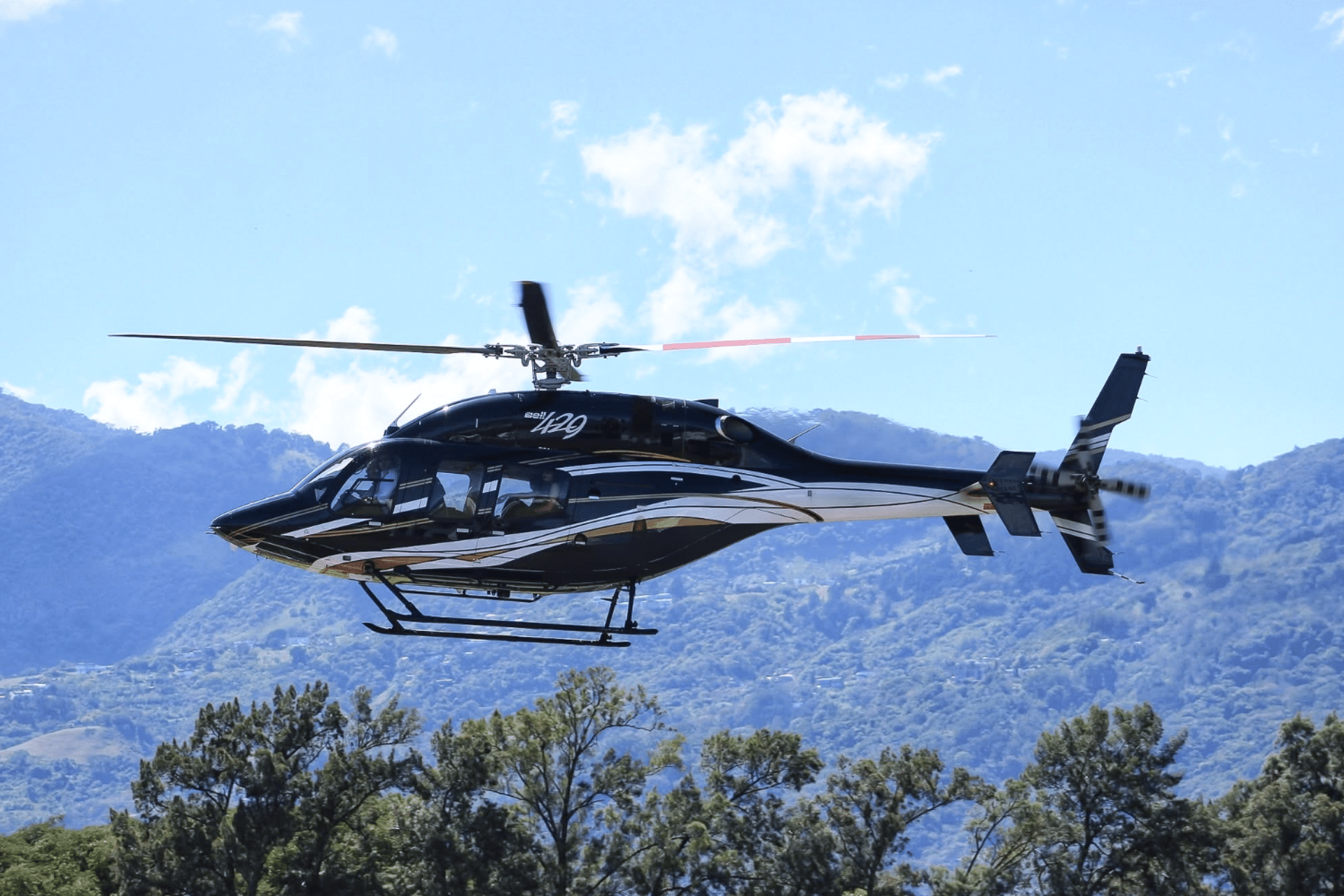
The aircraft should serve the mission. A private helicopter sightseeing flight is often the best choice when the goal is close visual access, flexible routing, and a more intimate view of varied terrain. Helicopters can be particularly compelling for scenic circuits over coastlines, valleys, forest, and volcanic regions, subject to operating conditions and applicable airspace requirements.
A private airplane may be the stronger fit for longer scenic distances, larger groups, or itineraries that combine sightseeing with transportation between regions. Airplanes can provide efficient coverage and a comfortable way to connect destinations, while helicopters offer a more immediate relationship with the landscape.
Neither option is universally better. The right choice depends on passenger count, preferred scenery, total flight time, luggage requirements, desired departure location, and the day’s weather. A qualified operator should explain these trade-offs clearly rather than pushing a one-size-fits-all solution.
Provide the Details That Shape the Flight
When you are ready to schedule a private sightseeing flight, a few details allow the planning process to move quickly. Your preferred date and time, number of passengers, hotel or current location, approximate body and baggage requirements, and must-see areas are all useful. If anyone has mobility considerations, sensitivity to motion, or a special occasion in mind, mention that early as well.
It is also helpful to state how flexible your schedule is. Scenic aviation is weather-dependent, and Costa Rica’s microclimates can vary considerably between the Central Valley, mountain areas, and both coasts. A morning departure may offer clearer conditions in some regions, while another route may be better suited to a different window. The flight team can advise on the operational outlook, but no responsible operator should guarantee views that weather does not support.
For travelers arriving on an international flight or connecting from another part of the country, build in reasonable timing. Private aviation is highly efficient, but it still relies on passenger readiness, airport procedures, weather assessment, and aircraft positioning. A well-paced schedule protects the experience from unnecessary pressure.
Make Safety and Operating Standards Part of the Decision
Scenic flying should feel exclusive, but it should never feel casual. The visual appeal of a flight is only as valuable as the operating discipline behind it. Ask about the operator’s certification, maintenance standards, pilot experience, safety procedures, and how weather decisions are made.
In Costa Rica, DGAC certification and operations aligned with recognized ICAO standards are meaningful indicators of a professional aviation framework. They do not remove the natural variables involved in flying, but they demonstrate that the service is being delivered within established regulatory and operational expectations.
A dependable operator will be direct about limits. That includes passenger and baggage considerations, route adjustments, visibility concerns, and any change required for safety. If weather shifts, the right response may be to adjust the route, move the departure time, reschedule, or, in some cases, cancel. Those decisions are not an inconvenience. They are a sign that the flight is being managed properly.
Aerotour brings operating experience dating to 1973, with private aviation services based in both San José and Liberia. That local coverage is valuable when a flight needs to fit naturally into a luxury vacation, executive schedule, or specialized production plan.
Plan the Day Around the Flight, Not Just the Flight Time
A 45-minute or 90-minute air experience has a longer footprint on the day. Allow time for the transfer to the departure point, passenger check-in, a safety briefing, and post-flight transportation. This is particularly relevant when your itinerary includes a resort check-in, a private driver, a dinner reservation, or a connection to another destination.
Dress for comfort and choose secure footwear. Avoid loose items that can become a distraction around an aircraft. Sunglasses can improve comfort in bright conditions, though your pilot or flight crew may provide specific guidance on what is appropriate to bring. For photography, ask in advance about camera equipment, lenses, filming needs, and any operational limitations.
If you are traveling with children, communicate their ages and sizes when booking. The operator can advise on seating, safety requirements, and whether the selected flight is a good match for the group. For guests who are prone to motion discomfort, it is worth discussing that too. Smooth flying conditions cannot be promised, but route and timing choices may help create a more comfortable experience.
Understand What Changes the Price
Private sightseeing flights are priced around the actual mission, not a standardized seat. Aircraft type, flight duration, route, landing or airport considerations, passenger count, positioning, and special requirements can all affect the final quote. A flight that begins near your resort and follows a simple local route may be priced differently from one requiring aircraft repositioning or a more complex itinerary.
The clearest quote is not always the lowest initial figure. Look for a proposal that identifies the aircraft category, approximate flight time, departure point, route concept, passenger limitations, and what is included. If your plans may change, ask about cancellation and weather policies before confirming. This avoids uncertainty and makes it easier to compare options responsibly.
For executive travelers, there may be value in combining business movement and scenery. A private transfer between regions can be designed to include a visual route where operationally practical, allowing the flight to serve both time efficiency and a distinctive guest experience. For leisure travelers, a dedicated scenic circuit may be the better choice because it keeps the pace relaxed and the itinerary focused on the view.
Confirm a Route With Room for Reality
A planned route is a strong starting point, not a promise that conditions cannot change. Air traffic requirements, weather, visibility, wind, cloud cover, and airport activity can influence the final path. The experienced way to book is to identify priorities, then give the pilot and operations team room to make the safest decision on the day.
That flexibility often improves the experience. If clouds settle around a volcano, a coastal or rainforest alternative may offer exceptional views. If a morning forecast is more favorable, shifting the departure can make a meaningful difference. The goal is not to force a particular flight plan. It is to create the best possible flight within safe operating conditions.
A private sightseeing flight is an investment in access, perspective, and time well used. Arrive with a clear idea of what you want to see, choose an operator whose credentials inspire confidence, and leave enough flexibility for professional flight planning. The result is more than a collection of photographs. It is a rare opportunity to see Costa Rica with the scale, privacy, and care the destination deserves.