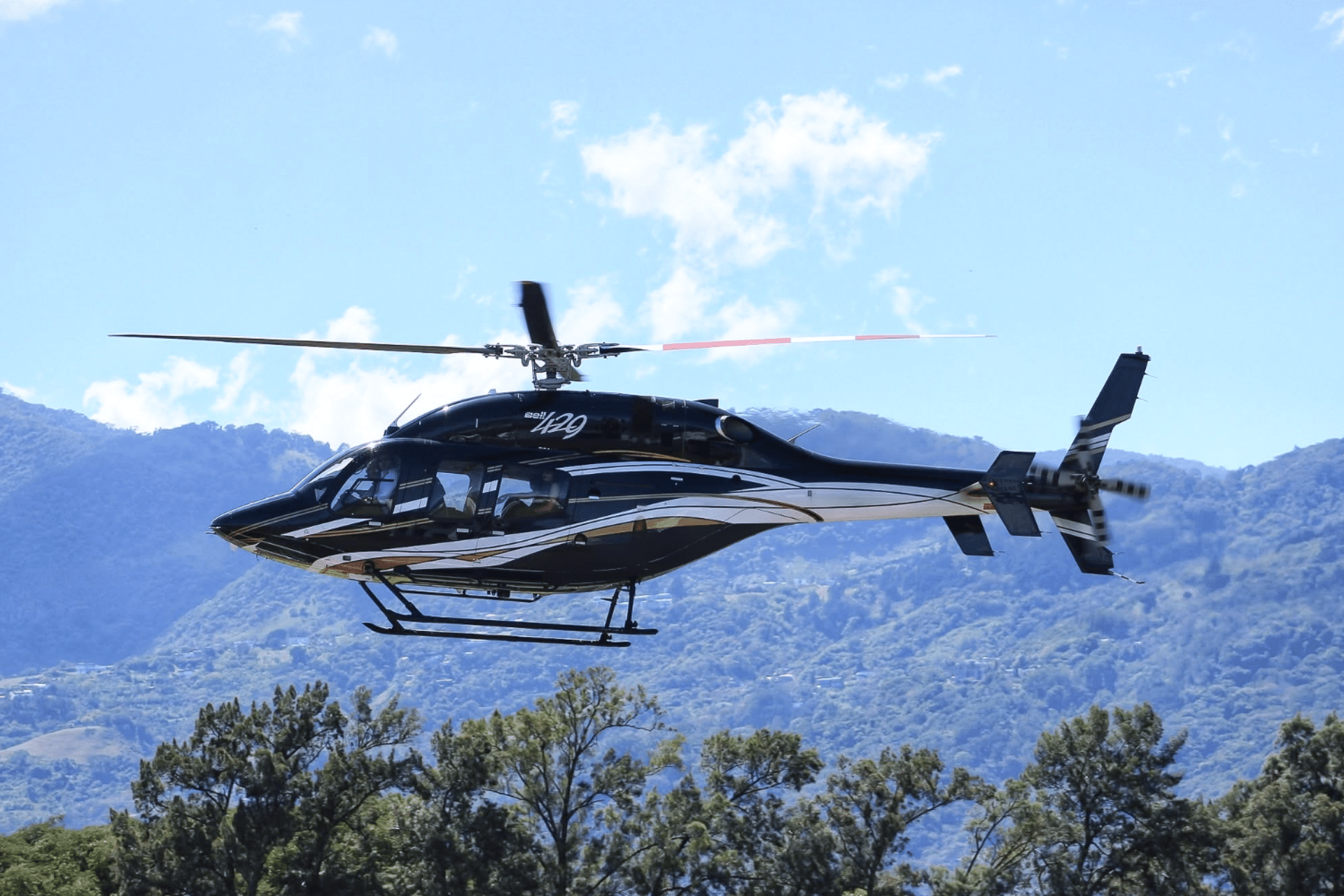

Air Charter for Productions in Costa Rica

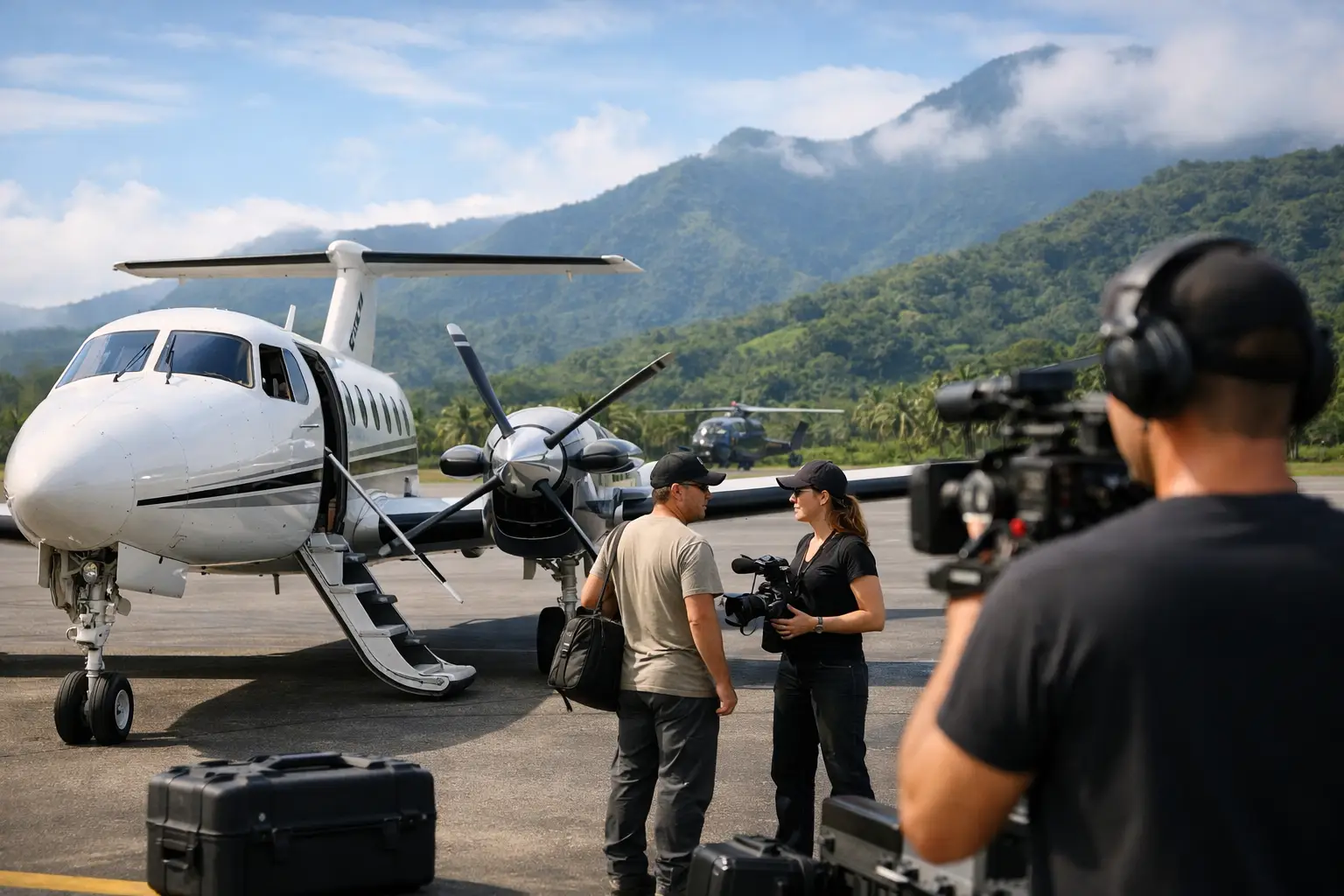
A production day can fall apart long before the first shot. A road transfer runs late, weather shifts over the mountains, daylight disappears, and a crew that looked efficient on paper loses half a day in transit. That is why air charter for productions matters in Costa Rica. When filming schedules are tight and locations are spread across coastlines, cities, forests, and remote properties, flight logistics become part of the production strategy, not just transportation.
For producers, line producers, location managers, and agency teams, the value is simple. Aircraft shorten transit time, improve access, and create more control around a schedule that already has enough moving parts. In some cases, a private airplane is the best tool for moving key personnel between regions. In others, a helicopter provides the combination of direct access and aerial filming support that ground logistics simply cannot match.
Why air charter for productions changes the schedule
Costa Rica offers unusual production advantages within a relatively compact geography. A team can move from urban settings to jungle, coastline, volcanoes, luxury resorts, and agricultural landscapes in a short span. The catch is that road time can still be unpredictable. Terrain, weather, traffic, and location access often stretch what looks like a manageable transfer into a major scheduling risk.
Air charter reduces that exposure. Instead of building a call sheet around long surface transfers, a production can position cast, clients, directors, or technical leads closer to where they need to be. That often means more shooting time, fewer overnight moves, and less fatigue for people whose decisions affect the entire day.
The benefit is not just speed. It is precision. A well-planned charter operation helps production teams work backward from the shoot window, talent availability, equipment needs, and weather conditions. That leads to better decisions about who should fly, what should move by air, and when a helicopter or airplane is worth the investment.
What productions typically use charter aircraft for
Most people assume charter is only for celebrity transport or luxury travel. In practice, production use is broader and more practical. Aircraft are often used to move directors, DPs, agency representatives, executive clients, or compact camera teams between locations where time is the limiting factor.
Helicopters are also used for aerial filming, aerial photography, and visual reconnaissance before a shoot. A location that looks perfect in stills may present different realities from the air, especially when approach paths, surrounding terrain, light angles, or nearby infrastructure matter to the shot. Seeing that environment from above can save both money and creative compromise.
There are trade-offs. Not every piece of gear should go by air, and not every crew movement needs a private flight. Larger set builds, heavy equipment loads, and non-time-critical support vehicles may still be better handled on the ground. The smart approach is usually mixed logistics, with air charter used for the people and tasks where speed, access, or aerial capability create a clear return.
Helicopter or airplane? It depends on the production plan
Choosing between a helicopter and a private airplane is less about preference and more about mission fit. Helicopters are ideal when direct access matters most. If the production is working near a remote lodge, private estate, coastline, mountaintop property, or difficult terrain, rotary-wing aircraft can substantially reduce the final access challenge. They are also the natural choice for aerial capture and low-altitude route flexibility, subject to operating and safety requirements.
Private airplanes make more sense when the objective is efficient regional transfer between established airports or airstrips. If a production needs to move a small executive group, agency clients, or core crew from one side of the country to another with comfort and speed, fixed-wing charter may be the more economical and practical solution.
For some productions, both are useful. An airplane can handle interregional transport, while a helicopter supports the final approach or the aerial shooting segment. That kind of combination is often the difference between a charter program that looks impressive and one that actually solves production problems.
Safety and compliance are not background details
In production planning, aviation can be treated as a fast fix for a difficult schedule. That is a mistake. Flight support has to be built on operational discipline, regulatory compliance, and clear communication with the production team. Safety is not a line item to review after the creative concept is approved.
For that reason, producers should evaluate operators on credentials, experience, maintenance standards, crew proficiency, and familiarity with specialized missions. A production flight can involve more complexity than a standard passenger transfer, especially when timing, route adjustments, aerial work, and changing weather all affect the mission.
In Costa Rica, working with an operator that is DGAC certified and aligned with ICAO standards provides an important level of reassurance. So does a long operating history in the local environment. Mountain weather, coastal conditions, and location-specific access all require local knowledge. Experience matters because production teams rarely have extra time to absorb preventable operational surprises.
Planning air support early saves more than money
The best charter outcomes usually come from early coordination, not last-minute scrambling. When aviation support is introduced at the location scouting or production planning stage, there is more room to optimize route design, ground handling, crew manifests, equipment movement, and timing around daylight.
This is also where realistic expectations help. Aircraft can solve many logistical problems, but they do not remove weather considerations, payload limits, or site restrictions. A reliable operator will explain what is possible, what needs adjustment, and what alternatives make more sense. That kind of clarity is valuable because it protects both the budget and the schedule.
For premium productions, early planning often improves the client experience as well. Agency stakeholders, brand teams, and executive guests can move between filming locations with far less disruption. That matters when approvals are happening in real time and decision-makers need to stay close to the production without losing entire days to transportation.
Air charter for productions and aerial filming support
Aerial content is one of the strongest reasons productions use charter aircraft in Costa Rica. Scenic scale is part of the country’s appeal, but capturing that scale well requires more than booking a flight. It requires coordination between aviation and production teams, with attention to flight paths, camera objectives, timing, weather, and onboard safety protocols.
Helicopter filming support can be especially effective for tourism campaigns, hospitality content, luxury real estate, infrastructure documentation, and branded storytelling built around landscape. The aircraft becomes both a transport tool and a production platform. That dual value can justify the cost when compared with the time and limitations of trying to create equivalent visual impact from the ground.
Still, not every aerial sequence calls for the same solution. Some shots are better suited to helicopters, while others may be handled through separate aerial methods depending on the objective, regulation, and environment. The key is working with an aviation partner that understands the difference between a scenic flight and a production mission.
What producers should look for in a charter partner
A strong charter partner for production work should be responsive, operationally clear, and comfortable working inside tight timelines. They should understand that call times change, weather windows narrow, and creative priorities can shift. Flexibility matters, but disciplined execution matters more.
Look for an operator with established infrastructure, proven safety culture, and familiarity with both executive transport and specialized aerial operations. In Costa Rica, base location also matters. Coverage from San José and Liberia can make a meaningful difference for productions moving between the Central Valley, Guanacaste, and other key regions.
This is where a long-established operator such as Aerotour stands apart. Experience dating back to 1973, combined with DGAC certification and adherence to ICAO standards, gives production teams something they actually need from an aviation provider – confidence that the flight side of the schedule is being handled by professionals who understand both service and mission discipline.
When the premium choice is also the practical one
Private aviation for film, advertising, branded content, and commercial shoots is sometimes treated as an indulgence. On the wrong job, it can be. But on a production with multiple locations, high-value personnel, strict daylight requirements, or aerial content needs, charter is often the practical choice.
The real calculation is not just the aircraft cost. It is the cost of delayed setups, lost light, extended crew hours, additional hotel nights, client dissatisfaction, and missed creative opportunities. Once those factors are clear, air charter becomes less about luxury and more about control.
For production teams working in Costa Rica, that control can be the difference between chasing the schedule and actually owning it. The smartest flight plan is the one that protects the work before the day starts.