
Helicopter Versus Boat Transfer in Costa Rica

A coastal transfer can set the tone for an entire Costa Rica itinerary. A helicopter versus boat transfer is not simply a question of luxury. It is a decision about time, access, weather tolerance, luggage, privacy, and what you need from the journey itself. For a family headed to a remote resort, an executive traveling between meetings, or a production team moving equipment and crew, the right choice can be very different.
Costa Rica’s geography makes both options compelling. Its Pacific coastline, islands, marinas, and hard-to-reach properties reward travelers who look beyond road travel. The better transfer is the one that matches your schedule, group, destination, and operating requirements.
Helicopter Versus Boat Transfer: The Essential Difference
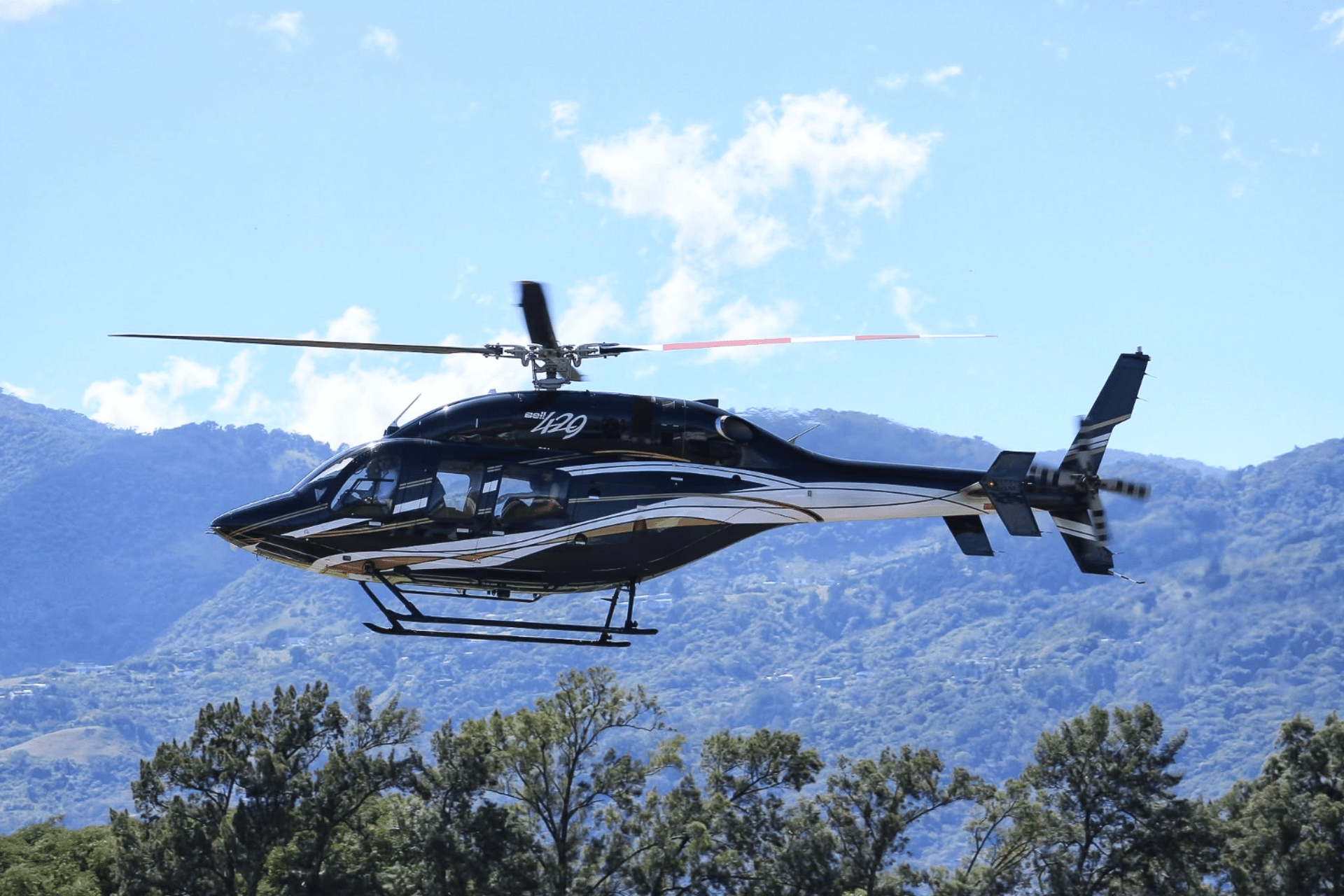
A private helicopter transfer is designed to reduce travel time and bypass the limitations of roads, traffic, and coastal terrain. It can connect airports, hotels, private properties, remote lodges, and approved landing areas with a level of directness that surface transportation cannot always provide. The experience is brief, private, and highly visual, with aerial views of rainforest, coastline, volcanoes, and the Pacific.
A private boat transfer is a water-based journey rather than just transportation. It is often the practical choice when the final destination is a marina, island, beachfront property, fishing location, or coastal resort without nearby helicopter access. It also allows more space for certain types of luggage and can be a more natural fit for travelers who want to enjoy the water, stop along the way, or arrive directly at a dock.
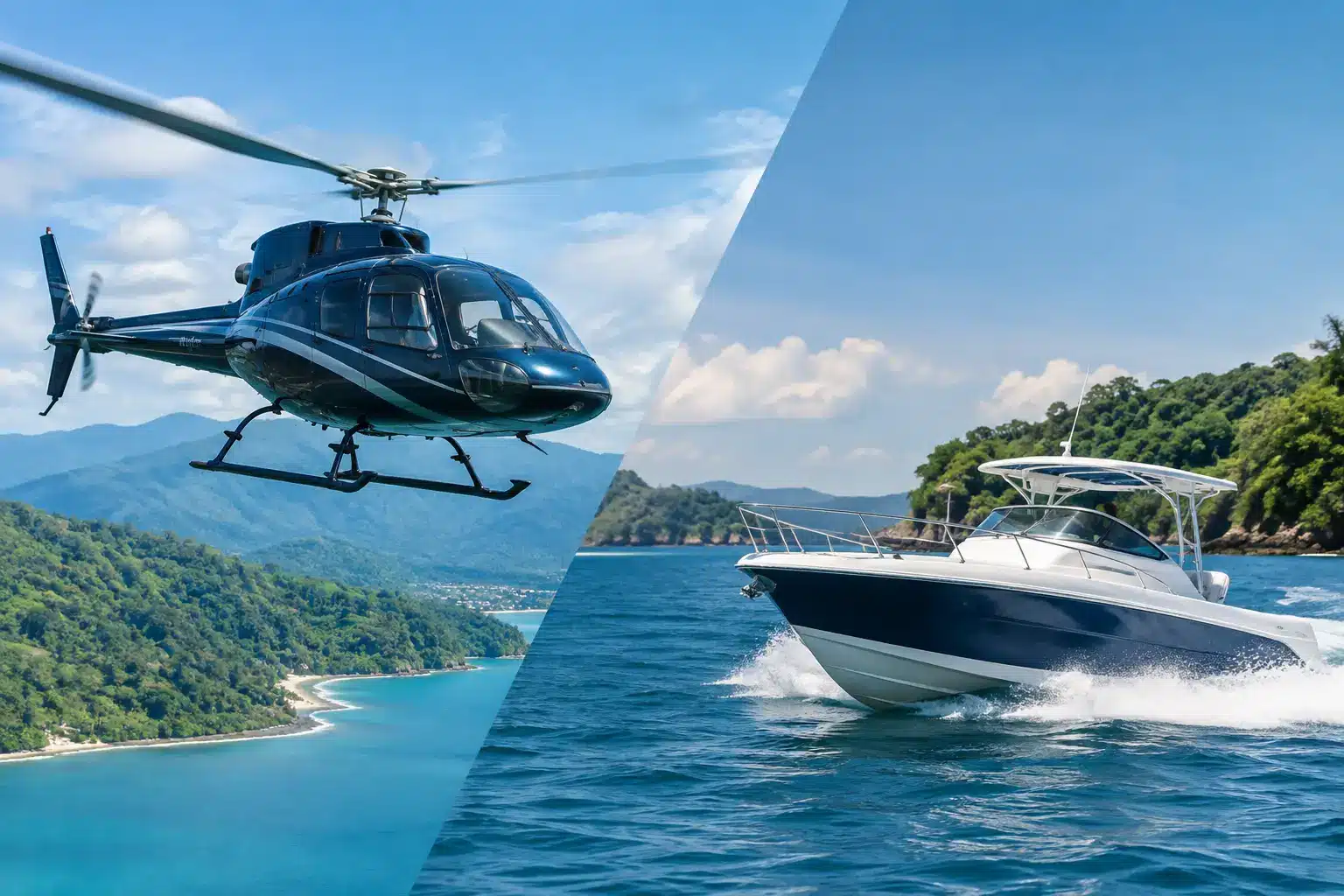
The distinction matters: helicopters prioritize speed and point-to-point access, while boats prioritize waterfront arrival, capacity, and the experience of being on the water.
When a Helicopter Is the Better Choice
For travelers whose time in Costa Rica is limited, a helicopter often changes the shape of the itinerary. A route that may involve several hours by road, plus a water crossing, can be reduced to a short flight when suitable landing facilities and operating conditions are available. That can mean an extra afternoon at a resort, a more productive day for a corporate team, or the ability to combine destinations that would otherwise require an overnight stop.
Helicopters are particularly valuable for executive mobility. A leadership team traveling between San José, Liberia, coastal properties, and regional sites may place a premium on privacy, schedule control, and avoiding long ground journeys. The cabin environment supports focused travel, although it should not be viewed as an office in the sky. Seating, payload, weather, and flight-time restrictions all need to be considered during planning.
They also offer an advantage for destinations where the road journey is difficult or indirect. Rainy-season conditions, mountain routes, road construction, and traffic can make a nominally short drive unpredictable. A helicopter does not remove all weather considerations, but it can reduce dependence on road conditions and give travelers a more efficient path to approved landing locations.
For production and technical work, helicopters provide capabilities that boats cannot. Aerial filming, photography, site surveys, reconnaissance, and specialized support missions require an aircraft, experienced crew coordination, and careful operational planning. In these cases, the transfer may be only one part of a broader aerial operation.
What to consider before booking a helicopter
Helicopter travel has practical limits. Passenger capacity is lower than on many private vessels, and each traveler’s baggage affects the aircraft’s weight-and-balance calculation. Soft-sided luggage is often easier to accommodate than large rigid cases. Golf bags, camera equipment, surfboards, and other oversized items may require advance planning, a separate logistics solution, or a different mode of transportation.
Weather is another important factor. Aviation operators assess conditions continuously, and flights are conducted only when conditions support safe operations. Travelers should build flexibility into tightly scheduled plans, particularly during Costa Rica’s wetter months. A professional operator will discuss alternates and contingency options before departure rather than making promises that ignore operational realities.
When a Boat Transfer Makes More Sense
A private boat transfer is often the strongest option when the destination itself is defined by the water. Guests traveling to an island, a yacht, a marina-based resort, or a property with dock access may find that a vessel delivers them closer to their final destination than an aircraft can. The transfer can be arranged around the rhythm of the day, whether that means a morning departure, a sunset crossing, or a route that includes a coastal stop.
Boats also generally offer greater flexibility for bulky items and larger groups, depending on the vessel selected. This can be useful for families with substantial luggage, fishing parties with gear, event groups, or crews carrying production cases. Comfort varies significantly by boat type, sea state, route length, and onboard amenities, so the vessel should be chosen for the mission rather than appearance alone.
For travelers who want the journey to be part of the vacation, a boat can be more rewarding than a quick flight. It creates time to take in the coastline at sea level, watch for marine life, and settle into a slower arrival. That said, the experience is not ideal for everyone. Guests prone to motion sickness, those traveling with young children, or anyone with a strict arrival deadline may prefer the predictability of a short helicopter flight when available.
Sea conditions can define the experience
The same coastline that makes a boat transfer memorable can also make it variable. Wind, swell, tides, seasonal weather, and departure timing affect ride quality and travel duration. A calm morning crossing may be very different from an afternoon trip on the same route.
A quality boat operator will set expectations honestly, monitor conditions, and recommend the appropriate departure window. If comfort is a priority, ask about the vessel’s design, shaded seating, restroom availability, safety equipment, and how the crew handles luggage and boarding. These details matter more than a generic promise of a premium transfer.
Compare the Factors That Matter Most
The choice becomes clearer when the transfer is evaluated against the needs of the trip.
| Decision factor | Helicopter transfer | Boat transfer | |—|—|—| | Travel time | Usually the fastest option for suitable routes | Depends on distance, sea conditions, and vessel speed | | Final access | Best for approved helipads and nearby landing sites | Best for marinas, docks, islands, and waterfront properties | | Privacy | Highly private with a small passenger group | Private charters can be private, often with more room to move | | Luggage | Limited by aircraft payload and dimensions | Usually better for bulky luggage and equipment | | Journey experience | Aerial views and efficient travel | Coastal scenery and time on the water | | Weather sensitivity | Subject to aviation weather minimums | Subject to wind, swell, tides, and marine conditions | | Group size | Best for smaller groups | Can suit larger groups depending on vessel capacity |
Cost should also be considered in context. A helicopter may carry a higher hourly rate, but it can create value by saving significant time, avoiding an extra night of accommodation, or allowing a business group to complete more than one engagement in a day. A boat may be more economical for larger groups or when water access eliminates the need for additional ground transfers. The most useful comparison is not the base price alone, but the total cost of time, coordination, and convenience.
Planning a Transfer Around Safety and Reliability
Private transportation should never be treated as a commodity purchase. Ask how the operator evaluates weather, confirms passenger and baggage limits, coordinates ground or dockside handling, and manages changes to the schedule. For helicopter operations, look for appropriate aviation certification, experienced flight crews, and procedures aligned with established aviation standards. For boat transfers, verify the vessel’s operating credentials, safety equipment, crew experience, and local route knowledge.
In Costa Rica, coordination is often the deciding factor. A successful transfer may involve airport handling, resort staff, private drivers, marina teams, luggage support, and timing around daylight or weather. Aerotour plans private helicopter services from its San José and Liberia bases with this broader logistics picture in mind, helping travelers connect their flight with the rest of the journey rather than treating it as an isolated segment.
Advance planning is especially valuable for holiday periods, major events, high-demand resort dates, and production schedules. Share passenger numbers, luggage details, destination information, preferred departure times, and any mobility or equipment needs early. The more precisely the operation is understood, the more accurately an operator can recommend the right aircraft, vessel, route, and backup plan.
Choose the Transfer That Protects Your Time
Choose a helicopter when speed, direct access, privacy, and a tightly managed schedule are the priorities. Choose a boat when waterfront arrival, group capacity, gear flexibility, or the pleasure of a coastal journey matters more. In some itineraries, the strongest solution is both: fly efficiently to a regional point, then continue by boat to an island or dockside destination.
The most valuable transfer is the one that lets you arrive prepared, unhurried, and confident that the route was designed around the way you actually travel.