
Aerial Filming Equipment Guide for Costa Rica

A waterfall sequence can look effortless on screen, yet the flight behind it is a tightly coordinated operation. This aerial filming equipment guide is designed for production teams planning helicopter or fixed-wing shoots in Costa Rica, where rainforest weather, changing light, terrain, and location access all influence what equipment will perform reliably in the air.
The right package is not simply the camera with the highest resolution. It is a matched system of aircraft, stabilized camera support, lenses, communications, power, crew workflow, and safety planning. A well-chosen setup protects the production schedule while giving the director and camera team meaningful creative control.
Start With the Shot, Not the Camera
Before selecting equipment, define the movement the story requires. A broad coastal reveal, a fast tracking pass over a vehicle, a slow approach to a resort, and a high-altitude establishing shot may all call for different aircraft positions, focal lengths, and stabilization approaches.
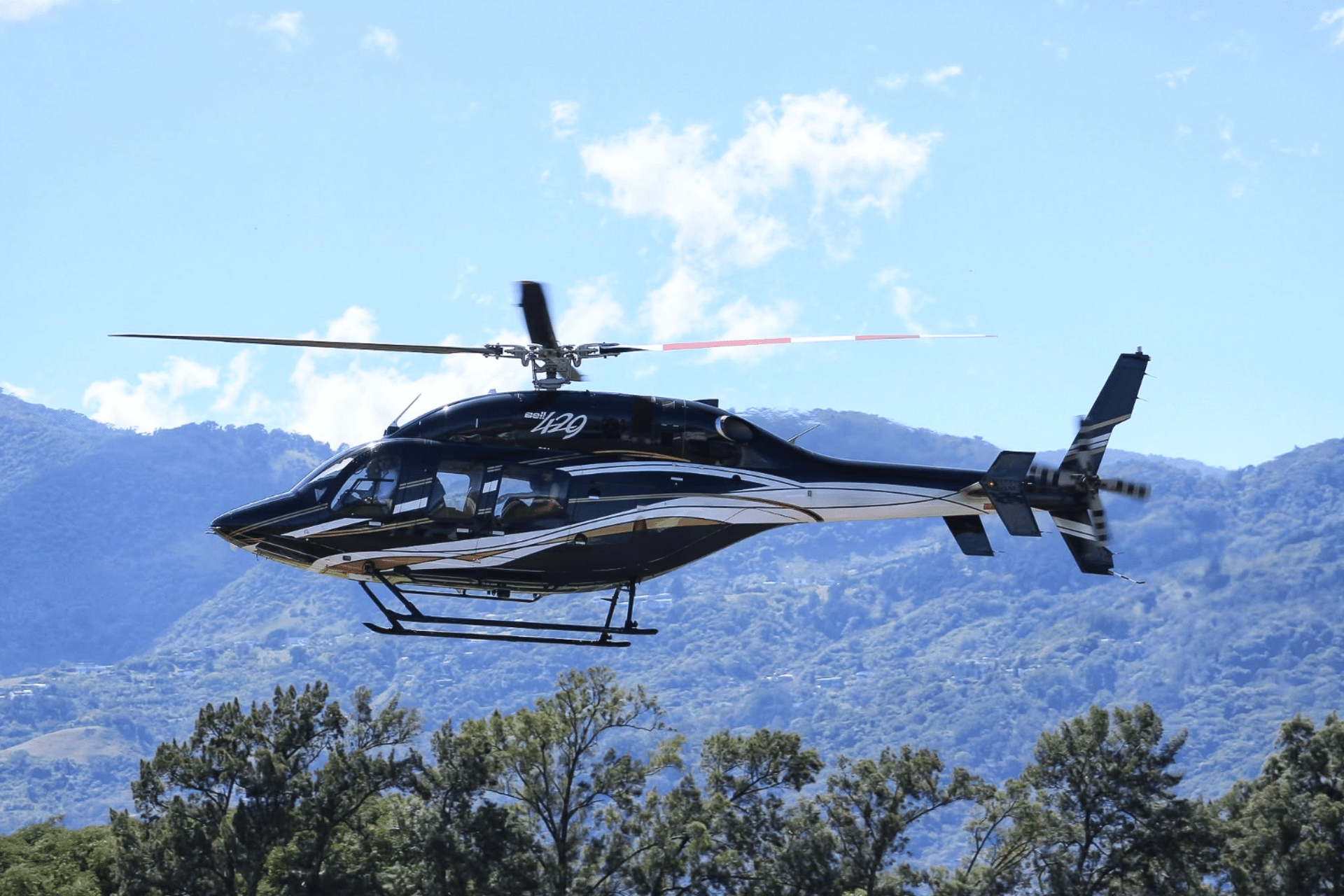
Helicopters are often the preferred platform when the project needs low-speed maneuverability, precise orbiting, or access near rugged terrain. They can hold a visual relationship with a subject more effectively than many fixed-wing aircraft. Fixed-wing platforms can be a strong choice for longer-range scenic coverage, higher-altitude work, and sequences where endurance or transit efficiency matters more than hovering capability.
This distinction affects the equipment package. A camera system that is ideal for a stabilized exterior mount may not suit a handheld cabin setup, and a lens plan built for distant volcanic landscapes will differ from one intended for close-in architectural work. Clarify the intended deliverables, frame rates, aspect ratios, and final distribution format before committing to a camera body.
Aerial Filming Equipment Guide: The Core System
A professional aerial package should be evaluated as a complete operating system rather than a collection of separate purchases or rentals. At minimum, the production needs a capable imaging platform, stable support, dependable monitoring, crew communications, and secure power and data handling.
Camera bodies and recording formats
Cinema camera bodies should be selected for image quality, weight, recording flexibility, and reliability at altitude. High-resolution acquisition can be valuable when reframing or stabilizing in post-production, but it adds demands for storage, media management, and processing. A lighter camera package may produce a better result if it allows the stabilized system to work within its preferred payload range.
Dynamic range is especially useful in Costa Rica, where a shot may move from dark forest canopy to reflective water or bright beach in seconds. Choose recording formats that give the color team enough latitude, but do not let a technically ambitious codec create unnecessary risk in the field. Tested media, duplicate cards, and a clear offload process matter as much as the camera specification.
Stabilized mounts and gimbals
For exterior aerial work, a gyro-stabilized gimbal is often the center of the package. It isolates the camera from aircraft vibration and enables controlled pan, tilt, roll, and lens operation from inside the cabin. This is the equipment that makes smooth, cinematic movement possible when the aircraft is operating safely within approved parameters.
Not every shoot requires an exterior mount. Interior handheld work can offer an immediate, documentary-style perspective, particularly for scenic flights or executive travel stories. The trade-off is that vibration, wind, reflections, and restricted camera movement become more apparent. Handheld work requires a carefully secured operator position and a realistic expectation of the footage style.
Aerial mounts should be installed, inspected, and operated by qualified specialists. The mount, camera, lens, cabling, and controls must be approved as a combined load, with no improvised additions introduced on the day of the flight.
Lenses, filtration, and focus control
Lens selection should favor versatility and mechanical reliability. Zoom lenses are valuable when the aircraft cannot reposition quickly or when the subject’s distance changes during a pass. Prime lenses can deliver a distinct visual character and may be appropriate for planned, repeatable shots, but frequent lens changes in an aircraft add operational complexity.
Aerial footage often benefits from longer focal lengths than crews expect. A distant viewpoint can compress mountain ridges, isolate wildlife at an appropriate operational distance, or create elegant parallax over coastline and cityscapes. Wide lenses remain essential for establishing shots, but extreme wide-angle coverage can make aircraft vibration and rapid movement feel more pronounced.
Neutral-density filters help maintain intentional shutter settings in strong tropical sun. Polarizers deserve more caution: they can reduce glare over water and foliage, yet their effect may vary across a wide frame and change as the aircraft turns. Every filter choice should be tested against the planned lens and shooting angle.
Build a Cabin Workflow That Supports the Flight
An aerial shoot is not the place for a crowded cabin or a loose cable. The pilot must have an unobstructed working environment, while the camera operator, director of photography, gimbal technician, and producer need clear roles and a disciplined workflow.
Reliable intercom communication is essential. The creative team needs to call framing adjustments without distracting the pilot, and the pilot needs a direct path to communicate weather, airspace, timing, or safety constraints. Agree on simple language before departure. Calls such as wider, hold, reset, and return should mean the same thing to everyone on board.
Remote monitoring is equally valuable. A calibrated onboard monitor lets the director of photography assess exposure and composition, while a separate client monitor can be useful on larger productions when space permits. However, extra monitors, wireless transmitters, and accessories add power requirements, weight, and potential points of failure. Prioritize the devices that genuinely improve decisions in the air.
All equipment must be secured. Cases, batteries, media, cables, and personal items should have designated locations before the aircraft starts. A production assistant cannot retrieve a loose item during flight, and an unsecured object can become a serious safety issue.
Plan for Light, Weather, and the Costa Rican Landscape
Costa Rica provides extraordinary visual variety within short flight distances: Pacific coastline, volcanic terrain, dense forest, rivers, urban skylines, and remote lodges. It also presents rapidly changing conditions. Morning cloud, afternoon convection, haze, rain, and wind can alter both safety margins and the look of the image.
Schedule the highest-priority shots during the most favorable operational window, then create a realistic alternate plan. A flexible call sheet may include an inland option if coastal weather closes in, or a later scenic sequence if early cloud cover delays a mountain shot. Trying to force a planned image through unsuitable conditions is costly and rarely produces the intended result.
Humidity and heat also deserve attention. Allow cameras and lenses to acclimate when moving between air-conditioned interiors and outdoor conditions, and protect sensitive equipment from moisture during staging. Battery performance, screen visibility, and media handling should be checked in the actual working environment, not only in a studio.
Treat Permits and Aircraft Integration as Production Equipment
A polished aerial unit is built as much through preparation as through hardware. Flight planning, location authorization, airspace coordination, passenger manifests, weight-and-balance considerations, and aircraft-specific operating limits all shape what can be filmed and how long the crew can remain productive.
Some locations may require property permission, coordination with local authorities, or additional restrictions because of environmental sensitivity or nearby operations. The production team should confirm these requirements early, particularly when filming near protected areas, resorts, populated locations, or infrastructure. Aviation approvals and ground-location permissions are related, but they are not the same thing.
The operator should be involved before the equipment is finalized. An experienced aerial partner can advise whether the desired mount, payload, seating arrangement, and route are compatible with the planned aircraft and mission. At Aerotour, that coordination is approached as part of the flight operation, combining production needs with the safety discipline expected of a specialized aviation service.
Budget for Redundancy Where It Counts
The most expensive failure is usually not a camera malfunction. It is losing a narrow weather window because a small accessory was overlooked. Carry tested backup media, adequate batteries, spare cables, lens-cleaning materials, rain protection, and a duplicate plan for data transfer.
Redundancy should be selective. A backup camera body may be prudent for a multi-day commercial production, while a second wireless video system may be less valuable than additional flight time or a weather hold. Spend first on the items that protect the schedule, the crew, and the irreplaceable footage.
Choose the Team Before the Gear
Premium aerial imagery comes from equipment that has been tested together and a crew that understands the limits of flight. The strongest productions leave room for changing weather, operational judgment, and the occasional decision not to take a shot.
Bring the creative brief to the aviation team early, identify the images that matter most, and let the aircraft, camera, and support systems be designed around those priorities. That preparation gives the production its best chance to return with footage that feels ambitious on screen and disciplined behind the scenes.