
When Private Aviation Makes Sense in Costa Rica


A meeting in San José, a villa on the Papagayo Peninsula, and a dinner reservation near Manuel Antonio can be difficult to combine on a commercial schedule. Private aviation changes that equation. In a country defined by mountain roads, remote coastlines, rainforests, and distinctive regional airports, a tailored flight can turn a multi-day transfer plan into a well-organized itinerary built around the traveler rather than a timetable.
For some guests, the value is an exceptional view of volcanoes, beaches, and forests from a helicopter. For others, it is the ability to reach a project site, resort, production location, or business meeting without sacrificing a working day. The right choice depends on the mission, the number of passengers, the destination, weather conditions, baggage needs, and the level of flexibility required.
What Private Aviation Delivers Beyond Speed
Time is often the most visible benefit, but it is not the only one. Private charter enables passengers to select departure times that support their plans, use the airport or helipad most appropriate for the route, and travel with the people who need to be on board. That can make a meaningful difference for families coordinating a holiday, executive teams managing regional commitments, and production crews moving between locations.
Privacy is equally relevant. A charter cabin creates space for confidential conversations and quiet preparation before an important meeting. It also avoids the complexity of moving a group through a conventional airport schedule. For travelers arriving from international destinations, a private onward flight can provide a more direct connection to a lodge, resort, or private residence.
Access matters in Costa Rica. Many of the country’s most sought-after destinations are not close to a major international terminal. A private airplane can connect cities and regional airfields efficiently, while a helicopter may offer access closer to remote properties, scenic areas, or specialized work locations when operating conditions permit. The best aircraft is not necessarily the largest or fastest one. It is the one suited to the route and the objective.
Private Aviation for Different Types of Travel
Executive and corporate travel
For business leaders, charter flights are most valuable when schedules are compressed or destinations are spread across the country. A same-day visit to multiple locations may be possible by air when road travel would consume most of the day. Private aviation can also support site visits, investor travel, executive retreats, and discreet client transportation.
Planning should begin with the actual business need, not an assumed aircraft type. Passenger count, meeting times, ground transfers, equipment, and the possibility of schedule changes all influence the recommended flight plan. An experienced operator can assess these details before presenting a practical option.
Leisure travel and destination access
Costa Rica rewards travelers who leave the main gateways behind. The challenge is that reaching a remote beach, rainforest lodge, or mountain retreat can require long drives after an international arrival. A private charter can reduce travel time and create a more comfortable start or finish to a vacation.
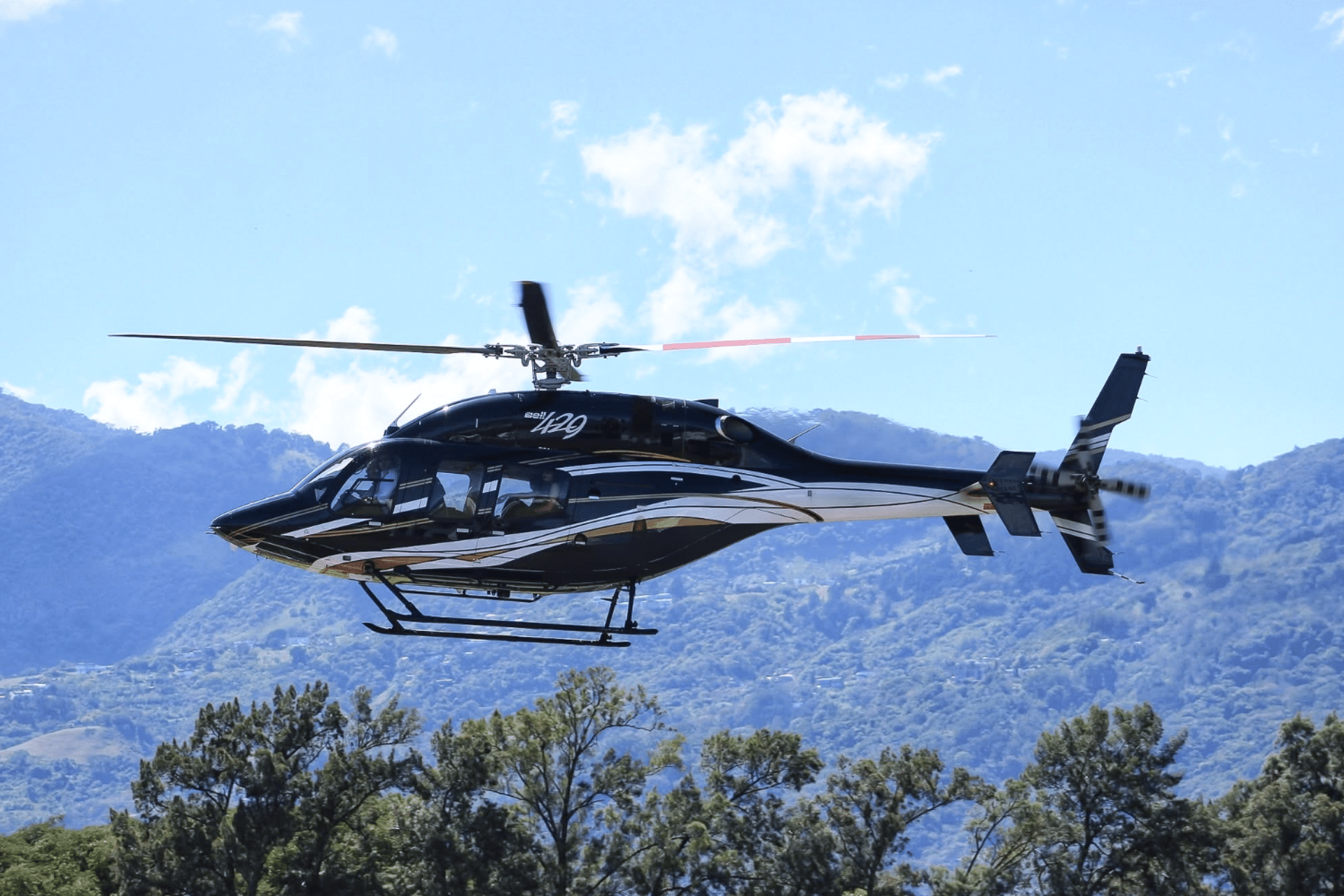
Helicopter charters are especially compelling for travelers who want a highly personalized point-to-point experience or a scenic transfer. A route over the Pacific coast, inland valleys, or volcanic landscapes can become part of the journey rather than simply transportation. Still, sightseeing value should never overshadow operational considerations. Weather, available landing sites, weight limits, and daylight requirements must guide the final plan.
Film, photography, and specialized operations
Aerial production work requires more than an aircraft and a camera. It requires pilots, flight planning, communications, equipment coordination, and an understanding of how to position safely for the requested shots. The same is true for industrial support, surveys, inspections, and mission-specific transport.
Production teams benefit from working with an operator that can discuss the practical details early: camera configuration, doors-off requirements where approved, fuel planning, permits, crew positioning, weather alternatives, and the time needed to complete a sequence. Aerial work is precise work. Preparation protects both the creative schedule and the safety of everyone involved.
Choosing Between a Helicopter and a Private Airplane
A helicopter and a private airplane solve different transportation problems. A fixed-wing aircraft is generally the better fit for longer regional routes, larger luggage loads, and travel between established airports. It can be an efficient choice for families, business groups, or travelers connecting San José and Liberia with regional destinations.
A helicopter is ideal when proximity, flexibility, or aerial visibility is central to the mission. It may reduce ground travel substantially where a suitable helipad or approved landing location is available. It also provides the perspective needed for scenic flights, photography, and certain technical operations.
The decision should be based on more than preference. Ask where the flight begins and ends, how many people are traveling, what luggage or equipment must be carried, whether the route is daytime only, and what backup options exist if weather changes. A professional charter team will explain the trade-offs clearly rather than pushing a one-size-fits-all answer.
Safety Is the Foundation of Every Charter Decision
Premium service is not defined by appearance alone. It is defined by disciplined operations, properly maintained aircraft, qualified crews, clear procedures, and conservative decision-making when conditions demand it. Clients should expect a charter provider to be transparent about aircraft capabilities, passenger and baggage limitations, operating weather, and airport or landing-site requirements.
In Costa Rica, conditions can change quickly between regions and seasons. Rain, cloud cover, wind, and visibility may affect an itinerary, particularly on helicopter routes or flights serving smaller destinations. A responsible operator does not treat these factors as inconveniences to work around. They are central to flight planning.
Credentials also deserve close attention. Look for an operator authorized by the appropriate civil aviation authority, operating under recognized standards, and able to explain its safety processes in straightforward terms. Aerotour brings experience dating to 1973, DGAC certification, and operations aligned with ICAO standards to private charter and specialized aerial missions in Costa Rica.
How to Plan a More Effective Charter
The strongest charter experiences are planned with enough detail to anticipate practical needs without overcomplicating the process. Start by sharing the dates, preferred departure windows, passenger count, route, baggage, and any special requirements. For executive travel, include meeting deadlines and ground transportation needs. For leisure trips, note resort check-in times, family considerations, and whether a scenic route is a priority.
It also helps to build reasonable flexibility into the day. Private aviation offers greater control than scheduled service, but it remains subject to weather, air traffic procedures, airport operating hours, and safety limitations. Travelers who understand those realities can make better decisions when a route or departure time needs adjustment.
For specialized flights, involve the operator before the production or project schedule is final. The earlier aviation requirements are considered, the easier it is to coordinate permits, equipment, access, crew movements, and contingency plans. This is particularly valuable for filming, photography, surveys, and time-sensitive commercial work.
The Real Value Is Control Over the Journey
Private aviation is most worthwhile when it protects time, improves access, or supports a mission that commercial travel cannot serve well. It is not always the right answer for every route or budget. A short trip with a simple commercial connection may not justify a charter, while a demanding itinerary involving remote destinations, several travelers, sensitive business needs, or specialized equipment often can.
The most useful question is not whether private flying is luxurious. It is whether the aircraft, crew, and flight plan solve a real logistical need with the level of safety and service the journey requires. When the answer is yes, the flight becomes more than transportation. It creates room for the plans that brought you to Costa Rica in the first place.