
Film Crew Airlift Planning in Costa Rica

A remote beach at first light, a volcano before cloud cover moves in, or a jungle location beyond the road network can make a production memorable. It can also make ground transport the weak point in the schedule. A properly planned film crew airlift gives production teams direct access to difficult locations while protecting the time, equipment, and operating rhythm a shoot depends on.
Costa Rica offers remarkable visual range within a compact geography, but its terrain changes quickly. Mountain roads, seasonal weather, limited access points, and long driving times between regions can affect call times and creative options. Private aircraft and helicopters are not simply premium transportation in this setting. For many productions, they are a practical logistics tool and, when required, an aerial platform for the work itself.
When a Film Crew Airlift Makes Sense
A film crew airlift is most valuable when it solves a specific production constraint. The clearest case is time. A route that requires several hours by road may take a fraction of that time by air, particularly when a crew is moving between San José, the Pacific coast, the Northern Plains, or Guanacaste. The saved time can support an additional setup, a better weather window, or a less demanding day for cast and crew.
Access is another deciding factor. Certain lodges, private properties, coastal areas, and remote work sites are difficult to reach with trucks or are only realistically accessible by helicopter. A helicopter can also reduce the number of vehicle movements through sensitive terrain, provided landing approvals and site conditions support the operation.
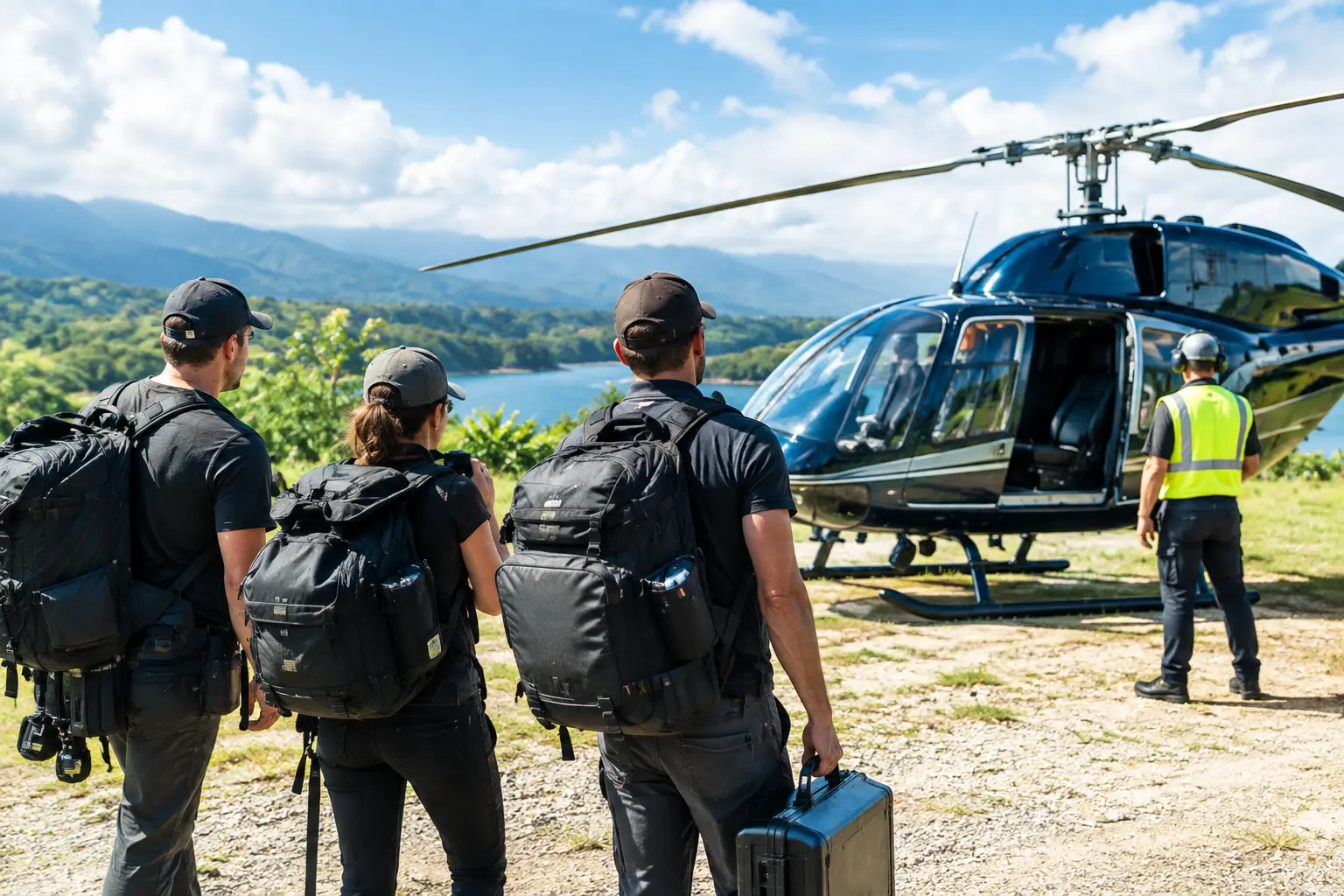
Not every production benefits from flying every person and every case. For a large unit with substantial lighting, grip, wardrobe, and construction requirements, road freight may remain the sensible foundation. Airlift is often most effective for a lean advance team, principals, camera units, essential technical staff, or high-value equipment that must arrive quickly and securely. The right answer depends on the shot list, location access, payload, and schedule – not on a one-size-fits-all approach.
Choosing Aircraft for Film Crew Airlift Operations
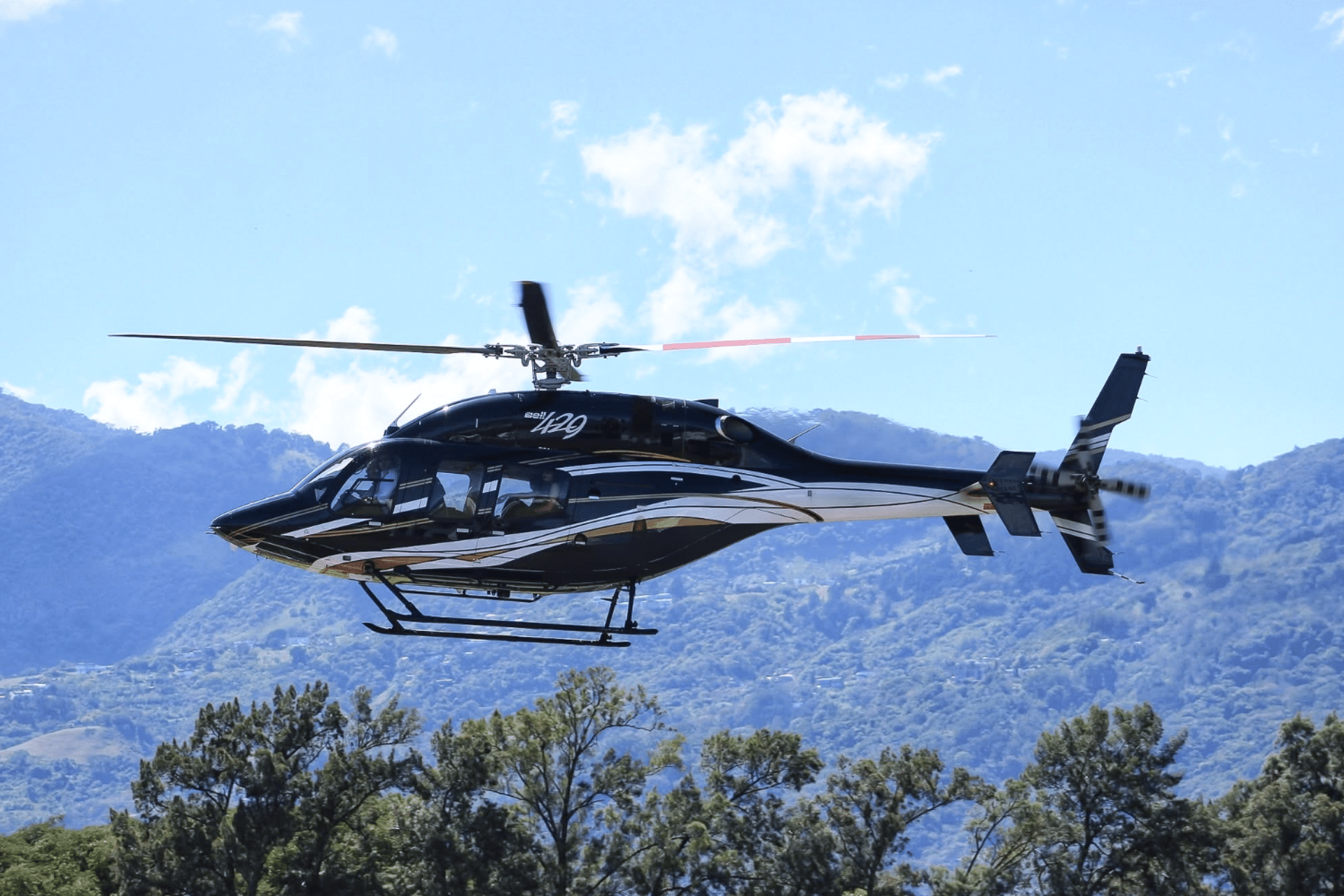
Aircraft selection begins with the mission rather than passenger count alone. A helicopter is well suited to point-to-point access, remote landing areas, location scouting, and projects that require aerial imaging. Its ability to land closer to a work site can transform a difficult day into a manageable one, but it requires careful evaluation of the landing zone, surrounding obstacles, weather, altitude, and local permissions.
Private airplanes are often the stronger choice for longer regional transfers and movements between established airports or airstrips. They can provide efficient transport for crew members and selected gear, especially when the production needs to cover distance quickly while maintaining privacy and schedule control. An airplane may carry more efficiently over longer legs, while a helicopter offers greater flexibility at the final destination.
Payload planning deserves early attention. Camera bodies may be compact, but cases, batteries, lenses, monitors, stabilizers, radios, and personal baggage add weight quickly. The usable payload of any aircraft changes with route length, fuel needs, runway or landing-zone conditions, temperature, and elevation. Production teams should provide accurate equipment dimensions and weights before the flight plan is finalized. Estimates made from memory can lead to last-minute changes that cost time on a shoot day.
For exterior camera work, the requirements become more specialized. An aerial filming flight may require an approved camera mount, a trained aerial cinematography team, coordination with the director of photography, and operating procedures designed around the shot. A passenger aircraft transfer and a filming platform are not automatically the same service. Clarifying that distinction at the first planning conversation helps match aircraft, crew, and authorization to the intended result.
Build the Manifest Around the Day’s Priorities
The passenger manifest should reflect operational priorities. Consider who must be on location for the first setup, who can travel by road, and which equipment is essential before the rest of the unit arrives. It is often wiser to fly a smaller, decisive team and move secondary items separately than to overload a flight plan with gear that is not immediately needed.
A good aviation partner will ask direct questions about crew size, individual baggage, equipment cases, destination, desired arrival time, return requirements, and shooting activity. These details are not administrative formalities. They determine what can be carried safely and how reliably the operation can be executed.
Location Planning Is a Safety Requirement
The most striking location is not always the best aviation location. Before a helicopter landing or pickup, operators need to assess the site for dimensions, slope, surface condition, wires, trees, nearby structures, livestock, bystanders, and approach paths. Coastal winds, loose sand, and vegetation can create additional considerations. A location that looks open from the ground may have hazards that become clear only during an aerial review.
Permissions matter as much as physical suitability. Private landowner authorization, protected-area restrictions, airport procedures, and local regulations can all affect whether and how a flight may operate. Productions should avoid treating aircraft access as a last-minute location solution. Early coordination gives the operator time to review the proposed site, identify alternatives, and obtain the required approvals where applicable.
Weather needs the same discipline. Costa Rica’s microclimates can change rapidly, especially in mountainous areas and during the green season. Rain, low cloud, wind, and visibility are operational factors, not inconveniences to be managed around a fixed creative plan. Experienced flight crews make conservative decisions when conditions require them. Building flexibility into the call sheet protects both safety and the production’s ability to recover if a route or timing must change.
Schedule With Margins, Not Assumptions
A private flight can reduce transit time dramatically, but it should not be scheduled down to the minute. Crew check-in, passenger briefings, loading, weather review, site coordination, and aircraft positioning all require realistic time. The production schedule should include a margin for these steps, particularly on multi-location days.
This is also where a two-base operating model can make a meaningful difference. With operational coverage from San José and Liberia, Aerotour can support flight planning across key business, tourism, and production corridors without treating every project as a single-origin mission. The practical benefit is better alignment between the aircraft’s starting point, the crew’s route, and the production’s location plan.
For multi-day projects, it helps to identify decision points in advance. If weather prevents a morning helicopter move, is there a road alternative? If an afternoon exterior shot is delayed, can the aircraft wait, reposition, or return the following morning? These decisions affect aircraft availability and cost, so they should be discussed before the crew is standing at the helipad.
Protecting People, Equipment, and the Production
Safety begins with choosing a qualified operator. Production teams should confirm the operator’s certification, crew experience, maintenance standards, and familiarity with the proposed mission. In Costa Rica, DGAC certification and operations aligned with ICAO standards are meaningful indicators of aviation discipline, but production-specific experience matters too.
Every passenger should receive a clear briefing before departure. This includes approach and departure procedures, seat belts, communication expectations, loose-item control, emergency information, and instructions for entering or exiting around a helicopter. On set, familiar equipment can create false confidence. Aircraft operations require everyone – including experienced crew – to follow the flight crew’s directions without exception.
Equipment protection requires planning beyond padded cases. Batteries may have transport restrictions, delicate camera systems need secure stowage, and loose items can become hazards in a helicopter cabin. If equipment will be used for aerial filming, confirm mounting, power, communications, and backup arrangements in advance. The best time to discover that a camera configuration will not work is during preproduction, not over a coastline with a limited weather window.
Budget for Mission Value, Not Flight Time Alone
Airlift pricing reflects more than the minutes spent airborne. Aircraft positioning, crew duty time, airport or landing fees, site surveys, specialized filming configuration, waiting time, and routing all influence the final scope. A clear brief allows the operator to price the mission accurately and helps producers compare options on a like-for-like basis.
The more useful budget question is not simply whether aviation costs more than vehicles. It is whether flying protects a critical shoot day, avoids an overnight move, reaches a location unavailable by road, or gives the creative team access to conditions that cannot be recreated later. When the answer is yes, the value of the mission can extend well beyond transportation.
A well-executed airlift should feel controlled rather than complicated: the right people arrive where they need to be, the essential equipment is ready, and the crew can focus on the work ahead. Give the aviation plan the same early attention as permits, locations, and camera packages, and it can become one of the most dependable parts of the production day.