
Private Charter Booking Guide for Costa Rica


A 35-minute road transfer can turn into several hours when weather, traffic, and Costa Rica’s mountainous terrain are part of the equation. A private charter booking guide helps turn that uncertainty into a well-planned flight: one built around your itinerary, passenger needs, baggage, and the conditions at the destination.
Private aviation is not simply commercial travel without a terminal line. It is a tailored operational service. The best result comes from sharing the right information early, selecting an aircraft for the actual mission, and choosing an operator with the experience and approvals to make sound decisions when conditions change.
Start Your Private Charter Booking Guide With the Mission
Before comparing aircraft or requesting a quote, define what the flight must accomplish. A family traveling from San José to a remote lodge has a different set of requirements than an executive team visiting multiple sites in one day. A production crew carrying camera equipment has different needs again, particularly when aerial filming or doors-off work is involved.
Start with the route, preferred departure window, number of passengers, and realistic baggage estimate. Be specific about hard-sided cases, golf equipment, surfboards, bulky camera gear, or temperature-sensitive items. Weight and dimensions affect aircraft selection, performance, and sometimes the number of flights required. An accurate brief at the beginning prevents uncomfortable compromises later.
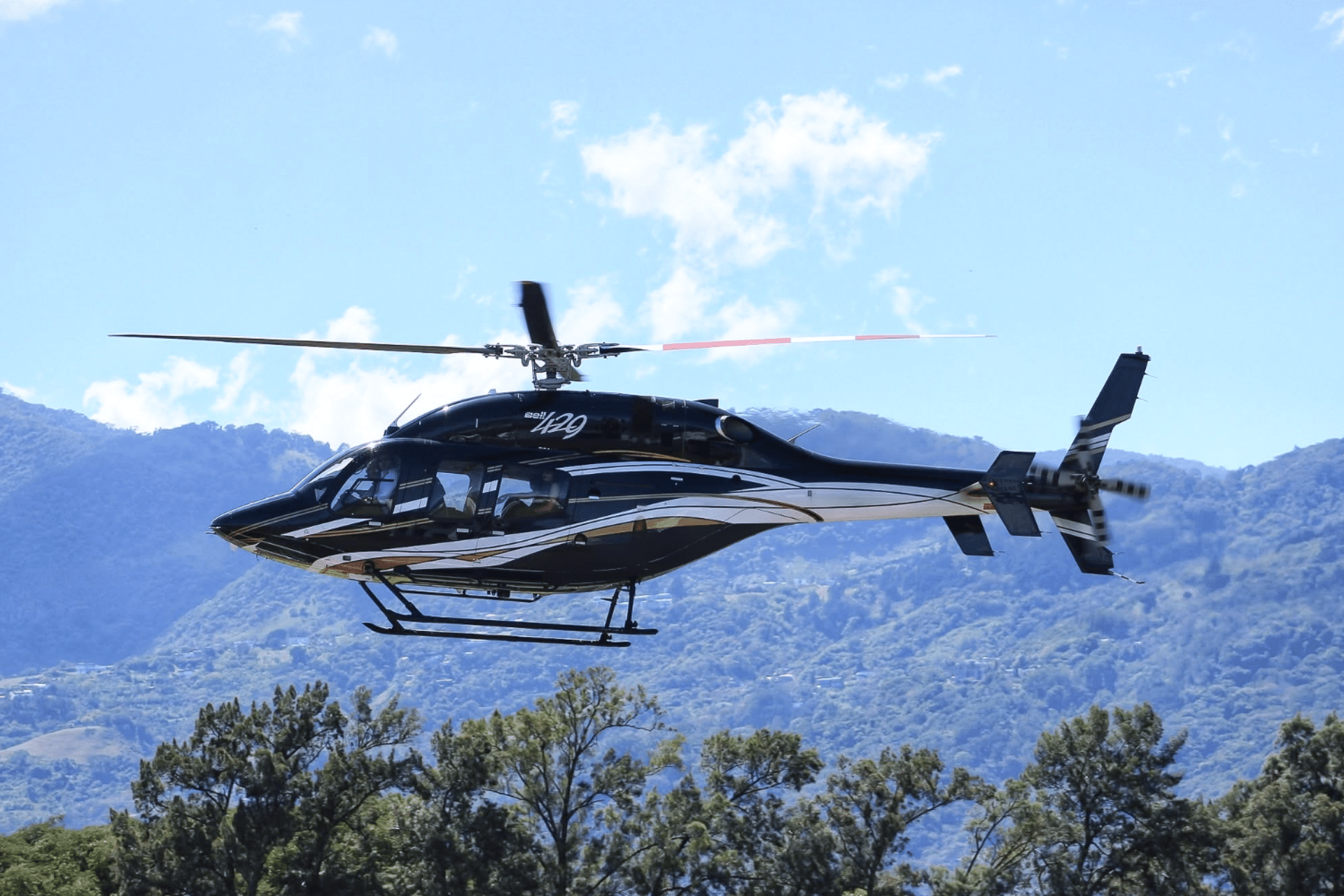
Also consider whether the priority is speed, direct access, privacy, scenery, or mission capability. A helicopter may be the right choice for point-to-point transfers to locations with suitable landing facilities or for a scenic experience over coastlines, volcanoes, and rainforest. A private airplane may better suit longer regional sectors, multiple passengers, or routes served by airfields with appropriate runways. The right aircraft is the one that serves the mission safely and efficiently, not necessarily the largest or fastest option.
Share the Details That Affect Flight Planning
A qualified charter provider will ask practical questions because those details determine what is possible. Give the operator your exact pickup and destination locations, not only the nearest city. Ask whether transfers to and from the airfield can be coordinated, how much time should be allowed before departure, and whether the destination has operating restrictions.
For international travelers, passport details, entry requirements, and arrival timing may also affect the plan. For corporate or production flights, provide a single decision-maker who can confirm schedules, passenger names, and last-minute operational adjustments. Clear communication is a premium service in itself, especially when a flight involves moving parts on the ground.
Choosing the Right Aircraft and Operator
Charter quotes should be compared on more than price. A lower initial figure may not reflect the same routing, aircraft category, baggage capacity, waiting time, airport fees, ground transfers, or flexibility if the schedule shifts. Ask what is included and which items may change based on actual flight time, landing requirements, or destination services.
Aircraft choice should account for more than seat count. Passenger comfort, cabin access, baggage volume, runway performance, range, and weather tolerance all matter. In Costa Rica, local conditions can change quickly between the Central Valley, Pacific coast, Caribbean coast, and mountain regions. An experienced operator evaluates the route against the aircraft’s capabilities and the available alternates, rather than forcing a preferred schedule into unsuitable conditions.
Safety credentials deserve the same attention. Look for an operator authorized by the relevant aviation authority, with disciplined maintenance practices, trained crews, and established operating procedures. In Costa Rica, Certificación DGAC and operations aligned with ICAO standards provide meaningful signals of technical oversight. Longstanding local experience matters as well because it brings familiarity with airfields, terrain, weather patterns, local coordination, and destination logistics.
Aerotour, with operating experience dating to 1973 and bases in San José and Liberia, illustrates the value of choosing a provider that combines local coverage with established aviation standards. For travelers and organizations, that depth of experience supports better planning before the flight and better judgment when the plan must adapt.
Ask About the Plan, Not Just the Aircraft
A good charter conversation should make you feel informed, not overwhelmed. Ask who will operate the flight, how weather decisions are made, what happens if an airfield becomes unavailable, and how schedule changes are handled. There is no responsible operator who can guarantee that weather will never affect a flight. What matters is whether the operator has clear alternatives and the confidence to delay, reroute, or cancel when safety requires it.
For helicopter charters, ask about landing-site suitability and permissions. Not every attractive property, beach, or resort area is an approved landing location. A professional team verifies obstacles, surface conditions, approach paths, local restrictions, and authorization before confirming a site. This work may be invisible to passengers, but it is central to a safe, properly managed operation.
Para aerial filming, photography, surveys, or industrial support, describe the mission objectives in detail. Camera mounts, crew positions, communications, flight profiles, permits, and weather windows can all shape the aircraft and crew requirements. Production teams should allow time for a technical briefing rather than treating a specialized aerial operation like a standard transfer.
Timing, Weather, and Seasonal Considerations
Booking early gives you more options, especially for peak travel periods, holidays, major events, and high-demand routes. It is also helpful when your itinerary includes multiple destinations, specific aircraft preferences, or specialized services. Early planning allows the operator to coordinate slots, crews, positioning, ground services, and suitable departure windows with less pressure.
That said, flexibility is valuable in Costa Rica. Afternoon weather patterns can be more active in some regions, while visibility and conditions may be more favorable earlier in the day. Your operator can recommend a practical departure time based on the season, route, and purpose of the flight. If a scenic experience is the priority, build a little room into the day rather than scheduling the flight between immovable commitments.
Weather decisions should never be viewed as a failure of service. Aviation crews assess current conditions, forecasts, terrain, visibility, wind, and aircraft limitations before and during a flight. A premium charter experience includes candid operational advice, even when that advice means waiting for better conditions or selecting another route.
Confirm the Commercial Details Before You Fly
Once the proposed itinerary works, review the confirmation carefully. It should identify the route, date, passenger count, aircraft type or category, quoted services, payment terms, cancellation conditions, baggage limits, and any special requirements. If you have requested child seating, pet travel, catering, ground transportation, filming support, or a nonstandard landing location, make sure it is reflected in writing.
Ask about schedule tolerance as well. A private charter offers exceptional flexibility, but crews have duty-time limits and aircraft need planned maintenance. A reasonable departure window gives the operation room to respond professionally if a transfer runs late or weather requires a minor adjustment. If your schedule has a fixed obligation, tell the operator early so the team can assess the best plan rather than making assumptions.
Passengers should arrive ready to fly, with identification available and baggage packed within the agreed guidelines. Limit loose items, secure valuable equipment, and follow crew instructions at all times around the aircraft. Near a helicopter, wait for the crew’s direction before approaching or departing. These simple practices protect passengers, crew, and equipment while keeping the experience calm and efficient.
What Premium Service Should Feel Like
The real value of private aviation is not only the time saved. It is the confidence that each part of the journey has been considered: the right aircraft, a credible crew, realistic weather planning, organized ground logistics, and a provider that treats safety as the foundation of service.
Whether you are connecting a coastal holiday with San José, moving an executive team across the country, or coordinating an aerial production mission, provide a complete brief and invite direct questions from your operator. The strongest charter plans are built as a partnership, leaving you free to focus on the reason you are traveling while the aviation team focuses on getting the details right.