
Top Private Aviation Use Cases in Costa Rica


A two-hour ground transfer can be an acceptable part of a vacation. It can also mean missing the first afternoon at a remote lodge, arriving fatigued for a board meeting, or losing the narrow weather window needed for a production shoot. The top private aviation use cases in Costa Rica are defined by those moments where time, access, privacy, or operational precision matter more than a standard travel itinerary can accommodate.
Private aviation is not one service for one type of traveler. In Costa Rica, it can mean a helicopter landing near a resort, a fixed-wing aircraft connecting business centers to regional destinations, or an aerial platform positioned for a demanding film sequence. The right choice depends on the mission, the route, the number of passengers, baggage requirements, weather conditions, and the landing infrastructure available at each end.
Top Private Aviation Use Cases for Costa Rica Travel
Executive travel between business and regional destinations
For executives, investors, and visiting corporate teams, private aviation turns a multi-leg travel day into a planned, direct operation. A flight can connect San José or Liberia with regional airports and destinations that would otherwise require long drives, commercial connections, or overnight stays. That time saved can protect a negotiation, site visit, inspection, or leadership meeting.
Privacy is equally relevant. Sensitive conversations do not belong in a crowded terminal or on a commercial flight. A private charter provides a more controlled environment for principals, advisers, and guests, while allowing the schedule to reflect the business objective rather than an airline timetable.
This use case is most valuable when multiple travelers are moving together, when timing is fixed, or when the itinerary combines several locations. It is not automatically the best choice for every single-point trip. For a simple route with flexible timing, scheduled service may be practical. Charter becomes more compelling when the value of time and direct access outweighs the added cost.
Resort transfers and hard-to-reach escapes
Costa Rica’s most memorable stays are often outside major urban centers. Reaching a peninsula, rainforest lodge, coastal retreat, or mountain property by road can take several hours after an international arrival. A private airplane or helicopter transfer reduces that final leg and starts the experience with a clear sense of occasion.
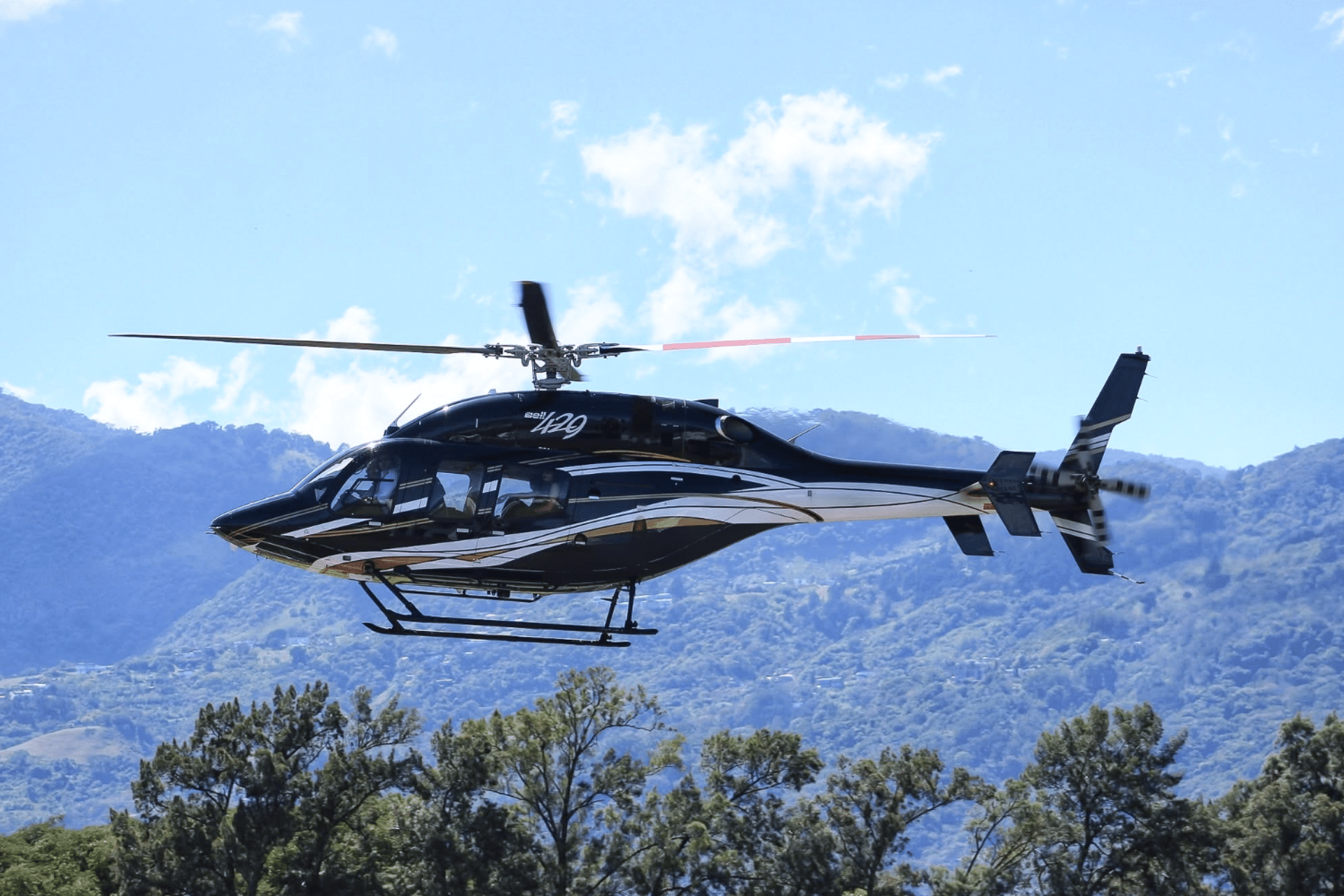
Helicopters are especially useful where proximity matters. Depending on site permissions and operating conditions, they can access approved landing areas closer to a property or destination than a conventional airport can. Fixed-wing charters are often the better fit for longer distances, larger baggage loads, or groups traveling to an airstrip.
The premium value is not simply speed. It is the ability to arrive rested, preserve limited vacation time, and avoid asking children, older family members, or guests with tight connections to undertake an extended road transfer. For travelers arranging a multi-stop itinerary, private flights can also make it realistic to pair regions that would be difficult to combine within a short stay.
Family travel and milestone celebrations
A private charter can bring structure to trips that involve several generations, special occasions, or guests arriving on different commercial flights. Rather than coordinating a large group through terminal queues and fixed departure times, the party travels together on an itinerary designed around the celebration.
This is particularly useful for destination weddings, anniversary trips, private villa stays, and family reunions. Flight planning can account for luggage, golf equipment, surfboards, camera gear, and other items that complicate commercial travel. The experience is also more private for high-profile guests who prefer discretion from the moment they leave the airport.
There are practical limits. Aircraft capacity and weight restrictions matter, especially on shorter routes and in variable weather. Travelers should communicate baggage needs early, rather than treating them as an afterthought. A qualified operator will match the aircraft and routing to the actual group, not simply the preferred departure time.
Scenic helicopter flights with a purpose
A scenic helicopter flight gives visitors a perspective that roads and resort viewpoints cannot provide. Coastlines, volcanic landscapes, waterfalls, forests, and secluded beaches reveal the scale and variety of Costa Rica’s terrain from the air. For travelers who have limited time, it can be one of the most efficient ways to experience several defining landscapes in a single outing.
The strongest scenic flights are planned around more than photographs. They can complement a proposal, milestone celebration, incentive program, or custom day that includes a remote lunch stop or resort transfer. The flight becomes part of the destination experience rather than a separate attraction squeezed into the schedule.
Conditions always shape the plan. Visibility, cloud cover, wind, and local operating requirements determine what can be flown safely and what can be seen clearly. A dependable operator will set appropriate expectations and prioritize weather decisions over a rigid itinerary.
Aerial filming, photography, and production logistics
For production teams, the aircraft is a working platform, not simply transportation. Aerial filming and photography may require precise positioning, experienced crew coordination, careful route planning, and an operator who understands the difference between a beautiful flight and a usable shot.
This use case supports commercials, branded content, television, documentary projects, real estate campaigns, tourism promotion, and industrial documentation. Helicopters can provide dynamic movement and close visual access, while fixed-wing aircraft may suit broader landscape coverage or repositioning needs. The appropriate aircraft depends on the shot list, camera system, crew size, flight duration, and approved operating environment.
Planning should begin well before shoot day. Producers need to consider permits, airspace, location access, weather alternatives, fuel planning, communications, and the safe handling of equipment. Aerotour brings decades of local operating experience, DGAC certification, and ICAO-aligned standards to work that requires both creative flexibility and disciplined aviation execution.
Industrial, construction, and site-support missions
Private aviation also serves organizations whose work takes place beyond easy road access. Project managers, engineers, survey teams, inspectors, and technical specialists may need to reach dispersed sites quickly, assess terrain, or coordinate activity across a wide area. In these situations, the cost of delayed access can exceed the cost of specialized air support.
Aerial operations can assist with site reconnaissance, executive inspections, infrastructure documentation, and time-sensitive personnel movement. They are particularly relevant when roads are affected by distance, traffic, seasonal conditions, or limited access. The goal is not to replace ground logistics in every case. It is to use aviation where it creates a clear operational advantage.
Mission planning must be specific. Passenger count, equipment dimensions, landing-area suitability, daylight limits, communications procedures, and contingency options all influence the flight. The most reliable outcome comes from sharing the operational need in detail, so the operator can assess whether helicopter charter, airplane charter, or a combined ground-and-air plan is appropriate.
Emergency and time-critical travel
Not every private flight is planned weeks in advance. A sudden family need, urgent business matter, vessel movement, or medical-adjacent travel requirement can create a narrow travel window. Private aviation can provide an efficient response when aircraft availability, crew duty limits, weather, and approvals align.
It is important to distinguish urgent travel from emergency medical transport. A charter operator can support time-sensitive passenger movement within its approved capabilities, but dedicated air ambulance requirements demand the correct medical aircraft, clinical staff, equipment, and regulatory framework. Clear communication about the nature of the mission protects everyone involved.
Choosing the Right Aircraft and Operating Partner
The best private aviation solution begins with a direct conversation about the outcome required. Is the priority arriving at a remote property, moving a leadership team, capturing a specific aerial sequence, or reaching a worksite before a decision deadline? Once that objective is clear, selección de aeronave becomes more precise.
Helicopters favor short-to-medium regional transfers, scenic experiences, and missions where approved landing access near the destination is the advantage. Airplanes generally favor longer routes, airport-to-airport travel, and missions requiring greater range or baggage capacity. Neither is inherently better. The mission determines the aircraft.
Safety credentials, maintenance practices, crew experience, and local knowledge should carry as much weight as cabin comfort. Costa Rica’s geography and weather demand careful operational judgment. Ask about the routing, alternate plans, passenger and baggage limits, and how weather decisions are handled. Premium service is measured not only by how a flight feels when conditions are ideal, but by the professionalism shown when plans need to change.
A well-planned private flight should make the complex parts of travel feel considered, not improvised. Whether the purpose is a confidential meeting, a remote lodge arrival, a film shoot, or a critical field operation, the right aviation plan gives every minute in Costa Rica a more deliberate purpose.