
How Executive Air Transfers Work in Costa Rica


A meeting in San José, a site visit near the coast, and an evening arrival at a remote resort can consume most of a business day by road. Understanding how executive air transfers work helps decision-makers turn that fragmented itinerary into a direct, private flight plan built around the people, locations, and timing that matter.
Executive air transfers are not simply commercial flights with more comfort. They are customized aviation movements designed to reduce travel friction for executives, visiting clients, production leaders, and teams with time-sensitive responsibilities. In Costa Rica, where geography, road conditions, weather patterns, and airport access can shape an itinerary, the value lies in careful operational coordination as much as the aircraft itself.
How Executive Air Transfers Work From Request to Arrival
The process begins with the mission, not the aircraft. An operator first evaluates where passengers need to depart, where they need to arrive, how many people are traveling, the amount and type of baggage involved, and the required schedule. A same-day transfer between San José and Liberia has different planning needs than a multi-stop itinerary linking business centers, resorts, industrial sites, or private properties.
The operator then confirms whether the proposed route can be served by fixed-wing aircraft, helicopter, or a combination of both. Fixed-wing charter aircraft are generally well suited to longer regional sectors and airport-to-airport travel. Helicopters can be particularly effective when the destination is closer to a helipad, an approved private landing site, or a location that would otherwise require a lengthy ground transfer after landing.
Once the route is defined, the aviation team builds the operational plan. This includes aircraft availability, crew assignments, fuel planning, airport or landing-site arrangements, passenger handling, weather monitoring, and coordination with ground transportation where needed. For international travelers, the plan may also account for customs, immigration, arrival procedures, and timing around commercial connections.
The result is a flight schedule designed around the client rather than a published airline timetable. That flexibility is valuable, but it is not unlimited. Aircraft performance, regulated crew duty times, airfield operating hours, weather, and local aviation permissions all influence what can be delivered safely and reliably.
Choosing the Right Aircraft for the Transfer
Aircraft selection is a practical decision with a direct effect on comfort, cost, timing, and access. The appropriate choice depends on the route rather than preference alone.
A private airplane is often the efficient option for executive groups traveling between established airports, particularly when distances make helicopter travel less practical. Cabin capacity, baggage volume, runway requirements, and passenger expectations all matter. A compact aircraft may be ideal for a small leadership team traveling light, while a larger cabin may be needed for a group carrying presentation materials, equipment, or extended-stay luggage.
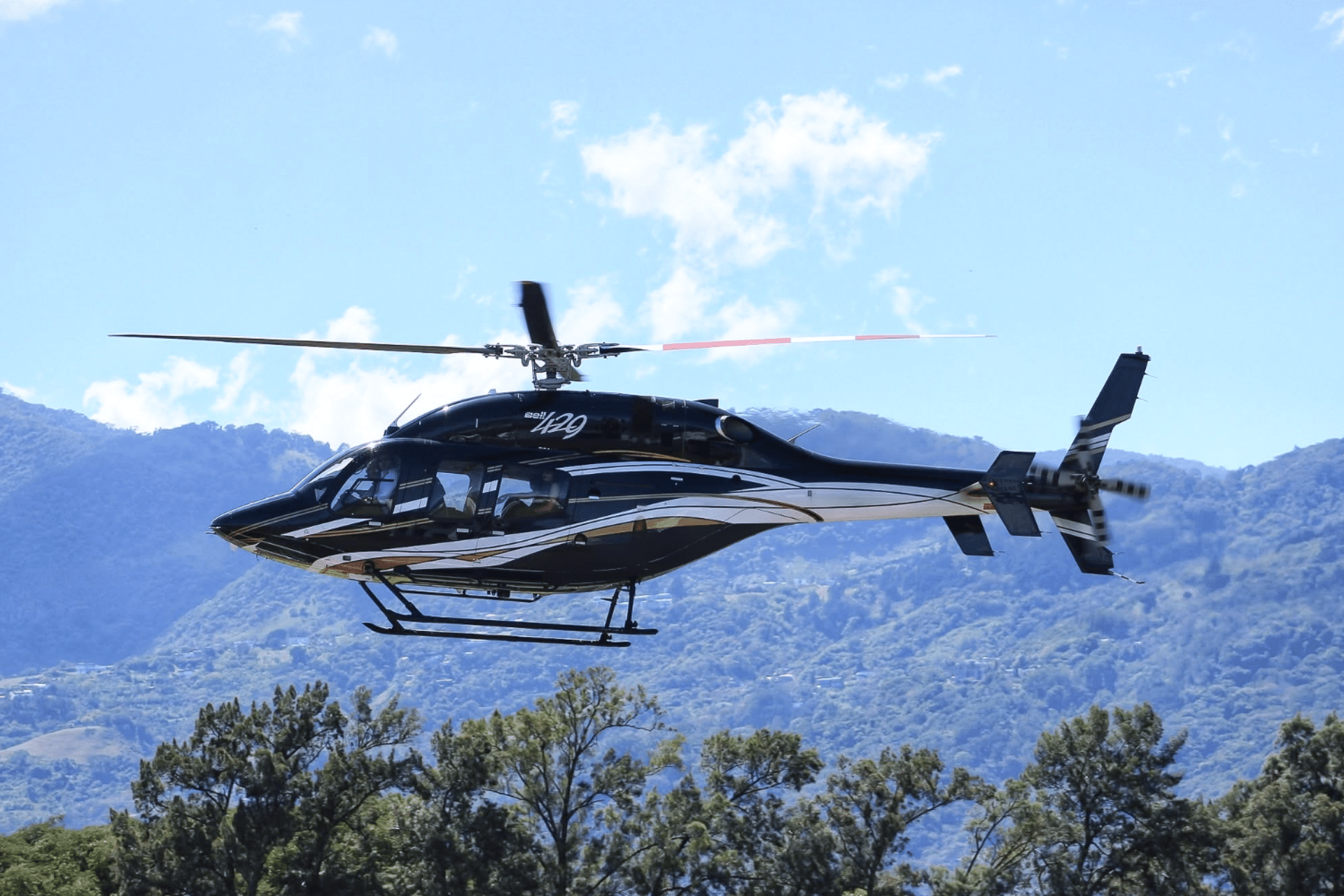
A helicopter transfer is often chosen for its ability to save time at either end of the trip. It can provide direct access to locations that are difficult to reach from a conventional airport, including select resorts, business facilities, project sites, and coastal destinations. For an executive itinerary, this can mean avoiding a long road segment after the flight.
There are trade-offs. Helicopters typically have more limited baggage capacity and may be more sensitive to weather conditions. Fixed-wing aircraft may offer greater range and cabin space but require suitable runway infrastructure. A professional operator explains these constraints early, then recommends the configuration that best fits the mission instead of forcing every request into one service model.
Safety and Compliance Behind Every Executive Flight
The visible part of executive aviation is the convenience of a private departure and tailored schedule. The more consequential work happens behind the scenes.
Before a transfer operates, aviation personnel review conditions that can affect safety and legality. These include current and forecast weather, aircraft status, passenger and baggage requirements, route conditions, landing-site suitability, fuel availability, and applicable air traffic procedures. A last-minute schedule request can often be accommodated, but only when those fundamentals are properly assessed.
In Costa Rica, changing weather and terrain demand disciplined flight planning. Mountainous regions, coastal weather systems, and localized rain can influence routing and departure timing. The responsible response is not to promise a particular outcome regardless of conditions. It is to maintain close communication, identify reasonable alternatives, and make decisions that protect passengers, crew, and the aircraft.
Certification and operating standards also matter. Clients should work with an operator authorized by the relevant aviation authority and committed to established international practices. Aerotour, for example, combines decades of Costa Rican operating experience with DGAC certification and adherence to ICAO standards, providing clients with an aviation partner built for both premium travel and mission-specific coordination.
What Passengers Can Expect on the Day of Travel
Private air transfers are designed to reduce the time spent navigating large terminals and airline processes. Passengers are generally given a clear departure location, arrival time, baggage guidance, identification requirements, and a primary contact for updates.
At departure, the experience is typically more direct than commercial travel. Depending on the airport and flight arrangement, passengers may proceed through a private or designated area, complete required security and documentation procedures, and board without the extended check-in sequence associated with scheduled airline operations. International flights still involve formal border requirements, and those should be expected rather than treated as exceptions.
The operator coordinates flight timing with the crew and monitors operational changes throughout the day. If weather, air traffic, or a passenger schedule affects the plan, clients should receive clear information quickly. For executive travelers, reliable communication is part of the service. A delayed meeting, an inbound commercial connection, or a change in destination can have consequences beyond the flight itself.
On arrival, the goal is equally straightforward: minimize the gap between touchdown and the next commitment. Ground transportation can be arranged to meet the aircraft, while helicopter operations may bring passengers closer to the final destination from the outset. For corporate teams, this also supports discretion by reducing unnecessary exposure and keeping the group together through the travel process.
Privacy, Productivity, and Schedule Control
Executive air transfers provide more than speed. They create a controlled environment for travelers whose time, privacy, or working requirements are valuable.
A private cabin allows a team to hold a confidential discussion, prepare for a presentation, or simply travel without the interruptions of a crowded terminal and commercial flight. The degree of productivity depends on the aircraft, flight duration, and operational conditions, but the ability to travel with a known group is often a meaningful advantage.
Schedule control is another benefit, particularly for itineraries involving multiple locations. Instead of arranging a day around limited airline frequencies, a charter can be planned around the meeting, inspection, event, or production call time. This does not eliminate the need for realistic planning. Flight windows, airport hours, and weather allowances still need to be built into the schedule. It does, however, give travelers more control over how their time is used.
For organizations, the financial case depends on the mission. A private transfer may not be the most economical choice for every trip or every passenger count. Its strongest value appears when commercial routing would create major time loss, when a destination lacks convenient scheduled service, when several key travelers need to move together, or when the cost of delayed decisions exceeds the cost of the flight.
Planning an Effective Executive Air Transfer
The best executive flights are arranged with enough detail to prevent avoidable changes. Share the exact passenger count, preferred departure and arrival windows, baggage requirements, ground transport needs, and any special considerations early in the process. If the itinerary includes international connections, large equipment, a remote destination, or multiple stops, additional lead time improves the available options.
It is also wise to distinguish between a preferred schedule and an immovable deadline. That helps the operator build practical contingencies. A meeting that must begin at 10:00 a.m. requires a different plan than one that can shift by an hour if weather affects a morning departure.
The most effective executive air transfer is rarely the one that merely flies fastest. It is the one that brings the right people to the right place, prepared and on schedule, while giving safety the authority to shape every operational decision.