
Vuelos Privados para Viajes en Grupo: ¿Qué se Adapta Mejor?


When eight executives, a wedding party, or a film crew all need to be in the same place at the right time, commercial air travel starts to show its limits fast. Private flights for group travel are not just about exclusivity. They are often the clearest way to protect schedules, reduce ground transfers, and keep a complex trip under control.
In Costa Rica especially, where business hubs, resorts, remote lodges, and filming locations can sit far apart, the value of a well-planned charter becomes practical very quickly. The real question is not whether private aviation feels premium. It does. The better question is when it delivers enough operational value to justify the decision.
When private flights for group travel make sense
Group charters tend to work best when time, coordination, and access matter more than simply finding the lowest fare. That includes executive teams moving between meetings, families traveling together for milestone events, incentive groups with fixed itineraries, and production crews carrying people and equipment on a tight schedule.
The biggest advantage is control. Instead of building the trip around airline routes, departure windows, and connection risks, the aircraft is planned around the group’s needs. That can mean departing closer to the preferred time, using airports that reduce ground travel, or aligning the flight with a production call sheet or resort check-in schedule.
For many groups, privacy matters just as much. Senior leadership teams may need to hold discussions in transit. High-profile travelers may want discretion from departure to arrival. Wedding groups and leisure travelers often value the comfort of staying together instead of being split across multiple commercial bookings.
That said, private charter is not automatically the right answer for every group. If travelers are coming from different cities, if the itinerary is flexible, or if the destination is already well-served by commercial aviation, the value calculation changes. Group charter works best when a shared schedule matters.
One aircraft or several seats? It depends on the group
One of the most common misconceptions is that private group travel always means a large jet. In practice, the right solution depends on passenger count, route length, baggage, landing requirements, and the purpose of the trip.
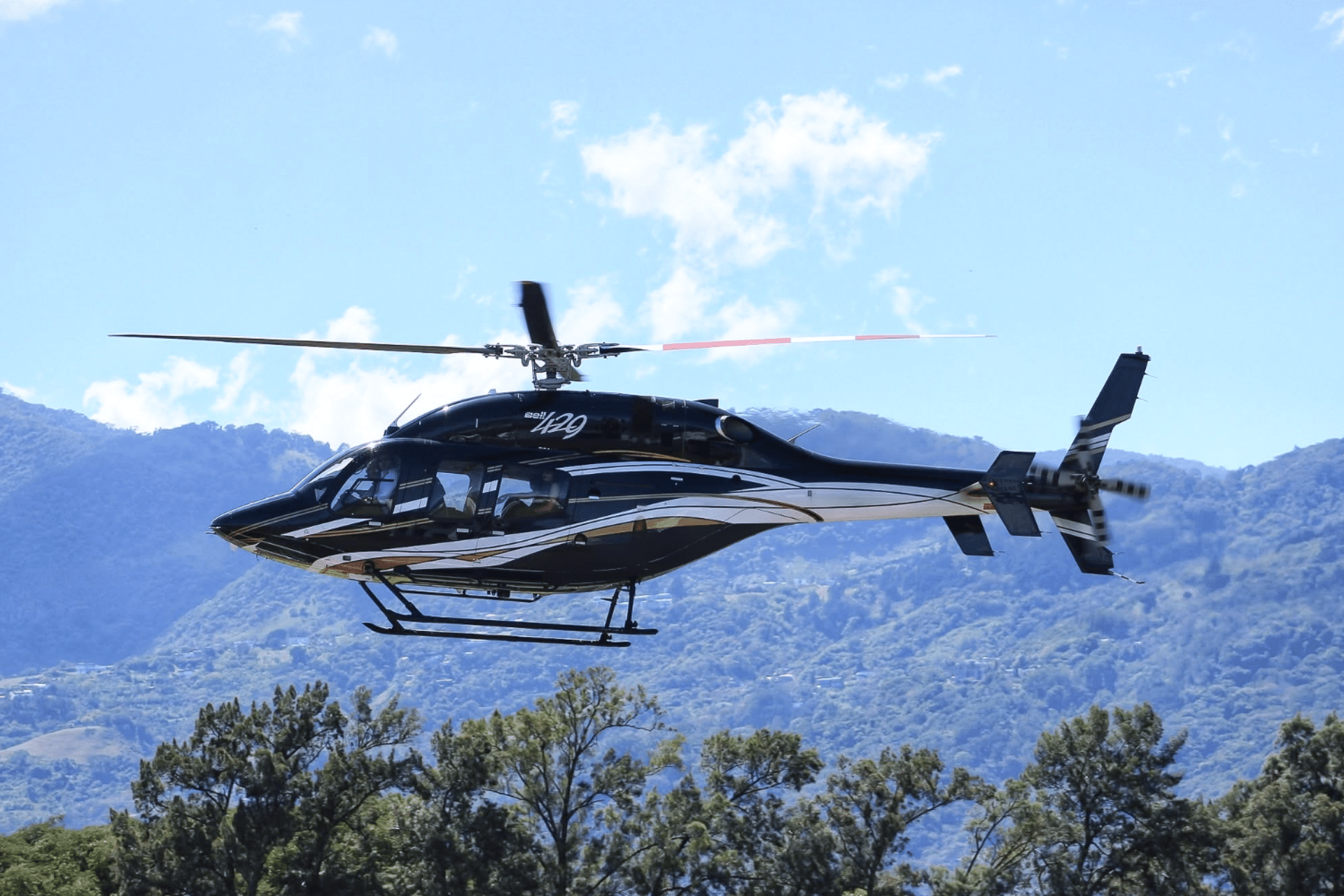
A smaller executive group may be best served by a private airplane that keeps everyone on one itinerary and minimizes time lost in transit. A leisure group moving between destinations within Costa Rica may benefit more from aircraft that can operate efficiently on regional routes. For some itineraries, a helicopter charter may be the smarter option, particularly when the destination is difficult to reach by road or when the goal is to shorten the final leg dramatically.
This is where experience matters. The aircraft that looks ideal on paper is not always the one that works best operationally. Cabin comfort, luggage volume, runway conditions, weather considerations, and airport access all shape the recommendation. A capable charter operator will balance those factors instead of simply offering the largest available aircraft.
The real value is in logistics, not just luxury
Luxury is easy to see. The more meaningful benefit is logistical efficiency.
For corporate groups, private aviation can compress a full day of travel into a tightly managed itinerary. Teams can reach meetings faster, visit more than one location in the same day, and return without the friction of commercial check-in, connections, or overnight holds caused by limited schedules.
For leisure groups, the gain is often time at the destination. A family or friend group heading to a remote property usually wants the trip to start smoothly, not with delayed baggage, airport transfers, and hours on the road. Private charter can remove several points of friction at once.
For production teams, reliability is often the deciding factor. Equipment, crew timing, and location windows leave little room for avoidable delay. In those cases, private group movement is not an indulgence. It is risk management.
What to consider before booking
The strongest group charters start with a clear brief. Passenger count is only the beginning. A serious planning conversation should also cover the travel objective, preferred departure points, final destination, baggage profile, required arrival time, and whether the group needs same-day return options.
It is also worth asking whether everyone truly needs to fly together. Sometimes the answer is yes because timing and coordination are critical. Sometimes a mixed approach works better, with key personnel on one aircraft and other travelers arriving separately. The best charter planning is practical, not sentimental.
Budget should be discussed early and directly. Private aviation pricing reflects aircraft type, route, airport fees, crew requirements, repositioning, and time on the ground. For group travel, cost per passenger may compare more favorably than many first assume, especially when measured against premium commercial tickets, lost work hours, overnight stays, and complex transfers. But the economics depend on the mission.
Safety credentials should never be treated as background detail. They should be central to the decision. Groups booking private flights need an operator with established procedures, appropriate certification, experienced crews, and a track record of disciplined execution. In a market where service can look similar from the outside, operational credibility is what separates a premium provider from a risky one.
Group travel in Costa Rica has its own requirements
Costa Rica is a strong case for private charter because geography shapes travel more than many visitors expect. Distances on a map can be misleading. Road transfers may take longer than anticipated, and some high-value destinations are simply easier to reach by air.
For executive travel, that can mean moving efficiently between San José, Guanacaste, coastal developments, and remote project sites. For leisure groups, it can mean arriving closer to a resort, villa, or eco-lodge without sacrificing half a day to ground transport. For creative and technical teams, it can mean direct access to areas where timing, light, and conditions matter.
A long-established operator like Aerotour brings additional value here because local operating knowledge matters. Two bases, regional familiarity, and decades of aviation experience help turn a charter from a simple flight booking into a workable travel plan. That is particularly important when coordinating group arrivals, destination transfers, or mission-specific requirements.
Common trade-offs to weigh
Private flights for group travel offer strong advantages, but buyers should be realistic about trade-offs.
The first is aircraft size versus airport flexibility. Larger aircraft may offer greater cabin space and range, but they can also limit access to certain airports. Smaller aircraft can be more versatile regionally, though they may offer less baggage capacity or require more careful seating and loading decisions.
The second is direct cost versus total trip value. A charter quote can look higher than commercial alternatives at first glance. But if the flight eliminates hotel nights, prevents missed production windows, reduces executive downtime, or keeps a group itinerary intact, the total value may be stronger than the ticket comparison suggests.
The third is comfort versus mission fit. Not every group needs the same cabin experience. Some trips call for a polished executive standard. Others are purely about access, timing, and function. Matching the aircraft to the purpose is usually the smartest choice.
What a premium charter experience should feel like
A strong operator does more than provide an aircraft. It provides clarity.
From the first inquiry, the process should feel structured and responsive. The recommendation should reflect the actual mission, not a generic sales script. Expectations around passenger capacity, baggage, routing, timing, and airport limitations should be explained early, with no ambiguity.
Execution matters just as much as presentation. Group travel is rarely simple behind the scenes. The right charter partner manages those details quietly, keeps communication precise, and prepares for variables before they become problems. For clients booking at a premium level, that discipline is part of the product.
That is why experience remains one of the most important buying factors in this category. Aircraft are only part of the equation. Judgment, coordination, and operational maturity are what make private aviation dependable.
Choosing private flights for group travel with confidence
The best use of private charter is not to make a trip look impressive. It is to make a group move better.
If your travelers need privacy, schedule control, regional access, or dependable execution across a complex itinerary, private aviation can solve problems that commercial travel simply cannot. If the trip is loose, price-sensitive, and built around major airline routes, it may be better to take a different path.
The key is to evaluate the mission honestly. When the aircraft, route, and operator are matched correctly, private group travel becomes more than a premium option. It becomes the most practical one.
The smartest charter decisions usually begin with one clear question: what does this group need the flight to accomplish?