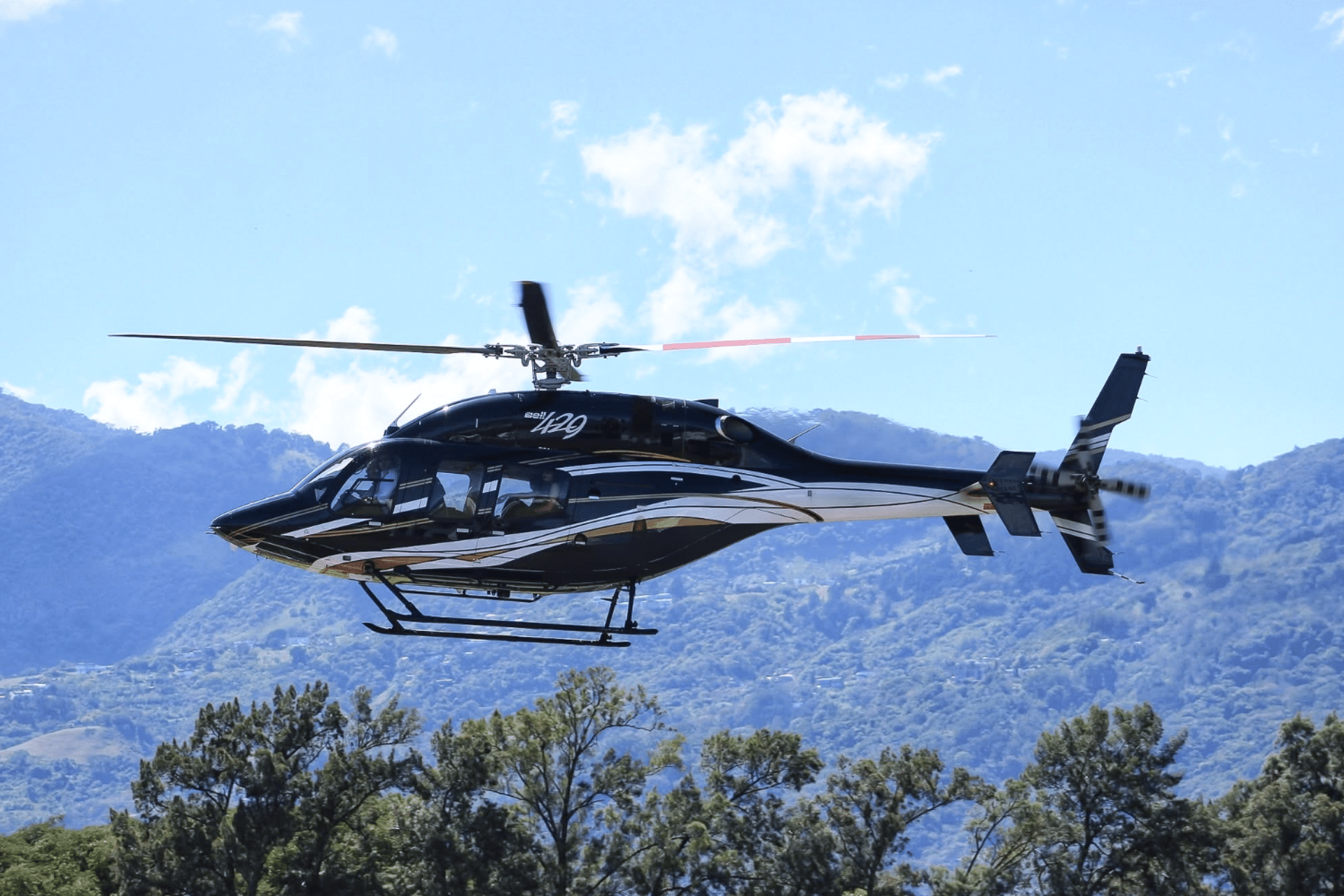

Transporte Corporativo en Helicóptero en Costa Rica


A missed site visit, a delayed executive transfer, and half a day lost in road traffic can change the pace of a deal. In Costa Rica, where business routes often cross mountains, coastlines, and areas with limited ground access, corporate helicopter transport gives companies a more direct way to move leaders, teams, and critical guests.
This is not simply a luxury upgrade from ground transportation. For many organizations, it is a practical logistics tool. When timing matters, when privacy matters, and when multiple destinations need to be reached in a single day, helicopters can turn a difficult itinerary into a workable one.
When corporate helicopter transport makes business sense
Corporate travel decisions are usually judged by efficiency, reliability, and risk management. Helicopter transport fits best when those priorities outweigh the lower upfront cost of commercial flights or private vehicle transfers.
A common case is executive mobility between San José and coastal or regional destinations. A leadership team may need to inspect a resort development, visit an agricultural operation, meet local partners, and return for evening commitments in the capital. On paper, those meetings can look close together. In practice, road conditions, weather patterns, and route limitations can make the day far less predictable.
Helicopter access changes that calculation. Instead of working around airline schedules or spending hours on the road, companies can build an itinerary around the business objective itself. That flexibility is often the real value.
It is also well suited for industries that operate outside major urban centers. Real estate, construction, hospitality, energy, infrastructure, and media production teams often need fast access to properties and work sites that are time-consuming to reach by land. In those settings, the aircraft is not just transportation. It becomes part of the operational plan.
The business advantages beyond speed
Speed is the first benefit most people notice, but it is rarely the only one that matters. Corporate helicopter transport also supports privacy, scheduling control, and route efficiency in ways that conventional travel cannot always match.
Privacy is especially relevant for executive travel. Senior leadership, investors, and high-value clients often need a more controlled environment than commercial terminals and public transfer points allow. A private helicopter charter reduces exposure, limits unnecessary waiting, and supports more discreet arrivals and departures.
There is also the issue of productive time. When teams spend less time in transit, they preserve more time for meetings, inspections, or decision-making. That does not mean every helicopter booking automatically improves ROI. The numbers depend on the size of the team, the urgency of the trip, and the consequences of delay. But for companies managing tight schedules, the savings can be substantial.
Another factor is access. Some destinations in Costa Rica are straightforward to fly over but far slower to reach on the ground. For hotels, private estates, eco-lodges, industrial sites, and remote event locations, direct helicopter routing can simplify what would otherwise require multiple transfer stages.
Corporate helicopter transport in Costa Rica is not one-size-fits-all
The right flight plan depends on the mission. An airport transfer for visiting executives has different requirements than a multi-stop inspection circuit or a filming support operation.
For corporate airport connections, the priority is usually punctuality and coordination. Flight schedules, baggage needs, passenger counts, and ground handling all need to align cleanly. A strong operator treats that transfer as part of a larger travel chain, not as a standalone flight.
For site visits, flexibility becomes more important. Teams may need to change the order of stops, spend more time on one location, or adapt to field conditions. Helicopters are valuable here because they allow schedules to reflect reality instead of forcing the day into rigid slots.
For special projects such as aerial photography, infrastructure surveys, or executive events, the mission profile is more technical. Aircraft capability, pilot experience, local operating knowledge, and safety planning carry more weight than simple point-to-point transport.
That is why charter buyers should be careful about viewing all providers as interchangeable. A helicopter operator serving business clients needs more than aircraft availability. It needs dispatch discipline, experienced crews, regulatory compliance, and the ability to support tailored itineraries without losing operational control.
What decision-makers should evaluate before booking
Price matters, but it should never be the only filter. In corporate aviation, the lowest quote can quickly become the wrong choice if the operator lacks experience, proper certifications, or the systems needed to manage changing conditions.
Safety credentials should be at the center of the evaluation. Buyers should look for a legitimate air operator with recognized oversight, trained crews, and clear operating standards. In Costa Rica, local certification and alignment with established aviation standards are not marketing details. They are part of the trust equation.
Operational history matters too. Companies carrying executives, clients, or production personnel need confidence that the operator has flown in the local environment for years, not months. Mountain weather, coastal conditions, and regional access points require judgment that comes from direct experience.
Base location is another practical consideration. An operator with strategic coverage can respond faster and build more efficient routes. For clients moving between the Central Valley, Guanacaste, resort regions, or private properties, that geographic reach can make trip planning much smoother.
Service quality should also be assessed in a business context. Responsive coordination, accurate timing, and clear pre-flight communication are part of the product. Premium aviation is not only about the aircraft. It is about how the mission is managed from first request to final landing.
Trade-offs companies should understand
Helicopters are powerful logistics tools, but they are not the answer for every movement. Group size is one limitation. For larger teams, fixed-wing aircraft, coordinated ground transport, or a mixed-mode travel plan may be more efficient.
Weather is another factor. Safe operators do not stretch conditions to keep a schedule. That can mean adjustments or delays when visibility, wind, or local weather systems are not suitable for flight. For corporate clients, the best provider is not the one that promises everything. It is the one that makes disciplined decisions.
Cost also needs to be framed properly. If a trip involves a single traveler, a flexible schedule, and an easy ground route, helicopter charter may not be necessary. But if the alternative includes senior staff losing a full day, missed appointments, or complicated transfers for key stakeholders, the higher hourly cost can be justified quickly.
The best planning starts with the actual business objective. Is the goal to save time, improve security, reach a difficult site, impress a client, or support a specialized aerial task? Once that is clear, the transport decision becomes much easier.
Why experience matters in corporate helicopter transport
Corporate clients do not just buy a seat on an aircraft. They buy judgment, preparation, and execution. That becomes especially important in a market like Costa Rica, where geography creates both opportunity and complexity.
Experienced operators understand how to coordinate with hotels, private properties, event teams, and airport movements. They know which itineraries are realistic, where timing can tighten, and how to structure a route that protects both efficiency and safety.
This is where a long-established operator such as Aerotour stands apart. Decades of flight experience, DGAC certification, ICAO-aligned standards, and operating bases in both San José and Liberia create the kind of framework corporate travelers and planners can rely on. For executive transfers, regional access, and mission-specific aerial support, that operational maturity matters.
A well-run charter should feel precise from the first conversation onward. Passenger needs should be clear. Routing should be realistic. Safety expectations should be non-negotiable. And the service experience should reflect the value of the travelers on board.
A smarter way to move when time is expensive
For the right mission, corporate helicopter transport is less about exclusivity and more about control. It gives companies a way to move decisively across a country where distance is measured not only in miles, but in terrain, access, and time lost between points.
When travel supports revenue, oversight, client relationships, or project momentum, the question is not simply what a helicopter costs. The better question is what delays, missed access, or fragmented logistics are already costing the business. That is usually where the value becomes clear.
If your itinerary involves tight schedules, remote destinations, or high-priority passengers, it helps to think beyond transportation and plan for operational advantage.