
Vuelos Charter para Ejecutivos en Costa Rica


A missed site visit in Guanacaste can push a deal by days. A delayed connection out of San Jose can force an executive team to cut a board session short. For companies operating on tight timelines, charter flights for executives are not a luxury add-on. They are often the clearest way to protect time, privacy, and decision-making momentum.
In Costa Rica, that value becomes even more obvious. Commercial schedules do not always align with business priorities, and ground transfers between key regions can consume hours that senior teams simply do not have. When leadership needs to reach multiple destinations in one day, travel directly to a remote property, or keep sensitive conversations private, private air charter changes the shape of the workday.
Why charter flights for executives make business sense
Executive travel is rarely just about moving one person from point A to point B. It usually involves a chain of meetings, site inspections, investor visits, hospitality commitments, and return timing that can shift quickly. Commercial travel works best when the schedule is fixed and the destination is well served. That is not always the reality in Costa Rica.
Charter flights for executives offer control where commercial options create friction. Departure times can be aligned with the business agenda rather than the airline timetable. Direct routing reduces unnecessary connections. Private terminals and faster boarding procedures cut wasted hours before and after the flight. Those savings may look small on paper, but for senior leadership, each recovered hour can carry real operational value.
There is also a less visible advantage. Executives often need uninterrupted time with colleagues, clients, or advisors. A private aircraft creates space for focused discussion before a negotiation, confidential review of documents, or a quiet reset between demanding commitments. That level of privacy matters in mergers, real estate transactions, hotel development, legal matters, and high-level corporate planning.
The Costa Rica factor: geography changes the equation
Costa Rica is compact compared with larger markets, but business travel here can still be logistically demanding. Coastal regions, mountain corridors, resort developments, agricultural operations, and infrastructure projects are spread across varied terrain. A route that looks manageable on a map can become a half-day exercise by road, especially during peak tourism periods or adverse weather conditions.
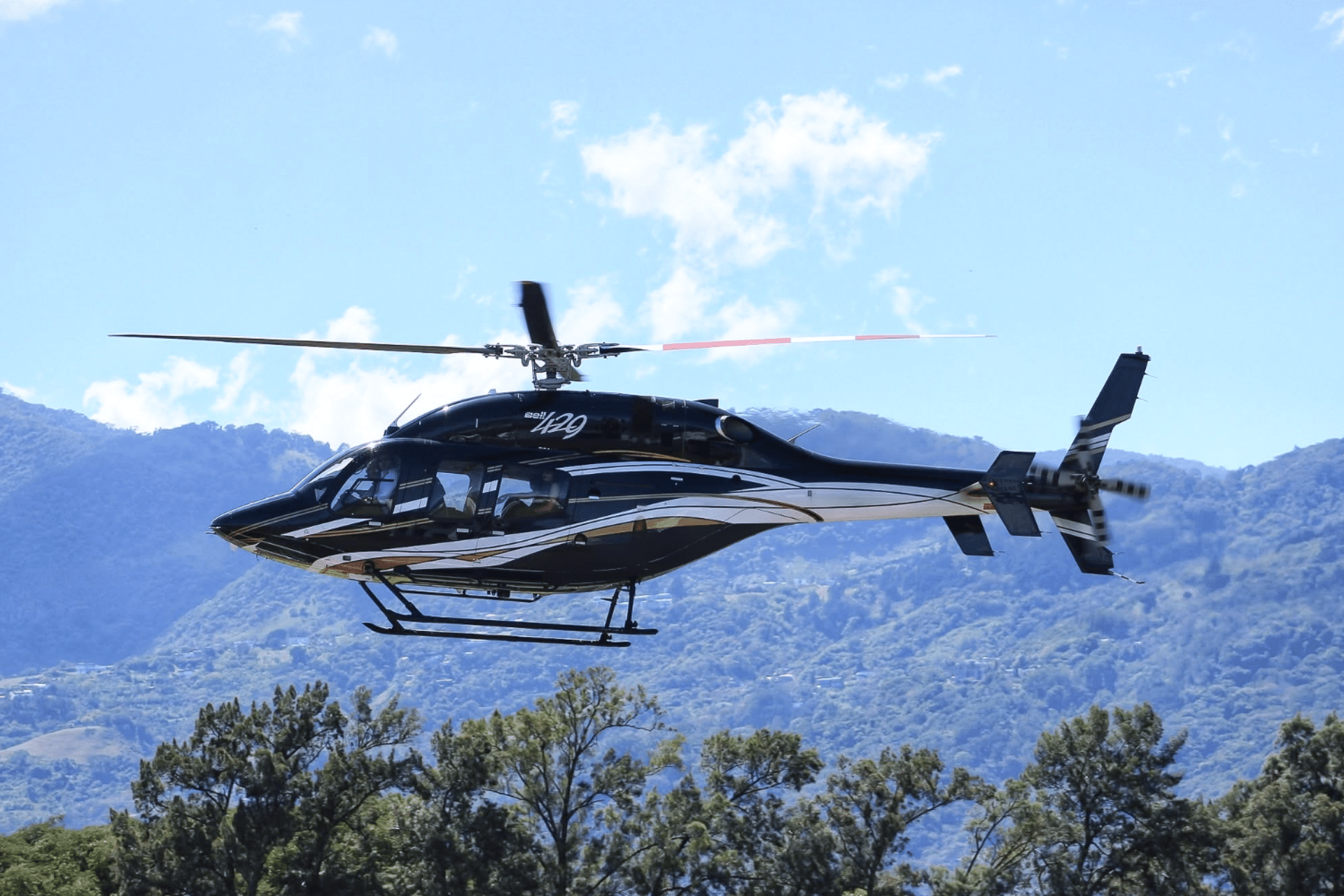
That is where executive charter becomes practical rather than purely premium. A helicopter can reach properties and project sites with exceptional speed. A private airplane charter can connect business travelers between major regions while avoiding the delays and inflexibility of scheduled services. For executives balancing time in San Jose with obligations in Liberia, the Pacific coast, or hard-to-reach inland areas, that access can materially improve the trip.
It depends, of course, on the mission. If a team has a single meeting in a city center with generous timing, ground transportation may be perfectly adequate. But if the day includes multiple stops, remote access, or a hard return deadline, charter becomes a much stronger operational choice.
What executives should expect from a quality charter operator
In executive aviation, aircraft comfort matters, but operator credibility matters more. The right provider is defined by its planning discipline, safety culture, and ability to execute custom itineraries without confusion.
A strong operator should be able to explain aircraft suitability clearly. Not every mission calls for the same platform. A helicopter may be ideal for direct access and short regional hops. An airplane may be better for longer distances, larger party sizes, or luggage requirements. The recommendation should reflect the route, the landing environment, the passenger profile, and the schedule – not a one-size-fits-all sales pitch.
Safety credentials should also be front and center. For executive clients, trust begins with regulatory compliance, experienced crews, and a documented operating standard. In a market where timing is important and expectations are high, professionalism behind the scenes is what protects the experience in the air.
Responsiveness is another mark of quality. Business itineraries change. Meetings run over. Weather shifts. An experienced charter team knows how to manage those variables with clear communication and realistic planning. Premium service is not just about a polished cabin. It is about reducing uncertainty before uncertainty affects the trip.
When private helicopter and airplane charter each make sense
Executive travelers sometimes assume the choice is mainly about preference. In practice, it is about mission fit.
Private helicopter charter is especially useful when the destination is difficult to reach efficiently by road or when direct access is the priority. Hotel developments, private estates, industrial facilities, and coastal properties are common examples. Helicopters can also be effective for short-notice inspections, leadership transfers between events, or time-sensitive movements where every hour counts.
Private airplane charter is often the better fit for longer regional flights, airport-to-airport business travel, or executive groups that need more cabin space. It can also make more sense when luggage volume is higher or when the itinerary includes formal business travel expectations across multiple destinations.
The best solution is not always the most expensive one. Sometimes a helicopter saves enough ground time to justify the premium. Other times, a fixed-wing aircraft provides better efficiency for the route. In some cases, a mixed itinerary is the smartest option, with one aircraft type handling the long segment and another covering the final transfer.
The real benefits go beyond speed
Speed gets attention because it is easy to measure. But the wider benefits of charter flights for executives are often what matter most to decision-makers.
One is continuity. Senior teams can stay together instead of splitting across commercial bookings and road transfers. Another is predictability. When the transport plan is designed around the agenda, the day becomes easier to control. There is also image and guest experience. If a company is moving investors, board members, or strategic partners, private aviation can support the level of care and discretion expected in high-value business relationships.
There are trade-offs. Charter requires earlier planning on details such as passenger count, luggage, landing access, and timing constraints. It is also a premium service, so it should be used where the value is clear. But for companies that place a high cost on delay, exposure, or executive downtime, the return is often straightforward.
Planning charter flights for executives the right way
The strongest charter trips start with clarity. A good operator will want more than a destination and a preferred departure time. They will ask about the purpose of travel, flexibility in the schedule, the nature of the destination, passenger priorities, and any special handling needs.
For executive travel, small details can shape the outcome. Is there a confidential meeting before arrival? Does the team need same-day return? Will the passengers be coming from an international flight connection? Is there a requirement to visit multiple properties in sequence? These questions help determine aircraft choice, departure strategy, and contingency planning.
This is one reason experienced local knowledge matters in Costa Rica. Operators with established bases, regional familiarity, and long-running flight coordination experience can spot issues early and propose better routing options. Aerotour, with operating roots dating back to 1973 and a service model built around custom aviation solutions, reflects the kind of experience executive clients generally look for when reliability is non-negotiable.
Who benefits most from executive charter in Costa Rica
Not every traveler needs private aviation. But for certain business profiles, the fit is strong.
Corporate leaders visiting multiple sites in a short window benefit from the time saved and the tighter control over the day. Real estate and hospitality investors gain direct access to properties that are otherwise cumbersome to inspect on a single trip. Production teams and commercial partners may use executive charter to move decision-makers quickly while keeping a wider project on schedule. Family offices, legal advisors, and private clients often value the privacy as much as the convenience.
In each case, the common thread is not status. It is the need for transportation that supports the objective instead of slowing it down.
Choosing service that matches the stakes
When executive travel matters, the flight is part of the business outcome. The provider should understand that the mission may involve more than transport – it may support a negotiation, a property closing, a regional inspection, or an investor relationship.
That is why experience, certification, aircraft suitability, and planning quality carry more weight than marketing language. The right charter solution should feel precise, calm, and well managed from the first conversation to final arrival.
For executives operating in Costa Rica, private aviation is at its best when it turns a complicated itinerary into a workable one. If the schedule is tight, the destination is hard to reach, or the value of privacy is high, charter is not about excess. It is about choosing a travel model that respects the importance of the work.