
Charter Aircraft for Resort Access in Costa Rica


A remote beach resort can be only a few hundred miles from San José, yet getting there by road may take most of a day. Mountain routes, seasonal weather, ferry schedules, and limited commercial flight timings can turn a carefully planned stay into a long transfer. Charter aircraft for resort access offer a more direct way to begin the experience, bringing travelers closer to Costa Rica’s most distinctive coastal, rainforest, and private-lodge destinations.
For guests who value privacy, time, and a well-managed travel day, private aviation is not simply about arriving faster. It is about controlling the pace of the journey. A properly planned charter can align with an international arrival, a resort check-in window, a family schedule, or an executive itinerary, while reducing the number of handoffs between airport, vehicle, and destination.
Charter Aircraft for Resort Access in Costa Rica
Costa Rica’s geography rewards thoughtful flight planning. Resorts in Guanacaste, the Nicoya Peninsula, the Central Pacific, the Southern Pacific, and the Osa Peninsula are often positioned for seclusion rather than proximity to major airports. That setting is part of their appeal, but it can also make conventional transfers lengthy and unpredictable.
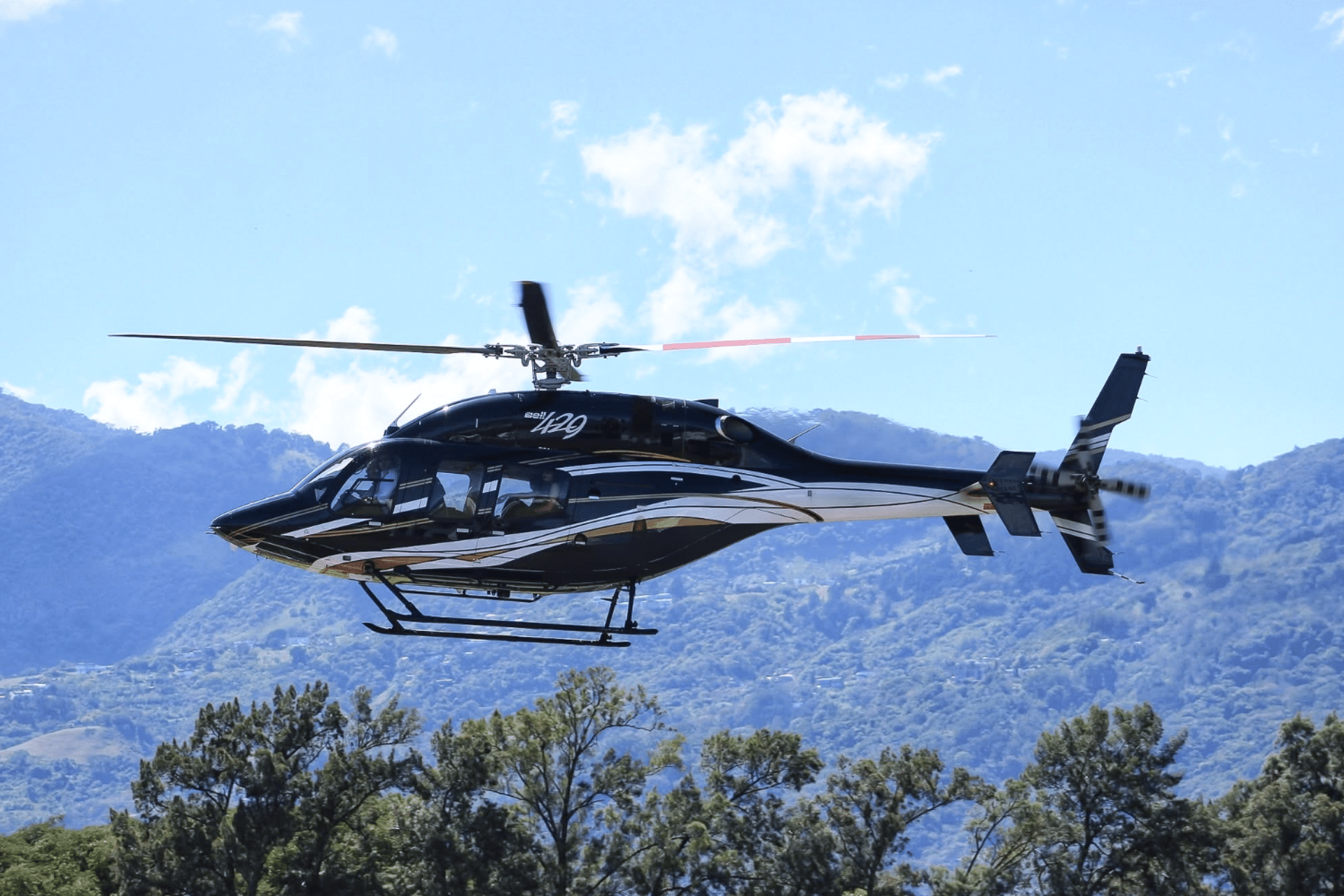
Private airplane charters can serve regional airports and airstrips that place guests closer to their resort. Helicopter charters can be especially valuable where terrain, road conditions, or transfer times make ground travel less practical. The right aircraft depends on the destination, passenger count, luggage requirements, weather conditions, and available landing infrastructure.
The benefit is most noticeable on short stays. Losing five or six hours to a road transfer can meaningfully reduce the time available for a three-night escape, a site inspection, or an executive retreat. A charter flight converts much of that transfer time into time at the property, whether that means an early lunch overlooking the Pacific, an afternoon meeting, or a sunset arrival at a private villa.
Choosing Between an Airplane and a Helicopter
Both fixed-wing aircraft and helicopters improve resort access, but they solve different logistical problems. A private airplane is generally the practical choice for regional airport-to-airport travel, particularly for guests traveling with several pieces of luggage or moving between established destinations. It can offer efficient travel from San José or Liberia to regional gateways near the coast or rainforest.
A helicopter is often the better fit when the final destination is remote, when the journey itself is part of the occasion, or when avoiding a long final road segment matters most. It also provides a distinctive perspective on Costa Rica’s terrain, from volcanic ridgelines and river valleys to Pacific beaches and dense tropical forest.
There are trade-offs. Helicopters may have more limited baggage capacity, and operations depend on appropriate landing locations, weight-and-balance considerations, weather, and daylight conditions. An airplane may be more suitable for larger groups or heavier luggage, but a resort transfer may still require a vehicle from the regional airport. The best plan is not automatically the fastest aircraft. It is the aircraft and routing that suit the full itinerary.
The Last Mile Matters
A resort charter should be planned as a complete movement, not only as a flight segment. The key question is not just, “Which airport can we reach?” It is, “How close does that arrival point place us to the resort, and what happens next?”
In some cases, landing at a regional airport followed by a short private vehicle transfer is the most sensible arrangement. In others, a helicopter can eliminate a multi-hour drive and provide a more direct arrival. For private properties, production locations, and resorts with restricted access, the operator should confirm the landing site, local operating requirements, passenger handling, and ground coordination before the day of travel.
This preparation is particularly valuable during high season, holiday travel periods, and the green season, when road conditions and demand for private transfers can change quickly. A polished travel experience comes from anticipating these details rather than improvising around them.
What Premium Travelers Should Expect From a Charter Operator
A premium charter service begins well before passengers reach the aircraft. The planning process should establish departure location, desired arrival time, number of travelers, luggage profile, special equipment, and any connections with commercial or international flights. It should also address the purpose of the trip, whether that is a family vacation, corporate retreat, resort inspection, wedding event, or media production.
Safety and operating standards should remain central to the decision. Travelers should work with an established operator that holds the appropriate aviation authorization and applies disciplined procedures to aircraft dispatch, weather assessment, maintenance, crew qualifications, and passenger briefing. In Costa Rica, DGAC certification and alignment with ICAO standards are meaningful indicators of an operator’s professional foundation.
Experience matters because resort access is rarely a one-size-fits-all service. A seasoned local operator understands regional airport limitations, changing weather patterns, fuel and handling logistics, and the practical differences between a beautiful route on paper and one that works reliably on the day of operation. Aerotour brings operating experience dating to 1973, with bases in San José and Liberia that support access across key tourism and business corridors.
Privacy is another consideration. Private charter allows guests to travel with their own party, avoid the fixed schedule of commercial services, and maintain discretion when required. For corporate teams, public figures, and families seeking a quieter arrival, that control can be as valuable as the time saved.
Planning the Flight Around Your Resort Stay
The strongest charter itineraries are built backward from the resort experience. Begin with the check-in time, desired first activity, dinner reservation, meeting schedule, or onward departure. Then determine whether the flight should leave directly after an international arrival, the following morning, or from a different Costa Rican departure point.
Flight timing should include practical margins. International arrivals can be delayed by immigration, baggage collection, and customs. During the rainy season, weather patterns may favor earlier departures for certain routes. Resorts may also have preferred arrival windows, especially where staff, security, boat transfers, or private vehicles must be coordinated.
Luggage deserves an early conversation. Surfboards, golf bags, camera equipment, dive gear, strollers, and larger suitcases can affect aircraft selection. A small group traveling light may have access to more options than a group bringing extensive equipment. This is not a limitation to discover at boarding. It is a planning factor that helps the operator recommend an appropriate aircraft from the start.
For larger groups, splitting passengers between aircraft or combining a charter flight with coordinated ground transport may be more effective than attempting to force every requirement into one movement. It depends on the destination, the available airport, the level of privacy desired, and the group’s tolerance for staggered arrivals.
Weather Is Managed, Not Ignored
Costa Rica’s climate is part of what makes the country exceptional, but it requires aviation judgment. Rain, cloud cover, wind, and visibility can affect routing and timing, particularly in mountainous or coastal regions. Responsible operators do not promise conditions they cannot control. They monitor forecasts, assess real-time operating conditions, and communicate alternatives clearly.
That may mean recommending an earlier departure, adjusting a route, using a different airport, or arranging a ground transfer if flying is not advisable. The priority should always be a safe, well-informed decision rather than preserving an itinerary at any cost. Premium service includes candid communication when conditions require flexibility.
When Resort Charters Deliver the Greatest Value
Charter aircraft are especially compelling when the cost of lost time is high. This can include short luxury stays, multi-resort itineraries, family trips with young children, destination celebrations, executive travel, and incentive programs. They are also useful when commercial flight schedules do not align with resort availability or when a group needs to reach a destination without multiple connections.
For production and hospitality teams, private aviation can support location scouting, property inspections, talent movement, and time-sensitive event logistics. The same principles apply: aircraft choice, baggage, ground support, weather, and schedule all need to be considered as one operational plan.
A resort transfer by charter aircraft should feel considered rather than extravagant for its own sake. When it replaces an exhausting road day, protects limited vacation time, or gives a group the flexibility to move on its own schedule, it becomes a practical extension of the stay. The right flight does more than shorten the distance to a resort. It lets the destination begin when guests are ready to arrive.