
Best Aircraft for Executive Travel in Costa Rica


A board meeting in San José at 9:00 a.m., a site visit near the Pacific by lunch, and a return flight before evening is not an unrealistic schedule in Costa Rica. It is precisely the kind of itinerary that makes choosing the best aircraft for executive travel a business decision rather than a luxury preference. The right aircraft protects valuable time, keeps teams focused, and reaches destinations that do not fit neatly into commercial airline schedules.
For executive travelers, the ideal choice is rarely defined by size alone. Passenger count, baggage, flight distance, runway conditions, weather, privacy requirements, and ground-transfer time all matter. In a country with mountains, coastlines, remote resorts, industrial sites, and regional business centers, the aircraft should match the mission from the first mile to the last.
What Defines the Best Aircraft for Executive Travel?
Executive aviation is about more than flying privately. It is about reducing friction in a complex day. That may mean departing closer to a meeting, arriving at a smaller airport, changing the schedule when plans move, or creating a quiet space for a leadership team to prepare in transit.
The best aircraft for executive travel should provide an appropriate combination of speed, cabin comfort, operational flexibility, and access. A larger jet can offer an impressive cabin and longer range, but it may not be the most practical option for a short regional route or a destination with runway limitations. Conversely, a smaller aircraft may be highly efficient for two or three passengers but insufficient when a full management team is traveling with equipment and luggage.
A qualified charter operator begins with the mission, not the aircraft category. Flight planning should account for the number of travelers, the exact departure and arrival points, desired departure time, baggage profile, weather considerations, and any special requirements such as confidential discussions, production equipment, or ground coordination.
Helicopters for Direct Access and Short Regional Flights
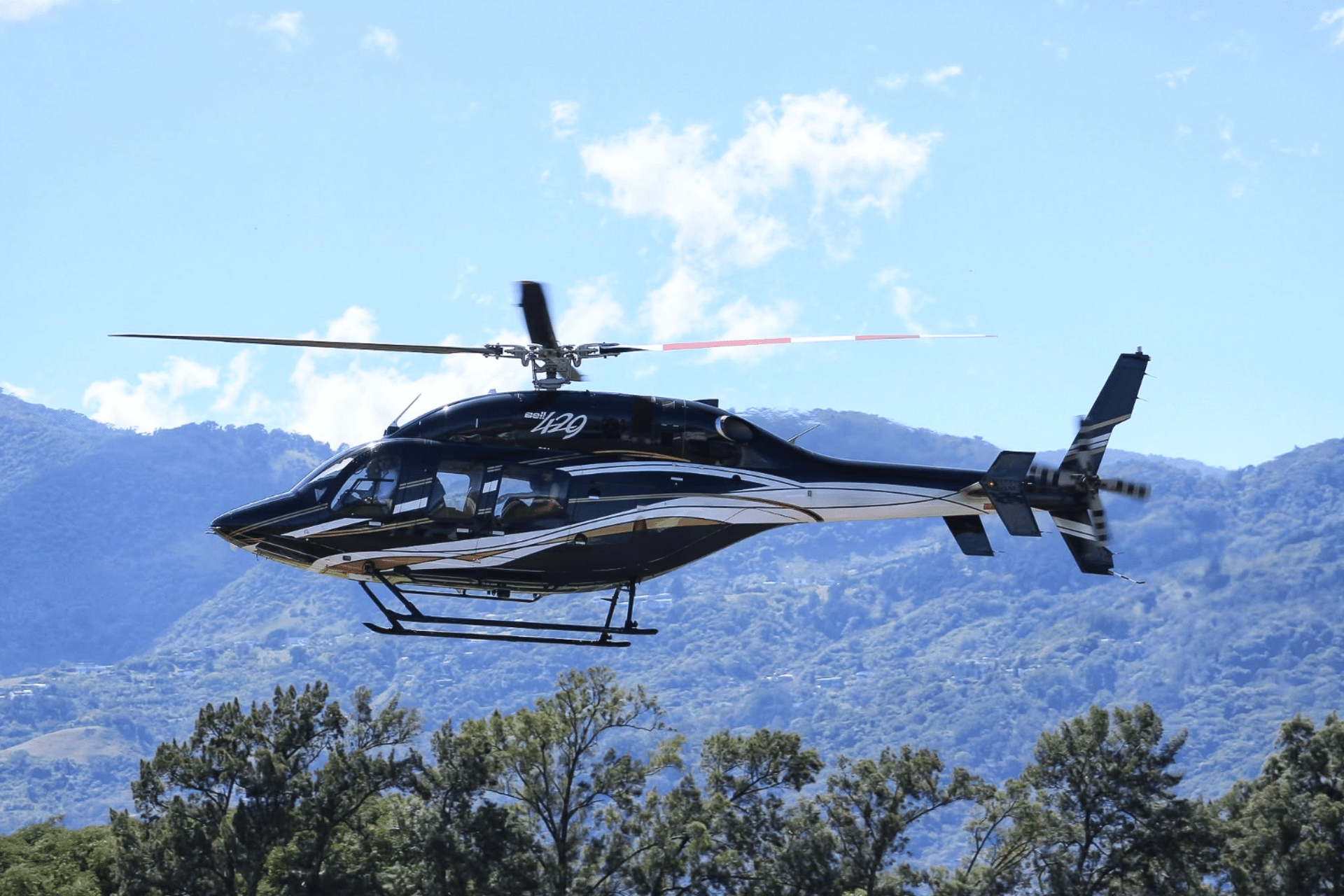
For executive movements within Costa Rica, a private helicopter is often the most efficient choice when the destination is difficult to reach by road or far from a commercial airport. Helicopters can connect key business and tourism corridors while avoiding long transfers through traffic, mountain roads, or seasonal travel delays.
This option is especially valuable for executives visiting properties, construction sites, agricultural operations, resorts, energy facilities, or remote communities. The advantage is not simply speed in the air. It is the ability to land closer to the final destination, subject to site suitability and operational authorization.
Helicopters are best suited to shorter routes and smaller groups. Cabin space and baggage capacity are more limited than in a fixed-wing aircraft, and weather conditions can influence routing and scheduling. For a team that needs to move quickly from San José to a coastal destination, however, the time saved on ground transportation can be substantial.
For senior leaders traveling with one or two colleagues, a helicopter can turn a full-day road itinerary into a focused half-day mission. It also offers a highly controlled travel environment, with private departure arrangements and direct coordination around the client’s schedule.
Turboprops: The Smart Choice for Regional Business Mobility
For many regional executive trips, a turboprop is the strongest balance of efficiency, comfort, and airport access. These aircraft are well suited to short and medium-distance flights, and they can often operate from smaller airports and airstrips that are less practical for larger jets.
A modern turboprop is not a compromise on professionalism. For a group traveling between Costa Rica and nearby Central American destinations, or for domestic movements where runway access is a priority, it can deliver a comfortable and capable charter experience. It also provides useful baggage capacity for travelers carrying presentation materials, technical equipment, golf bags, or luggage for an extended stay.
The trade-off is speed. A turboprop is generally slower than a jet, particularly over longer sectors. Yet on shorter regional routes, the overall travel-time difference may be modest when smaller-airport access, reduced check-in time, and direct routing are considered. In practice, it can be the most intelligent aircraft category for executives who value efficiency over unnecessary cabin size.
Light and Midsize Jets for Privacy and Pace
When speed, cabin privacy, and a more refined business environment are priorities, light and midsize jets are compelling options. They are particularly effective for executive teams flying beyond Costa Rica, whether to regional capitals, major commercial centers, or selected destinations in North America and the Caribbean.
Light jets generally work well for smaller groups and shorter international missions. Their appeal lies in efficient point-to-point travel, a dedicated cabin, and a meaningful improvement in cruise speed compared with turboprops. They are a practical choice for a chief executive, client delegation, or small leadership team that needs to arrive prepared and on schedule.
Midsize jets offer more cabin room, greater baggage capacity, and stronger range for longer trips. They are often a better fit when several executives are traveling together, when the flight may extend for several hours, or when passengers need space to work comfortably in transit. Depending on the aircraft, amenities may include club seating, enhanced connectivity, enclosed lavatories, and a more flexible cabin layout.
The consideration is airport compatibility. Some regional airports and shorter runways may limit jet operations, particularly during certain weather or weight conditions. A professional flight team will evaluate the route before confirming the appropriate aircraft rather than promising a category that may not serve the mission reliably.
Super-Midsize and Heavy Jets for High-Value International Missions
For long-range travel, larger delegations, or schedules that require fewer fuel stops, super-midsize and heavy jets provide a different level of capability. These aircraft are designed for demanding international itineraries where cabin comfort, range, and productivity are central to the trip.
A super-midsize jet can be an excellent choice for executive teams traveling to the United States, Canada, or farther within Latin America. It typically offers a more spacious stand-up cabin, generous baggage capacity, and the range needed to simplify longer missions. For travelers who need to conduct discussions, review materials, or rest before a major engagement, cabin quality becomes a business advantage.
Heavy jets are appropriate when the passenger count is larger, the route is long, or the journey itself requires a premium working environment. They can support senior delegations, investor groups, and corporate teams traveling with substantial baggage or specialized equipment. However, they are not automatically the best choice for every high-profile trip. Their higher operating costs and airport requirements should be justified by the mission.
Selecting the Right Aircraft Starts With the Itinerary
The most productive charter decision begins with a clear operational brief. A capable provider will ask where passengers need to be, not only which airport they prefer. A hotel helipad, private estate, remote project location, regional airport, or major international gateway may each call for a different solution.
Safety oversight should remain central to the decision. Aircraft suitability means little without experienced crews, disciplined maintenance, compliant flight planning, and an operator that understands local operating conditions. Costa Rica’s terrain and changing microclimates demand careful preparation, especially for flights involving mountain routes, coastal weather, or remote landing areas.
Aerotour brings experience dating to 1973, DGAC certification, and operations aligned with ICAO standards to private aviation missions across the country. With bases in San José and Liberia, the company can coordinate aircraft solutions around Costa Rica’s principal business and tourism corridors while maintaining the discretion and service expected by executive travelers.
The right aircraft should feel proportionate to the assignment. A helicopter may be the decisive tool for reaching a remote meeting on time. A turboprop may offer the best value and access for a regional delegation. A jet may be essential when international range, cabin privacy, and speed define the day. Share the full itinerary, the passenger profile, and the business objective with your charter team, and let the mission determine the aircraft.