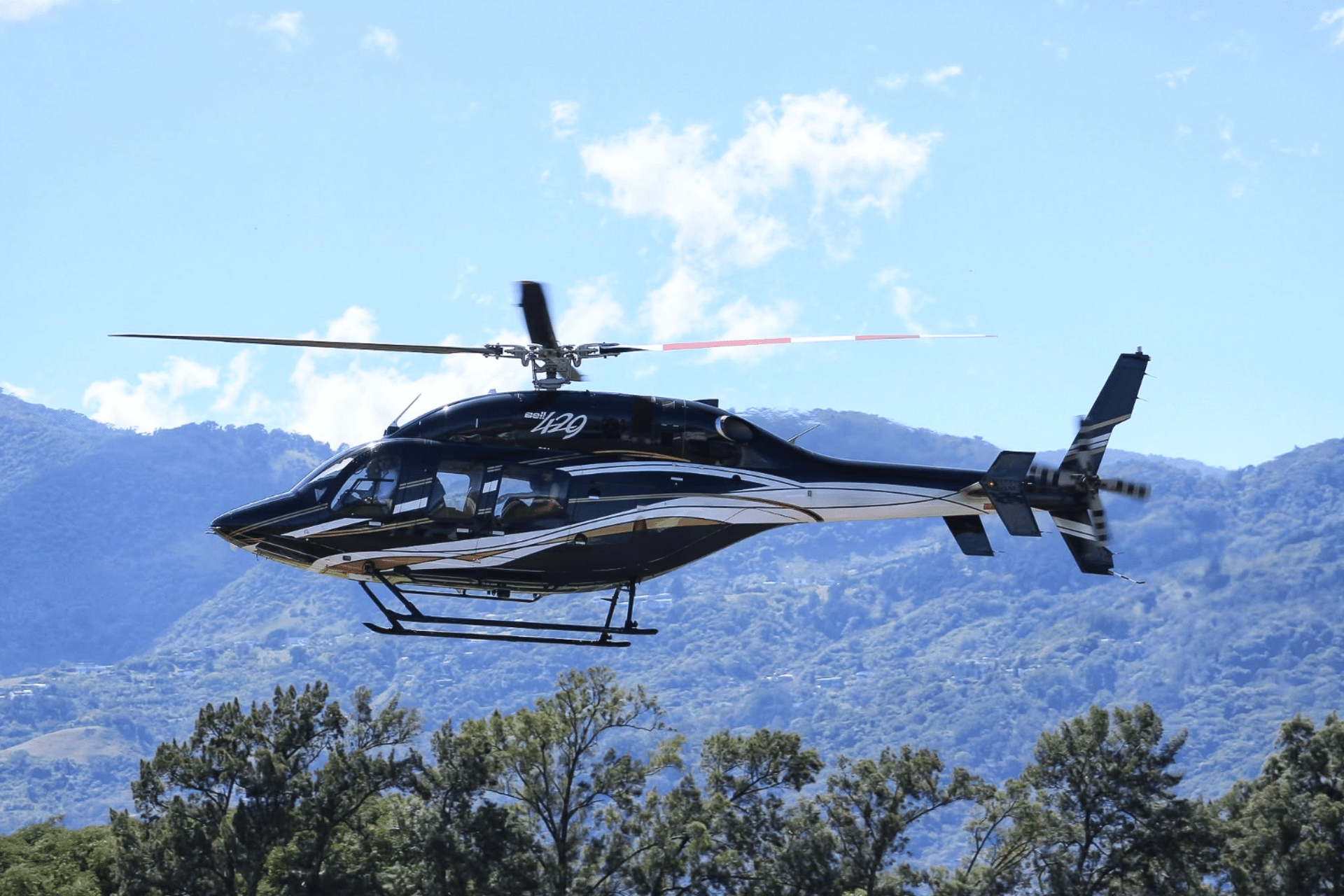

Why Choose Helicopter Transfers in Costa Rica?


A two-hour ground transfer from an international airport can be a reasonable part of a vacation. On a short executive visit, a multi-stop itinerary, or a production day with a narrow weather window, it can become the one detail that dictates everything else. That is why choose helicopter transfers is a practical question, not simply a luxury travel preference. In Costa Rica, where mountain roads, coastal routes, and changing conditions can extend travel times, a private helicopter can turn transit time into time spent at the destination.
Why Choose Helicopter Transfers for Costa Rica Travel?
A helicopter transfer is designed around direct access, flexibility, and privacy. Rather than following commercial airline schedules or committing to a long overland route, travelers can move between approved locations on a timetable built around their plans.
For a family arriving in San José and staying on the Pacific coast, that may mean beginning the vacation sooner. For an executive team, it may mean attending a meeting in the Central Valley and reaching a resort, project site, or regional destination the same day. For a production crew, it can mean positioning people and essential equipment efficiently when daylight, talent schedules, and location access matter.
The value is not limited to speed. A private flight creates a controlled travel experience: a dedicated aircraft, a known passenger group, coordinated baggage handling, and a flight plan tailored to the mission. That level of control is particularly valuable when the itinerary includes several destinations or when commercial connections do not align with the schedule.
Time is often the most valuable benefit
Costa Rica is compact on a map, but road travel does not always reflect straight-line distance. Traffic around metropolitan areas, winding mountain routes, road conditions, seasonal weather, and limited access roads can change a journey considerably. Helicopter transfers reduce exposure to many of those variables by flying directly between suitable departure and arrival points.
This matters most when a transfer affects the rest of the day. A late ground arrival can mean a missed dinner reservation, a shortened site visit, or an overnight stop that was never part of the plan. Flying privately helps protect the itinerary, allowing travelers to organize their time around the reason they came to Costa Rica rather than around the transfer itself.
There is still a realistic trade-off. Helicopters operate within strict weather, weight, daylight, airspace, and landing-site requirements. A professional operator will never treat those standards as optional. The right decision is not based on the shortest estimated flight time alone, but on a flight plan that is operationally appropriate for the route, passengers, and conditions on the day.
Direct Access Beyond Major Airports
Commercial airports serve essential routes, but they cannot place passengers at every beach resort, private estate, lodge, filming location, or business destination. Helicopter operations can provide access to approved helipads, private landing areas, and locations that may be far more convenient than a commercial terminal.
For leisure travelers, this can change the feel of an itinerary. A transfer can connect an arrival airport with a remote eco-lodge, a coastal property, or a destination where the final ground segment would otherwise take hours. The aircraft becomes part of the travel experience, with views of rainforest, ridgelines, volcanic terrain, and the Pacific or Caribbean coastline along the route.
For organizations, direct access is often a logistical advantage rather than a scenic extra. Teams may need to reach an agricultural operation, construction area, energy facility, hospitality property, or event venue on a precise schedule. A helicopter can reduce travel friction when access is time-sensitive, provided the landing location has been evaluated and authorized for the operation.
Privacy and discretion for high-value travel
Private aviation gives passengers space to travel without the crowds, queues, and shared cabin environment associated with standard airport journeys. For corporate leaders, public figures, families, and clients traveling for sensitive meetings, that privacy can be a meaningful part of the service.
Discretion also supports better working travel. A small team can review the day’s agenda, prepare for a presentation, or simply arrive focused rather than depleted from a long drive. For guests traveling to a special occasion or private retreat, the experience offers a quieter and more personal beginning to the stay.
Privacy does not mean isolation from planning. The best private helicopter service includes clear coordination before departure: passenger details, luggage expectations, ground transportation, timing, special requests, and destination procedures. That preparation is what makes a premium transfer feel calm rather than complicated.
A Better Fit for Complex Itineraries
Helicopter transfers are particularly useful when the route involves more than one destination. Costa Rica can reward travelers who combine city stays, rainforest experiences, volcano regions, surf destinations, and coastal resorts in a single trip. Yet every additional road transfer can consume a substantial portion of the schedule.
A private flight allows the itinerary to be shaped by the experiences travelers want, not only by what is easiest to reach by road. It can also support one-way routing, timed departures after an event or meeting, and connections between destinations that would otherwise require backtracking through a major airport or city.
Para corporate travel planners and executive assistants, this flexibility can simplify a demanding schedule. Instead of coordinating multiple vehicles, overnight stops, and commercial flight restrictions, they can arrange a tailored point-to-point movement with one experienced aviation partner. Details still matter – particularly passenger weights, baggage dimensions, and arrival-site availability – but they can be addressed in advance rather than discovered during the trip.
When helicopter transfers make the most sense
The strongest use case is not necessarily the longest route. It is the route where saved time, access, privacy, or scheduling control has a clear value. A helicopter transfer may be the right choice when travelers have limited days in country, when a road journey would cut deeply into a planned experience, or when a group must arrive together at a specific time.
It is also well suited to high-touch travel arrangements. Honeymoons, milestone celebrations, multigenerational family trips, executive retreats, and VIP hosting all benefit from fewer handoffs and more direct coordination. In these situations, the transfer is part of the overall standard of service, not an afterthought between destinations.
Conversely, a helicopter may not be necessary for every movement. If a destination is nearby, the road route is predictable, and the schedule is relaxed, a private vehicle can be an excellent choice. Premium travel means selecting the option that serves the trip best, not automatically selecting the aircraft.
Safety Standards Should Lead the Decision
Private helicopter travel should always begin with the operator’s safety culture and operating credentials. Travelers should expect professional flight planning, qualified crews, properly maintained aircraft, operational limits that are respected, and straightforward communication about conditions that could affect a flight.
Costa Rica’s terrain and microclimates make local operating knowledge especially important. Weather can vary significantly between the Central Valley, mountain corridors, coastlines, and remote regions. An experienced team evaluates each flight according to the actual conditions, the planned route, the aircraft’s capabilities, and the suitability of the departure and arrival locations.
Aerotour brings operating experience dating to 1973, DGAC certification, and operations aligned with ICAO standards to private helicopter services in Costa Rica. Those credentials matter because the quality of a transfer is measured not only by how quickly it gets underway, but also by how responsibly it is planned and executed.
Passengers should also welcome clear baggage guidance. Helicopters have specific weight and balance requirements, and luggage capacity varies by aircraft and passenger count. A reliable operator will explain those considerations early and help arrange practical alternatives when a trip includes oversized equipment, extensive luggage, or specialized production gear.
The Transfer Can Become Part of the Experience
There is a distinct difference between seeing Costa Rica from the road and seeing its varied geography from the air. A helicopter transfer can reveal the scale of the country in a way that ground transportation cannot: the transition from urban valley to cloud forest, the contours of the mountains, river systems cutting through green terrain, and long stretches of shoreline.
That perspective has emotional value, especially for leisure guests. But it can also provide practical context for business and production travelers who need to understand a region quickly. The flight is purposeful transportation, yet it adds a view of the destination that few other transfers can offer.
The most rewarding private transfer is one that feels effortless because the details were handled carefully before the rotors start. Choose the route that protects your time, respects the operating conditions, and brings you closer to the reason you traveled in the first place.