
Construction Aerial Support for Costa Rica Sites

A bridge approach washed out by rain, a tower site sits above a steep access road, or a critical component must reach a remote work zone before a concrete pour. These are the moments when construction aerial support becomes a practical project decision rather than a specialty service. In Costa Rica, where terrain, weather, and infrastructure can reshape a schedule quickly, the right aircraft and crew can reduce access constraints without compromising operational discipline.
For developers, contractors, engineering firms, and industrial operators, aerial support is not simply about moving faster. It is about making informed choices around access, safety, timing, and the real cost of delays. A well-planned mission can help teams reach difficult sites, document progress from a useful perspective, and support logistics where ground transportation is impractical.
When Construction Aerial Support Adds Real Value
Construction projects do not all require aviation. A site with reliable road access, predictable delivery windows, and sufficient staging space may be better served by conventional ground logistics. Aircraft are most valuable when they solve a specific constraint that ground transport cannot solve efficiently.
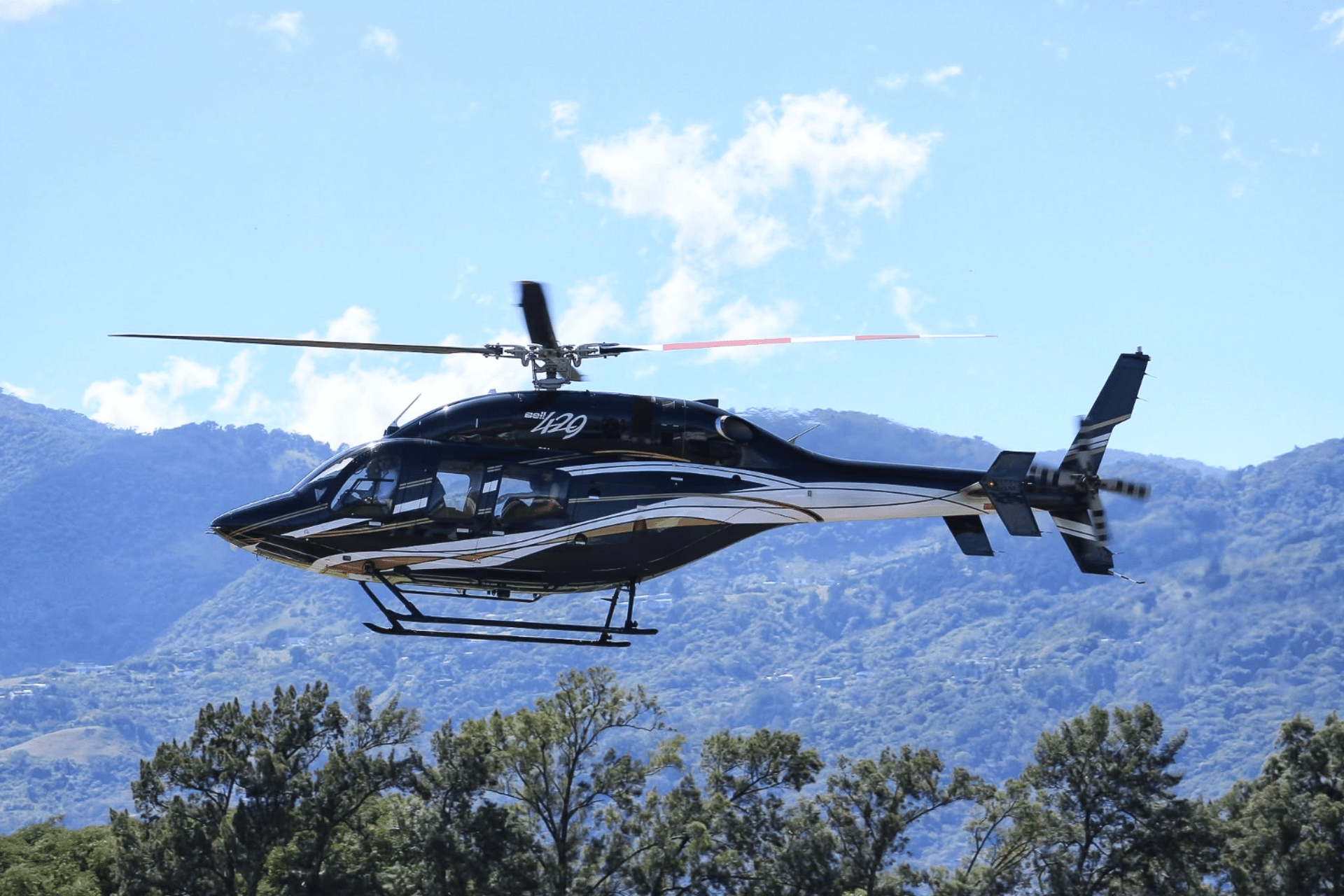
Remote projects are an obvious example. Costa Rica’s mountainous interior, coastal locations, forested regions, and developing corridors can present long travel times or limited access for heavy vehicles. A helicopter can bring project managers, inspectors, engineers, or specialized technicians directly to a site, avoiding hours of road travel and allowing work to proceed during narrow weather or daylight windows.
Aerial operations can also support time-sensitive site assessment. After severe rain, an overflight may give project leaders a rapid view of road conditions, slope movement, drainage issues, river crossings, or changes around a work area. That perspective does not replace an engineering inspection on the ground, but it can help decision-makers determine where to send personnel and what conditions they will encounter.
For projects with demanding schedules, the value often lies in protecting critical-path work. Moving a small but essential item, transporting a technical team, or completing an aerial inspection before a milestone can be more cost-effective than allowing crews and equipment to remain idle. The calculation should include more than the price of a flight. It should consider labor downtime, missed delivery windows, delayed subcontractors, and the safety exposure created by rushed ground access.
Matching the Aircraft to the Mission
The right solution depends on what must move, where it must go, and how the site can safely receive it. Helicopters are typically suited to short-range access, remote landings, reconnaissance, personnel transport, and carefully planned external-load operations. Fixed-wing aircraft can be an efficient option for moving people or equipment between regions when airports or airstrips are available near the project.
External-load work requires particularly careful planning. Payload weight is only one part of the decision. Operators must assess dimensions, rigging, density altitude, wind, route obstacles, landing-zone conditions, fuel requirements, and the aircraft’s performance limits. A load that appears straightforward at sea level may require different planning at an elevated site on a warm day.
This is why construction teams should avoid treating aircraft capacity as a single published number. Safe payload capability changes with conditions. An experienced aviation team will review the mission profile before confirming what can be carried, how it can be secured, and whether the proposed delivery plan is appropriate.
The landing area deserves equal attention. Rotor wash can affect loose materials, dust, unsecured tools, nearby personnel, and temporary structures. A suitable site needs clear approach and departure paths, controlled access, firm ground conditions, and a designated person who can coordinate with the flight crew. In some cases, the safest answer is to land nearby and complete the final transfer by ground. Flexibility is part of sound planning.
Personnel Transport and Site Access
Flying personnel can be valuable when the people on board have a clear, time-sensitive purpose: a structural engineer evaluating an issue, an executive team reviewing progress, a survey crew accessing a remote corridor, or technicians responding to a service requirement. It is less effective when the flight substitutes for ordinary workforce commuting without a defined operational benefit.
A clear passenger manifest, weight information, personal protective equipment requirements, and site contact details help the operator prepare correctly. Crews should also know whether passengers are familiar with helicopter operations. A proper safety briefing is essential, especially around approach procedures, loading, unloading, and movement near the aircraft.
Documentation, Surveys, and Project Visibility
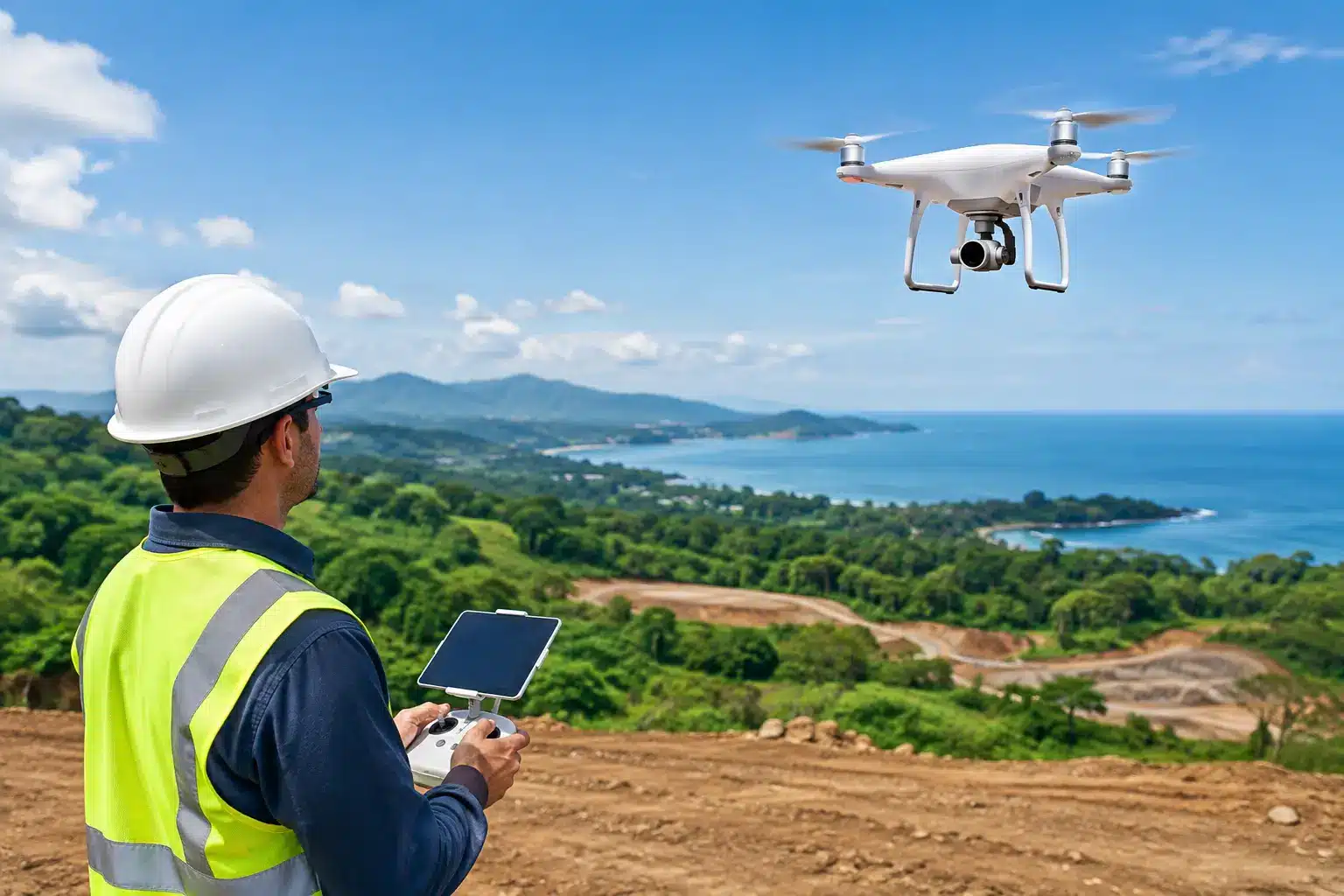
Aerial imagery can give stakeholders a more complete view of a construction site than ground photographs alone. Progress documentation, corridor mapping, roof and façade review, topographic context, and visual updates for investors or owners can all benefit from an aerial perspective.
The method should fit the purpose. A production-quality aerial shoot for a project announcement has different requirements from an engineering-focused documentation flight. Camera position, flight path, light conditions, aircraft vibration, door configuration, and communications between pilot and production crew all affect the result. For technical records, consistency matters. Repeating similar angles and altitudes at defined project stages creates a more useful visual record than collecting isolated images.
Planning Construction Aerial Support Before the Schedule Is Pressured
The best time to discuss an aviation mission is before an urgent need develops. Early planning allows the project team and operator to review alternatives, confirm approvals, identify landing areas, evaluate weather patterns, and set realistic timing. Last-minute flights can sometimes be arranged, but mission quality improves when logistics are not being designed under pressure.
A strong request for construction aerial support should describe the objective first. Is the need personnel access, reconnaissance, equipment transport, filming, surveying, or a combination of tasks? The operator will then need locations, approximate dates, passenger or cargo details, site elevation where relevant, and any known hazards such as power lines, cranes, restricted airspace, or unstable ground.
It is also useful to identify the decision-maker on site. Aviation crews need a reliable point of contact who understands local conditions and has authority to control the landing zone or coordinate site personnel. This reduces confusion during arrival and helps keep aircraft movements separate from active construction activity.
Weather remains a central variable in Costa Rica. Rain, low cloud, changing visibility, wind, and afternoon convection can affect route choices and flight timing. A professional operator will not treat a planned departure time as more important than safe conditions. Project managers can support good outcomes by building contingency into the schedule rather than making a flight the only path to a critical deadline.
Safety Is a Shared Operational Responsibility
Aviation safety begins with the operator’s standards, maintenance program, qualified crews, and regulatory compliance. It also depends on the project site. Construction environments are dynamic, and conditions can change between a site visit and the day of the flight.
Before operations begin, the aviation team should understand current site activity, crane locations, temporary cables, new structures, stockpiles, dust conditions, and vehicle movement. The construction team should understand the aircraft’s operating requirements and follow crew instructions without exception. Clear communication is especially important during landing-zone activity and any external-load operation.
For organizations selecting an aviation partner, credentials and local operating knowledge should carry substantial weight. DGAC certification, adherence to applicable ICAO standards, established safety procedures, and demonstrated experience in Costa Rican conditions are meaningful indicators. They should be paired with mission-specific planning, because no two construction sites present exactly the same operating environment.
Aerotour brings decades of Costa Rican aviation experience to customized missions involving private aircraft, helicopters, aerial filming, and specialized operational support. That breadth can be useful when a project requires more than a simple point-to-point flight and needs a team that can coordinate the operational details around it.
A Better Way to Evaluate the Investment
Construction aerial services should be evaluated against the cost of the problem they solve. If a helicopter flight saves a project team several hours but has no effect on schedule, safety, or decision quality, ground transport may remain the better choice. If the same flight allows an inspection to happen before a work stoppage, reaches a site made inaccessible by road conditions, or avoids a costly delay, the value changes significantly.
The most successful missions have a defined outcome: get the specialist to the site, verify the route condition, capture required documentation, deliver an approved load, or move a decision-maker where time matters. Clear objectives lead to better flight planning, cleaner budget decisions, and safer execution.
When access becomes the variable that threatens progress, aviation can provide more than a faster route. With the right preparation, it gives the project team a controlled, informed way to keep moving while respecting the operational limits that protect people, equipment, and the work itself.