
Cuándo usar chárteres aéreos para viajar en Costa Rica


A morning meeting in San José, lunch at a Pacific coast resort, and a return flight before dinner can be realistic in Costa Rica – but not if the day is built around commercial airline schedules and long road transfers. Knowing when to use air charter comes down to more than a preference for privacy. It is a practical decision about time, access, group needs, and the value of arriving prepared rather than exhausted.
Private aviation is not the right answer for every itinerary. For travelers and organizations with fixed schedules, remote destinations, sensitive work, or a need for specialized aerial capability, however, it can turn a difficult logistical day into a controlled one. The key is choosing the right aircraft, routing, and operator for the mission.
When to use air charter for business travel
Air charter is most compelling when time lost in transit carries a real cost. An executive team may need to visit a property, meet a client, inspect an operation, and return to San José on the same day. A commercial itinerary can introduce airport arrival requirements, limited regional frequencies, connections, baggage delays, and transfers on either side of the flight. A private charter is organized around the passengers’ schedule and the destination’s operating conditions.
This is particularly useful for companies with teams moving between San José, Liberia, coastal destinations, and regional airfields. Rather than asking a business day to fit an airline timetable, the aircraft can be positioned to support the work that has to be done. That flexibility also helps when a meeting runs long or a site visit needs more time than expected.
Privacy can be equally valuable. Charter passengers have a more discreet environment for confidential conversations, senior leadership travel, or client hosting. That does not mean every executive trip requires a private aircraft. For a single traveler going between major cities with a flexible schedule, commercial service may be the sensible choice. Charter earns its place when the schedule, the group, or the stakes make control of the itinerary worth the premium.
Reaching destinations where the road takes too much of the day
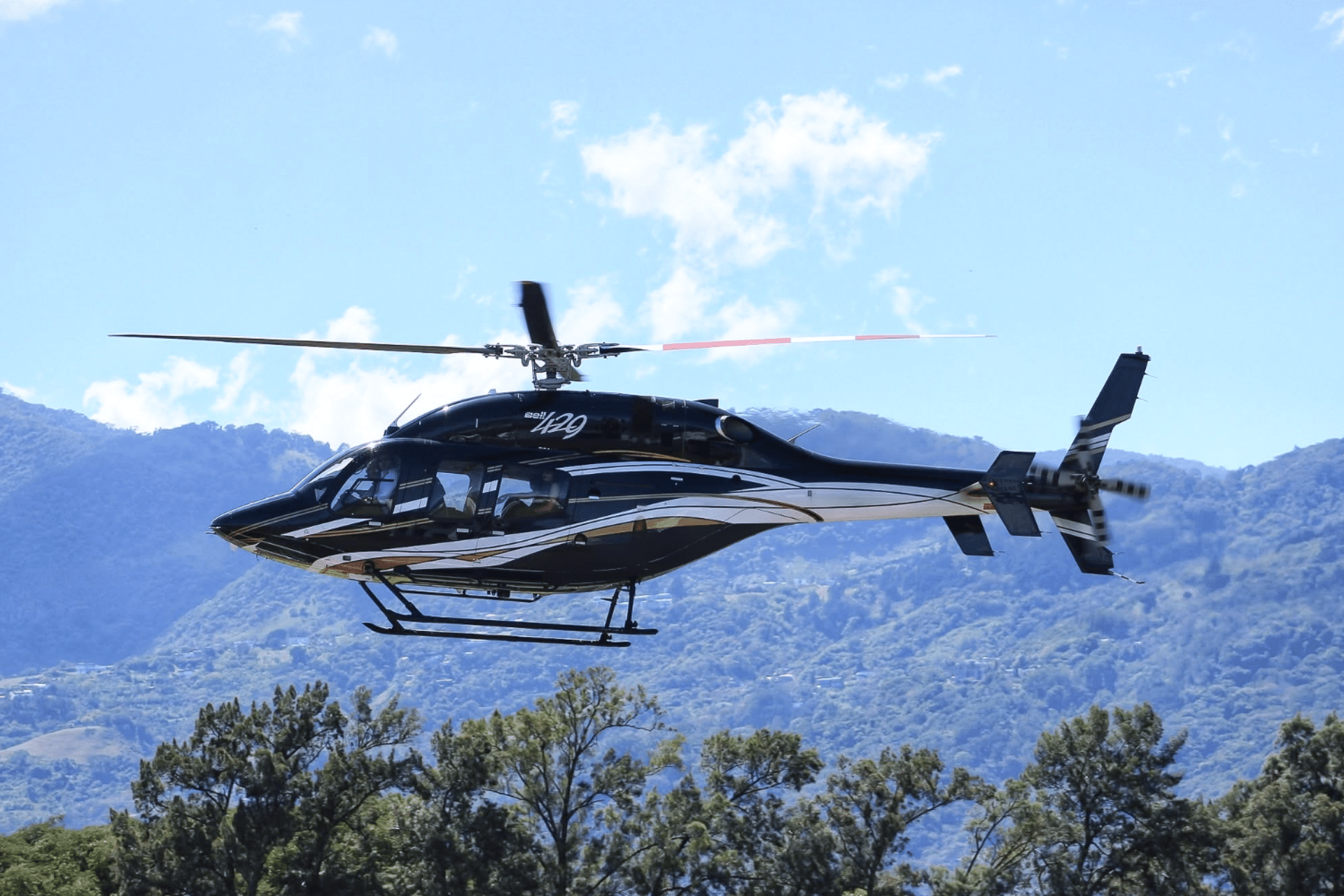
Costa Rica’s geography is part of its appeal, but it can make ground transportation demanding. Mountain roads, seasonal weather, traffic near urban areas, and lengthy drives to beach or rainforest regions can consume a substantial portion of a short stay. A private airplane charter can reduce travel time between approved airfields, while a helicopter can offer access to heliports and suitable landing locations where operations and permissions allow.
For a family or small group staying at a remote lodge, charter can preserve valuable vacation time. Instead of arriving from an international flight and beginning another multi-hour drive, guests may continue by air and reach their destination with daylight left to enjoy it. On the return, a direct transfer can make an international departure less stressful.
Aircraft selection matters. Fixed-wing aircraft are often the efficient choice for longer regional sectors and airport-to-airport travel. Helicopters are especially useful when proximity to the final destination matters more than runway access. Flight time is only one part of the comparison: the best option also considers luggage, passenger count, terrain, weather, ground handling, and the transfer required after landing.
Making a special occasion feel appropriately personal
There are moments when the journey should be part of the occasion. A helicopter flight over volcanoes, rainforest, coastline, or the Central Valley can give travelers a perspective that is unavailable from the road. For anniversaries, proposals, family celebrations, and high-end incentive programs, a private scenic flight adds a level of exclusivity while allowing the experience to be tailored to the group’s interests and timing.
The distinction between a scenic tour and transportation is worth making. A tour is designed around the aerial experience, visual highlights, and an enjoyable pace. A point-to-point charter is designed around getting passengers to a destination efficiently. They can be combined, but the flight plan should be clear from the outset so the aircraft, routing, and timing support the purpose of the day.
Weather also deserves respect. Costa Rica’s views can be extraordinary, yet cloud cover, wind, rain, and changing local conditions may affect a route or departure time. A professional operator will prioritize safe operating limits over a planned photo opportunity. Building reasonable flexibility into an itinerary is one of the simplest ways to protect the experience.
When specialized aerial work calls for an aviation partner
Air charter is not limited to passenger transport. Production teams, developers, event organizers, and industrial operators may need an aircraft for aerial photography, filming, reconnaissance, survey support, or access to a location that is difficult to reach by road. These missions require more than reserving a seat or selecting a scenic route.
Aerial production, for example, involves aircraft configuration, camera requirements, communication between the pilot and crew, route planning, local restrictions, weather assessment, and careful coordination on the ground. The right platform depends on the shot. A helicopter may provide the positioning and low-speed capability a production requires, while a fixed-wing aircraft may suit a different type of coverage or transport need.
Mission-specific work should be discussed early, especially if it involves equipment, door-off operations where permitted, unusual payloads, remote landing areas, or tight production windows. The operator needs time to evaluate feasibility and ensure the mission is conducted within applicable regulations and safety procedures. Aerotour brings experience dating to 1973, Certificación DGAC, and operations aligned with ICAO standards to the planning of private and specialized flights in Costa Rica.
Signs that charter is the better choice
A charter conversation is worthwhile when several factors apply at once: the destination is remote, the group is traveling together, the schedule is fixed, privacy matters, or the trip has a commercial purpose that cannot absorb delays. It is also a strong option when the itinerary includes multiple locations that would be inefficient by road.
Consider a few common situations. A resort guest arriving late in the day may value a direct onward flight more than spending the first night near the airport. A board may need to inspect sites in different regions without dividing its visit across several days. A film crew may need a platform and flight crew who understand the operational needs of aerial work. In each case, the benefit is not simply speed. It is the ability to design transportation around the actual objective.
Conversely, charter may be unnecessary for travelers with an open schedule, a simple route, and easy access to commercial service. Responsible flight planning begins with an honest assessment of the trip, not an assumption that a private aircraft is always the best fit.
Planning a charter flight with confidence
The best charter requests begin with practical details: preferred travel date, passenger count, baggage, route, desired departure window, and any special requirements. For business travel, share the non-negotiable appointment times. For leisure trips, identify whether the priority is the fastest transfer, a scenic experience, or both. For production and industrial work, explain the mission clearly before discussing aircraft preferences.
Safety should guide every decision. Ask whether the operator is properly certified, how weather and operational changes are handled, and what aircraft best suits the proposed route. A dependable provider will explain the options plainly, including limitations. Passenger weight, luggage volume, runway conditions, daylight, and weather are operational factors, not minor details, and they can change what is feasible on a given day.
Advance planning usually creates more choices, particularly during peak travel periods. Still, a capable charter team can often respond to urgent needs by coordinating aircraft availability, crew duty limits, permits, and ground arrangements. The goal is not to promise every request. It is to provide a flight plan that is realistic, well managed, and appropriate to the mission.
The most valuable charter flight is the one that gives your time back without asking you to compromise on safety or service. Start with the outcome you need to achieve, then let the route, aircraft, and experienced flight team be chosen around it.